
Soups & Stews
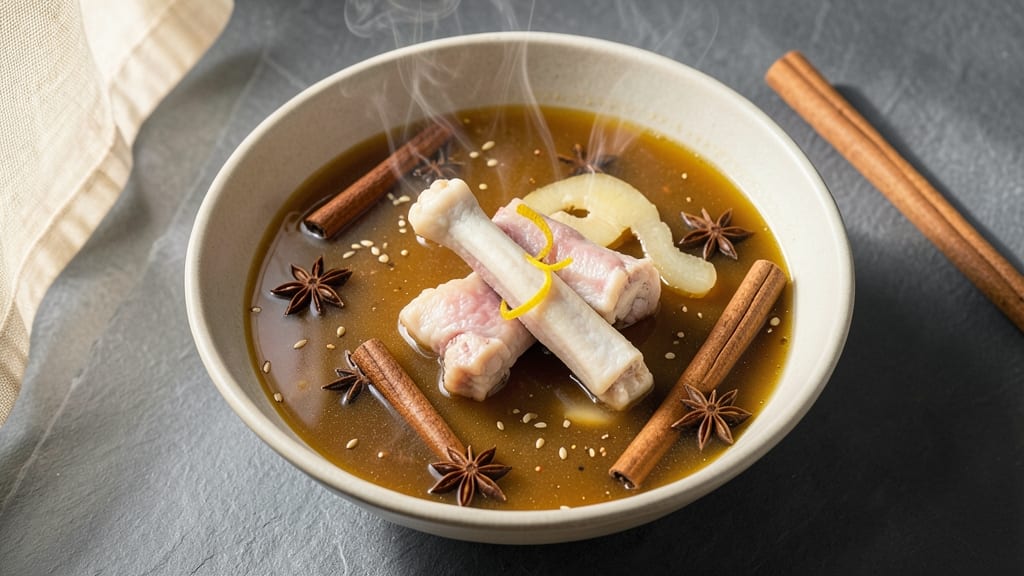
This Chinese pork soup stock recipe transforms simple pork bones into a golden, umami-rich foundation that elevates any dish. After years of perfecting stock-making in Charleston kitchens, I’ve learned the secrets to clarity and depth—parboiling bones, slow simmering with aromatic spices, and the patience to let flavors meld.
The result? A broth so flavorful it turns basic noodles or dumplings into restaurant-quality meals.
The process begins with pork bones—ideally from a heritage pig—parboiled to remove impurities before simmering with ginger, star anise, and cinnamon for authentic Chinese flavor. Unlike quick broths, this requires 4-6 hours of gentle cooking, but every minute builds layers of complexity.
The key? Skimming foam and maintaining a gentle simmer to keep the stock clear and rich.
What you’ll end up with is a deeply aromatic, slightly sweet broth that’s perfect for pho, ramen, or even braising meats. The spices infuse the liquid with warmth, while the pork bones dissolve into tender, gelatinous strands that thicken the stock naturally.
This isn’t just a broth—it’s the heart of your meal, packed with umami and tradition.
Serve it steaming hot over rice noodles, use it as a base for dumplings, or sip it straight from a bowl. The versatility is endless, but the foundation is always the same: time, patience, and the right technique. Let’s get started on creating your own flavor-packed stock.
Ingredients for chinese pork soup stock
Heritage pork bones and aromatic spices transform into a golden, umami-rich broth foundation.
| Ingredient | Amount | Notes |
|---|---|---|
| Pork Bones 🥩 | 3 lb | Ideally from heritage pig, knuckle or neck bones |
| Cold Water 💧 | 12 cups | For initial parboiling |
| Fresh Ginger Root 🧄 | ½ cup | Sliced into 2-inch pieces, peeled |
| Star Anise Pods 🌟 | 4 whole | Lightly crushed for aroma release |
| Cinnamon Sticks 🌿 | 2 whole | 2-inch lengths preferred |
| Dried Fennel Seeds 🌾 | 1 tsp | Toasted lightly for depth |
| Bay Leaves 🍃 | 2 whole | Dried, standard size |
| White Peppercorns 🌶️ | ½ tsp | Crushed lightly for subtle heat |
| Salt 🧂 | 1 tsp | Diamond Crystal preferred |
| Soy Sauce 🍶 | 1 tbsp | Light or dark, for umami depth |
| Sesame Oil 🫒 | 1 tsp | Toasted, for finishing |
The pork bones are the backbone of this stock—heritage pig knuckle or neck bones deliver the most gelatin and depth, but any pork bones work in a pinch. Local butchers often have them pre-cut, but if buying whole, ask for the marrow-rich ends. Fresh ginger is non-negotiable here; Asian markets usually carry the plump, fibrous roots perfect for slicing. Star anise and cinnamon should be whole pods and sticks—Penzeys Spices sells them in bulk, or check the international aisle at Whole Foods. The fennel seeds? Toast them in a dry pan for 30 seconds first—trust me, it makes all the difference. Bay leaves and peppercorns are pantry staples, but if yours smell stale, toss them.
No star anise? Anise seeds at double the amount work, but you’ll lose that signature Chinese warmth. Substituting cinnamon? Cassia bark is the direct swap—it’s what most Chinese recipes actually use. Running low on ginger? Ginger paste at half the amount gets you close, but fresh is always better. The soy sauce can be swapped for coconut aminos if you’re avoiding soy, though you’ll lose some depth. Sesame oil is optional but adds that final nutty finish—Kadoya makes the best toasted version, but any good brand works. For the water, filtered is ideal, but tap water works fine if you’ve got a good system. Just don’t use distilled—it lacks the minerals that help extract flavors.
This stock tastes even better the next day as flavors meld, so make a double batch if you’ve got space. Store it in the fridge for up to 5 days or freeze in ice cube trays for easy portioning—perfect for pho or ramen later. The bones themselves? Save them in the freezer for up to 3 months—they’ll make another batch just as rich. When reheating, warm gently over low heat or in a saucepan—never microwave, or you’ll break the delicate emulsification that gives it that silky texture. And if you’re feeling fancy, finish with a drizzle of toasted sesame oil right before serving.
Why You'll Love This Recipe
- No-Chop Needed: I swear by this—just toss in whole ginger slices, star anise, and cinnamon sticks. No peeling, no mincing, no mess. The bones render all the flavor on their own while you sip tea and pretend you’re in a bustling Beijing kitchen.
- Umami Bomb: That first sip? Pure porky magic. The ginger and spices caramelize into the water, creating a deep, savory base that’s richer than any bouillon cube. Honestly, I’ve used this stock in everything from dumpling broth to stir-fry sauces—and it’s always the star.
- Freezer-Friendly Gold: Make a big batch (I do 2 gallons) and freeze it in ice cube trays. Need a quick ramen fix? Toss a few cubes into boiling water. Or thaw a batch for congee on lazy mornings. It’s my secret weapon for lazy nights and last-minute meals.
- Budget Booster: Pork bones are cheaper than chicken, and this method stretches them further. A single batch feeds my family for a week—whether it’s noodle soup, braised pork, or even a simple rice bowl. Between us, this is how I keep groceries from spiraling.
Step-by-step instructions for Chinese pork soup stock
Here's how to build a deeply flavorful, aromatic stock that forms the heart of Chinese soups.
Parboil the Pork Bones for Maximum Extraction
Place the 3 lb pork bones in a large stockpot and cover with 12 cups cold water. Bring to a boil over medium-high heat, then immediately reduce to a simmer for 30 minutes. This initial parboil removes impurities and blood, ensuring a clear broth. Skim off any foam that rises to the surface during this time—this prevents cloudiness in your final stock.
After 30 minutes, drain the bones and rinse them under cold water to remove any remaining scum. Return the cleaned bones to the same pot and add 12 cups fresh cold water. The cold water helps extract collagen for a richer, gelatinous texture. Bring to a boil again, then reduce heat to maintain a gentle simmer—this is where the magic begins.
Build Layered Aromatics for Depth
Add the 0.5 cup sliced fresh ginger root, 4 whole star anise pods, 2 whole cinnamon sticks, 1 tsp toasted dried fennel seeds, 2 whole bay leaves, and 0.5 tsp crushed white peppercorns to the simmering bones. These spices create a symphony of flavors—ginger adds warmth, star anise brings licorice-like sweetness, cinnamon contributes earthy notes, fennel adds anise-like brightness, and bay leaves provide herbal depth.
Let the stock simmer uncovered for 1.5 hours at a steady low heat, skimming any additional foam that rises. The liquid should reduce slightly, intensifying the flavors. Here's the thing—don't rush this step. The longer the aromatics steep, the more complex the broth becomes. If the water level drops below halfway, add hot water to maintain volume, but never cold water as it shocks the stock.
Season and Simmer for Umami Perfection
After 1.5 hours, stir in the 1 tsp salt and 1 tbsp soy sauce. The salt enhances all flavors, while the soy sauce adds a savory umami depth that's characteristic of Chinese cooking. Return to a simmer and cook uncovered for another 2 hours. You'll notice the stock gradually darkens and develops a rich, porky aroma—this is your cue that the collagen is breaking down into gelatin.
About 30 minutes before the stock is finished, strain it through a fine-mesh sieve into a clean pot. Discard the solids. The strained stock should be clear with a deep amber color and a robust, meaty aroma. If it's still cloudy, strain it again through a coffee filter for extra clarity. This is the moment that matters: your stock should now have a velvety texture and a depth of flavor that makes it worth every minute of simmering.
Finish with Sesame Oil for Final Touch
Return the strained stock to the pot and bring it to a gentle simmer. Stir in the 1 tsp toasted sesame oil just before removing from heat. The sesame oil adds a nutty, aromatic finish that elevates the stock from good to extraordinary. Let the stock cool slightly—it will continue to thicken as it rests.
For best results, refrigerate the stock overnight. The fat will solidify on top, making it easy to remove. Store the remaining stock in airtight containers in the refrigerator for up to 5 days, or freeze for up to 3 months. This stock is the foundation for everything from congee to hot-and-sour soup—it's worth every effort to make it right.
Pro Tips For Making Chinese Pork Soup Stock
- BLANCH BONES FIRST: Toss your pork bones in boiling water for 3-5 minutes before simmering—this loosens gristle and dirt stuck in the marrow cavities. I learned this the hard way after scraping out stubborn bits mid-cook (yes, it’s gross). Cold water? Skip it for this step—hot water cuts through the mess faster.
- PEEL GINGER THICK: Use a spoon to scoop off just the outer skin, leaving the pith intact—that’s where the flavor hides. Thin slices burn and turn bitter; I now cut ginger into 1-inch chunks to keep them whole and aromatic during the long simmer.
- DON’T CROWD THE POT: Fill the pot with cold water until the bones are barely submerged—about 1 inch above them. Overloading forces bones to steam instead of simmer, and you’ll end up with cloudy, weak stock. Trust me, your future noodles will taste better for it.
- TOAST SPICES SEPARATELY: Dry-toast star anise and cinnamon sticks in a separate pan for 30 seconds until fragrant—this deepens their aroma before adding them to the stock. I was skeptical until I tried it; the difference is subtle but noticeable in a finished dish. (Yes, even if you’re impatient like me.)
Creative variations of this chinese pork soup stock
Regional Twists
In Sichuan province, this stock gets a fiery kick with 1 tbsp doubanjiang (fermented chili bean paste) added during the final 30 minutes of simmering. The paste infuses the broth with smoky, spicy depth—perfect for spicy pork noodle soups.
I’ve tested this variation and found that 1 tsp chili crisp stirred in at the end adds another layer of heat. 🌶️
Fusion Adaptations
For a Southern American-Chinese fusion, swap the star anise for 1 tsp smoked paprika and add ½ cup diced celery with the ginger. This creates a stock that bridges the gap between pho and gumbo—ideal for serving over shrimp and sausage rice.
The smoked paprika adds a subtle BBQ note that pairs surprisingly well with the soy sauce umami. 🔥
Vegetarian Option
Skip the pork bones entirely and use 3 lb king oyster mushrooms (whole) as the base. Parboil them for 20 minutes to remove bitterness, then proceed with the same aromatic spices. Add 1 tbsp miso paste during the final 30 minutes for umami depth.
This version works beautifully in vegetarian pho or as a base for tofu hot pot. The mushrooms develop a meaty texture when simmered long enough. 🌱
Spiced Variations
For a Cantonese-inspired stock, add 1 tsp white pepper and ½ tsp coriander seeds with the fennel. The coriander lightens the broth while complementing the star anise. In Hong Kong-style versions, 1-inch piece of galangal (or extra ginger) replaces some of the cinnamon for a citrusy, peppery note.
Both variations shine in wonton soup or dim sum broths.
Quick-Prep Shortcut
Short on time? Use 2 lb pork shoulder instead of bones, cut into 1-inch chunks. Brown the meat in a Dutch oven first for 5 minutes per side to develop the Maillard reaction, then proceed with the recipe.
The meat will shred easily after simmering, adding protein-rich chunks to your stock. I’ve made this version in under 3 hours—still packed with flavor, just with a different texture. ⏱️
Winter Comfort
Boost the stock’s warmth by adding 1 cinnamon stick and 2 slices of fresh ginger to your mulled wine or chai tea while it simmers. The spices infuse the liquid with the same aromatic depth, creating a cozy drink perfect for cold evenings.
The leftover stock also makes an excellent base for hot toddies—just add bourbon, honey, and a dash of bitters. 🍯
Nutrition facts
Frequently asked questions
Can I use pork shoulder instead of bones for this stock?
For a meatier stock, use 2 lb pork shoulder cut into 1-inch chunks. Brown it first in a Dutch oven for 5 minutes per side to develop deep flavor, then proceed with the recipe. The meat will shred after simmering, adding protein to your broth. This version cooks in under 3 hours while still delivering rich umami.
Why does my stock look cloudy even after straining?
Cloudiness usually means impurities weren't fully removed during the initial parboil. For extra clarity, strain the stock twice: first through a fine-mesh sieve, then through a coffee filter. Another trick? Skim foam aggressively during the first 30 minutes of simmering. If it's still cloudy, add 1 extra bay leaf and simmer 15 minutes longer—the tannins help clarify.
How can I make this stock vegetarian?
Replace pork bones with 3 lb king oyster mushrooms (whole). Parboil them for 20 minutes to remove bitterness, then simmer with all the same spices. Add 1 tbsp miso paste in the final 30 minutes for umami depth. The mushrooms develop a meaty texture when cooked long enough. Perfect for vegetarian pho or hot pot!
What's the best way to store leftover stock?
Refrigerate in airtight containers for up to 5 days, or freeze in ice cube trays for easy portioning. When reheating, warm gently over low heat—never microwave, or you'll break the stock's silky texture. The fat solidifies on top when chilled, making it easy to remove before using. For long-term storage, freeze in 1-cup portions for convenience.
Can I add vegetables to this stock for extra nutrition?
Yes! For a more balanced broth, add ½ cup diced celery and ½ cup diced onion with the ginger. Remove them after 1 hour of simmering to prevent bitterness. Alternatively, stir in 1 cup chopped shiitake mushrooms during the final 30 minutes for added umami. Just strain them out before serving.