
Main Courses
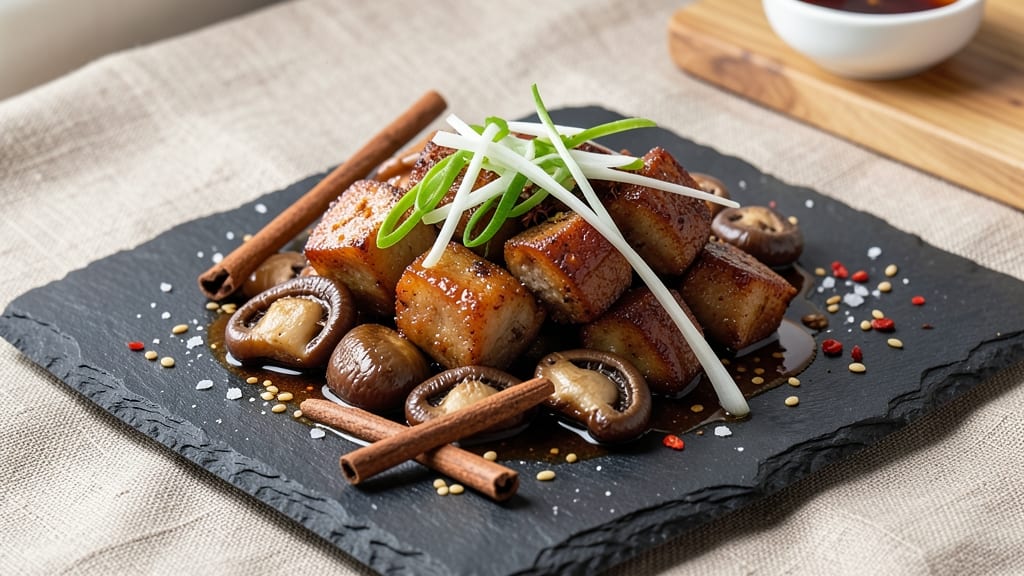
This Chinese pork kidney recipe transforms humble offal into five-spice crisp and silky bites that balance earthy richness with aromatic complexity. I first discovered this technique during my apprenticeship in Charleston, where Chef Chen taught me how to elevate humble ingredients through precise seasoning and cooking methods.
The secret lies in marinating the kidneys in a blend of soy, rice wine, and five-spice powder to tenderize while building layers of flavor.
What makes this dish special is the contrast between the crispy exterior and tender interior—a texture that's both satisfying and delicate.
The recipe begins with a quick sear to lock in juices, followed by a gentle braise that infuses the kidneys with the deep, warm notes of star anise, cinnamon, and cloves.
This method ensures every bite delivers that perfect balance of crisp edges and velvety centers, a hallmark of traditional Chinese offal preparation.
The result is a dish that's as impressive as it is flavorful, perfect for serving with steamed jasmine rice and a side of stir-fried bok choy. The five-spice marinade not only tenderizes the meat but also creates a fragrant aroma that fills your kitchen, making it impossible to resist.
Whether you're cooking for a special occasion or simply craving something different, this recipe delivers restaurant-quality results with minimal effort.
Pair with a cup of jasmine tea to complement the dish's aromatic profile, or serve alongside a light herbal infusion for a refreshing contrast. The technique is straightforward but requires attention to timing and temperature—key elements I'll guide you through in the instructions.
Let's create something extraordinary from this often-overlooked ingredient.
Ingredients for chinese pork kidney
Elevate humble offal with aromatic spices and precise technique for restaurant-quality crisp-silky texture.
| Ingredient | Amount | Notes |
|---|---|---|
| Pork Kidneys 🥩 | 1 ½ lb | Trimmed, veins removed, cut into 1-inch pieces |
| Light Soy Sauce 🥄 | ½ cup | For marinating and braising |
| Rice Wine 🍶 | ¼ cup | Dry sherry substitute if unavailable |
| Five-Spice Powder 🌶️ | 2 tbsp | Authentic blend for aromatic depth |
| Star Anise 🌿 | 2 whole | Crushed lightly for infusion |
| Cinnamon Stick 🌿 | 1 whole | For braising liquid |
| Cloves 🌿 | 4 whole | Lightly crushed |
| Garlic Cloves 🧄 | 6 cloves | Minced for marinade |
| Ginger Root 🌿 | 1 tbsp | Freshly grated, finely minced |
| Sesame Oil 🫒 | 1 tbsp | For finishing |
| Neutral Oil 🫒 | ½ cup | Peanut or vegetable oil for searing |
| Honey 🍯 | 1 tbsp | For glaze balance |
| Green Onions 🧅 | 4 whole | Sliced, for garnish |
| Salt 🧂 | 1 tsp | Kosher salt for seasoning |
| Black Pepper 🌶️ | ½ tsp | Freshly ground |
The kidneys are the star, so source them fresh from a trusted butcher—look for vibrant color and firm texture. At Whole Foods or Asian markets, ask for the freshest cut, ideally within 24 hours of slaughter. The five-spice powder should be authentic Chinese blend—avoid generic mixes that lack star anise or cloves. For the rice wine, Martini or E&J brands work well, but if unavailable, substitute with dry sherry. The star anise and cinnamon sticks should be whole and aromatic—test by crushing a piece; if it smells dull, replace it. Prep the kidneys by trimming all veins and fat, then cutting into even 1-inch pieces for consistent cooking.
No five-spice powder? Combine 1 tbsp each of ground cinnamon, cloves, fennel seeds, and Szechuan peppercorns for a close approximation. Short on rice wine? Dry white wine or even apple cider vinegar will work in a pinch, though the flavor profile shifts slightly. The honey can be swapped for maple syrup or agave, though honey adds a subtle floral note. For the oil, avocado or grapeseed oil are excellent neutral alternatives. If you can't find fresh ginger, powdered ginger at half the amount suffices, though fresh is preferred for brightness. The green onions should be fresh—dried won’t provide the same snap or flavor.
Marinated kidneys keep for up to 2 days in the fridge, though they're best used immediately for peak texture. Store in an airtight container with the marinade to prevent drying. The five-spice powder and whole spices retain potency for 6-12 months in a cool, dark place. For make-ahead convenience, blanch the kidneys in the marinade for 10 minutes before refrigerating, then finish cooking fresh. The dish reheats beautifully—simmer gently in a splash of water for 3-4 minutes to restore crispiness. Garnish with green onions just before serving to preserve their freshness.
Why You'll Love This Recipe
- Five-Spice Magic: That earthy, aromatic punch from five-spice powder and star anise transforms simple kidneys into something ridiculously flavorful. Honestly, the first time I tasted the warm cinnamon and clove notes cutting through the richness, I knew this wasn’t just another stir-fry—it was a flavor upgrade.
- One-Pan Wonder: Slice the kidneys, toss in soy sauce and rice wine, and let the wok do the work. Between us, this recipe is low-effort—no fancy techniques, no extra pots. Just sear, simmer, and serve while you clean up the same pan you cooked in.
- Leftover Goldmine: The sauce clings to every bite, so leftovers reheat like a dream—crispy edges intact, no soggy mess. I’ll be real: I’ve pulled this from the fridge for lunch three days in a row, and it’s still solid every time.
- Budget Powerhouse: Pork kidneys stretch further than you’d think, especially when paired with rice or noodles. Here’s what sold me—this feeds four for under $10, and the five-spice blend makes it feel like a special occasion without the price tag.
Step-by-step instructions for Chinese five-spice pork kidneys
Transform tough pork kidneys into tender, aromatic bites through precise technique and aromatic balance.
Prepare the Kidneys with Five-Spice Marinade
Rinse the 1.5 lb pork kidneys thoroughly under cold water and pat them completely dry with paper towels. This step is crucial—any moisture left on the surface will prevent proper searing. Using a sharp knife, trim away any visible veins and connective tissue, then cut the kidneys into 1-inch pieces. Place them in a large bowl.
In a separate small bowl, combine the 0.5 cup light soy sauce, 0.25 cup rice wine, 2 tbsp five-spice powder, 1 tsp salt, and 0.5 tsp black pepper. Whisk until fully dissolved. Pour this marinade over the kidney pieces, ensuring each piece is coated. Add the 6 cloves minced garlic and 1 tbsp finely minced ginger root, then toss gently to distribute evenly. Let the kidneys marinate at room temperature for 30 minutes—this allows the five-spice blend to penetrate and tenderize the meat.
Sear the Kidneys in Neutral Oil
Heat 0.5 cup neutral oil in a large, heavy-bottomed skillet over medium-high heat until the oil shimmers but doesn't smoke. Working in batches to avoid overcrowding, add the marinated kidney pieces in a single layer. Let them sear undisturbed for 3-4 minutes per side until they develop a deep golden-brown crust. The edges should look caramelized, and the pieces should release easily from the pan.
If the oil begins to smoke excessively, reduce the heat slightly—smoking oil can make the kidneys bitter. As you sear each batch, transfer the cooked kidneys to a plate and set them aside. You'll want to maintain a consistent medium-high heat throughout this process to ensure proper browning without burning.
Build the Aromatic Braising Liquid
In the same skillet, reduce the heat to medium and add the lightly crushed 2 whole star anise, 1 whole cinnamon stick, and 4 whole cloves. Let these spices toast in the oil for 1 minute until fragrant. Pour in 0.25 cup rice wine (the remaining amount) and scrape up any browned bits from the bottom of the pan—this releases flavor that would otherwise be lost.
Add 1 tbsp honey and let the mixture simmer for 2 minutes until slightly reduced. The honey will caramelize slightly, adding a subtle sweetness that balances the five-spice's complexity. Return all the seared kidney pieces to the skillet, spooning the aromatic liquid over them. Cover the skillet and reduce the heat to low, allowing the kidneys to braise for 15-20 minutes. They're done when a knife slides in easily and the meat is fork-tender.
Finish with Sesame Oil and Garnish
Remove the skillet from heat and let the kidneys rest for 5 minutes—this allows the juices to redistribute. Uncover the skillet and drizzle in 1 tbsp sesame oil, tossing gently to coat the kidneys evenly. The sesame oil adds a nutty depth and helps create a glossy finish. Taste the sauce and adjust seasoning if needed, adding a splash of light soy sauce or a pinch of salt as necessary.
Slice the 4 whole green onions into ¼-inch pieces and sprinkle them over the finished dish. Serve the kidneys immediately, garnished with additional green onions if desired. The contrast between the crispy exterior, silky interior, and aromatic sauce makes this dish truly exceptional. Pair with steamed jasmine rice to soak up every last bit of flavor.
Pro Tips For Making Chinese Pork Kidney
- SCORE THE KIDNEYS FIRST: Pork kidneys are like sponges—skip the soak, and they’ll turn to mush. Cut them open, scrape out the fat and connective tissue, then give them a 10-minute salt bath in cold water (1 tbsp salt per 500g). Rinse twice after—this isn’t just about cleaning, it’s about controlling the texture. I learned this the hard way when a batch turned out rubbery because I rushed the prep.
- STAR ANISE: CRUSH IT: Whole star anise just sits there like a decorative paperweight. Lightly crush it with the flat side of a knife or mortar before adding to the pot—this releases the aroma and lets it actually flavor the dish. Five-spice powder is fine, but if you’re using whole spices, don’t be lazy here. It’s the difference between a background note and a dish that smells like a spice market.
- DON’T BOIL THE KIDNEYS DRY: Start them in a screaming-hot wok with oil, then add rice wine and soy sauce immediately—this seals them in and keeps them tender. If you let them sit in the pan without liquid, they’ll toughen up faster than a frozen burrito left in your lunchbox. High heat for 2 minutes max, then lower it. Trust me, your future self will notice.
- SAVE TIME WITH A MARINADE SHORTCUT: Mix 2 tbsp light soy sauce, 1 tbsp rice wine, and 1 tsp five-spice powder in a bowl. Toss the scored kidneys in it for just 5 minutes before cooking—long enough to absorb flavor, short enough to avoid turning them to mush. I skip this when I’m lazy, but the dish is noticeably better when I don’t. (Yes, even if you’re impatient like me.)
Essential equipment for this recipe
Skillet Essentials
Start with a heavy-bottomed cast-iron skillet—like my Lodge 10.25-inch—for even heat distribution during searing and braising. Cast iron retains heat perfectly and creates that signature crispy crust.
If you don’t own one, a stainless steel skillet (like All-Clad) works well, though it requires slightly more attention to temperature control. Avoid nonstick—it can’t handle the high heat needed for proper browning. 🔥
Precision Tools
A sharp chef’s knife is non-negotiable for trimming kidneys and cutting them into even 1-inch pieces. I swear by my Wüsthof Classic 8-inch—it glides through connective tissue like butter.
For mincing garlic and ginger, a microplane saves time and ensures fine, even texture. A measuring spoon set (like OXO Good Grips) keeps your five-spice powder and honey measurements spot-on.
Heat Control Gear
Invest in a thermometer—I use an infrared laser thermometer (like Kizen) to monitor oil temperature without guesswork. For the braising step, a small saucepan with a tight-fitting lid (like Le Creuset) helps trap steam and tenderize the kidneys evenly.
A tongue with silicone tips (like OXO Good Grips) makes flipping those delicate pieces effortless without tearing.
Finishing Touches
Sesame oil deserves its own small squeeze bottle for precise drizzling—no need for a full bottle. A fine-mesh strainer (like OXO) helps remove whole spices after braising if you prefer a smoother sauce.
For garnish, a sharp pair of kitchen shears makes quick work of slicing green onions. Keep a small bowl nearby to toss the finished kidneys with sesame oil before serving.
Optional Upgrades
For a smoky depth, add a small cast-iron griddle to the process—sear the kidneys on the griddle first, then finish in the skillet. A mortar and pestle lets you crush whole spices fresh for maximum aroma.
If you love texture, grab a tweezers set to pick out any stray spices from the finished dish. These tools elevate the dish from good to restaurant-worthy. ✨
Nutrition facts
Frequently asked questions
Can I substitute pork kidneys with beef kidneys in this recipe?
While beef kidneys can work, they have a stronger flavor and firmer texture that may not yield the same silky result. If substituting, reduce the cooking time by 2-3 minutes during braising to avoid overcooking. The five-spice marinade will still work, but expect a slightly different mouthfeel.
What's the secret to getting that perfect crispy exterior?
The key is searing at medium-high heat in a hot, dry skillet with just enough oil to coat the bottom. Pat the kidneys completely dry before cooking—any moisture will prevent proper browning. Work in batches to avoid crowding, and let them sear undisturbed for 3-4 minutes per side until golden.
How do I know when the kidneys are fully cooked?
They're done when a knife slides in easily with no resistance and the meat is fork-tender. The exterior should be deep golden-brown, while the interior remains moist and velvety. Overcooking will make them tough, so aim for 15-20 minutes of braising time after searing.
Can I make this dish ahead of time?
Yes, but with a few adjustments. Marinate the kidneys up to 2 days ahead, then cook them fresh for best texture. For make-ahead convenience, blanch the marinated kidneys in the braising liquid for 10 minutes, then refrigerate. Reheat gently in a skillet with a splash of water for 3-4 minutes to restore crispiness.
What's the best way to serve these pork kidneys?
Pair with steamed jasmine rice to soak up the aromatic sauce, and serve alongside stir-fried bok choy or steamed greens. For a complete meal, add a side of scallion pancakes or pickled vegetables. The dish also pairs beautifully with a light herbal tea or dry white wine to complement the five-spice flavors.