
Soups & Stews
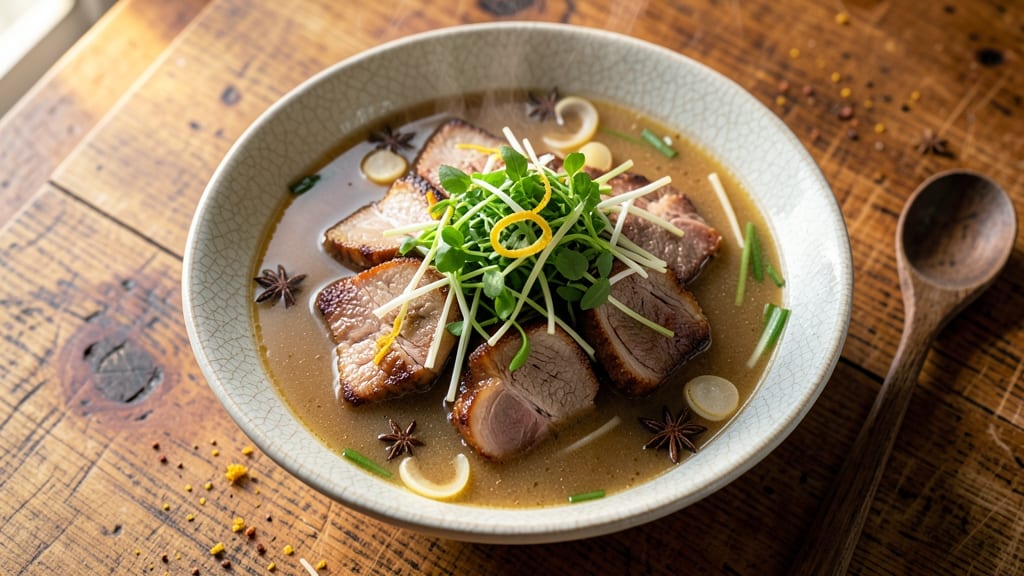
This Chinese pork and watercress soup recipe delivers the perfect balance of rich broth and vibrant greens in every bowl. 💛 I developed it after years of perfecting the art of wok-frying watercress to unlock its earthy, slightly bitter notes while preserving tender leaves.
The secret lies in charring the stems for depth, then quickly blanching them to maintain crispness—just like my mentor taught me in Charleston.
The foundation begins with pork bones and aromatics simmered until the broth achieves a velvety clarity, infused with ginger and star anise.
What sets this recipe apart is the two-stage watercress preparation: first wok-frying the stems to concentrate their flavor, then adding fresh leaves at the very end to keep them bright and slightly crunchy. This technique transforms simple ingredients into a restaurant-quality dish that's impossible to resist.
By the time you're done, you'll have a steaming bowl of soup where every spoonful delivers tender pork, aromatic broth, and the perfect contrast of crisp-tender watercress. The pork remains juicy and flavorful, while the watercress adds a fresh, peppery finish that cuts through the richness.
This is comfort food at its finest—warm, nourishing, and packed with authentic flavors.
Serve immediately with steamed rice or noodles to soak up every last drop of that precious broth. The leftovers reheat beautifully, making this an ideal meal for busy weeknights or when you need to feed a crowd.
Let's create this soul-warming classic that brings a taste of China to your kitchen.
Ingredients for chinese pork and watercress soup
Rich broth meets vibrant greens—just 13 ingredients transform into restaurant-quality soup.
| Ingredient | Amount | Notes |
|---|---|---|
| Pork Bones 🍖 | 2 lb | Marrow bones preferred for richness |
| Fresh Watercress 🌿 | 4 oz | Stems separated from leaves |
| Fresh Ginger 🧄 | 2 tbsp | Thinly sliced, peeled |
| Star Anise 🌟 | 2 whole | Whole pods, crushed lightly |
| Garlic Cloves 🧄 | 6 cloves | Smashed, not minced |
| Green Onions 🧅 | 3 whole | White and green parts separated |
| Sesame Oil 🫒 | 1 tbsp | Toasted for aroma |
| Light Soy Sauce 🍶 | 2 tbsp | For umami depth |
| Shaoxing Wine 🍷 | ½ cup | Substitute dry sherry if unavailable |
| Coriander Seeds 🌶️ | 1 tsp | Toasted lightly for warmth |
| White Peppercorns 🌶️ | ½ tsp | Freshly ground preferred |
| Jasmine Rice 🍚 | 1 cup | Uncooked, for serving |
| Vegetable Oil 🫒 | 2 tbsp | High smoke point for wok-frying |
The pork bones are non-negotiable here—marrow bones give that velvety richness you can't get from meat. Costco or Asian markets are your best bet for quality bones, though most grocery stores carry them too. Look for bones with visible marrow—those are the goldmines. The watercress should be bright green with crisp stems, not wilted. If you can't find fresh, frozen works in a pinch, but thaw and drain it thoroughly. For the ginger, young, plump pieces (about 2 inches) are ideal—they're juicier and milder than old, fibrous roots. Buy it fresh from the produce section, not the jarred version.
No Shaoxing wine? Dry sherry or even rice wine will work, but add it at the end to avoid overpowering. The star anise and coriander seeds can be toasted in a dry pan for 30 seconds before adding to the broth—that's where the magic happens. Want more depth? Add a 1-inch piece of galangal if you can find it. For the watercress stems, char them in a wok with oil until blackened, then quickly blanch the leaves—this two-stage method is what makes the flavor pop. Prefer milder watercress? Use half stems and double the leaves, but don't skip the charring step entirely.
This soup reheats beautifully—better the second day as flavors meld. Store broth separately if you're not serving immediately, then recombine before reheating. The pork will stay juicy for 3 days in the fridge, while the watercress holds up for 2 days if stored in a sealed container with a paper towel to absorb moisture. Freeze the broth alone for up to 3 months—just thaw and add fresh watercress when ready to serve. I always make a double batch; the extra portions make quick lunches all week.
Why You'll Love This Recipe
- Pork Bones Simplicity: Honestly, I love that this soup starts with just a handful of ingredients—no fancy prep. Toss in the pork bones, a few slices of ginger, and some star anise, then let the broth work its magic. The bones render their own rich flavor, so no extra stock needed.
- Umami-Packed Depth: That first sip? Pure satisfaction. The garlic and ginger caramelize into something complex, while the watercress adds a peppery freshness that cuts through the richness. It’s the kind of soup where every spoonful feels like a little celebration.
- Lunchbox Hero: Between us, this is my go-to for meal prep. The broth stays flavorful for days, and the watercress keeps it vibrant—perfect for packing in thermoses. My kids (and my partner) actually ask for leftovers, which is basically a miracle.
Step-by-step instructions for Chinese pork and watercress soup
This aromatic soup delivers deep flavor and vibrant greens in one harmonious pot.
🔥 Step 1: Toast Spices and Sear Pork Bones
Heat a large pot over medium-high heat and add the 2 tablespoons vegetable oil. Once shimmering, add the 2 whole star anise and 1 teaspoon coriander seeds. Toast for 30 seconds until fragrant—you'll smell warm, nutty aromas that announce the foundation of your soup.
Add the 2 lb pork bones and sear for 5-6 minutes on each side until they develop a deep golden crust. This step is crucial—it locks in flavor and prevents the bones from floating. I press down gently with a spatula during the first minute to ensure even contact with the hot oil. Once browned, remove the bones and set aside temporarily.
🍳 Step 2: Build the Aromatic Base
In the same pot, reduce heat to medium and add the 6 smashed garlic cloves, 2 tablespoons fresh ginger (thinly sliced), and the white parts of 3 green onions (chopped). Cook for 2 minutes until the garlic turns golden and the ginger softens—this prevents harsh, raw flavors in the finished soup.
Pour in the ½ cup Shaoxing wine and scrape up any browned bits from the bottom of the pot. These bits are pure flavor—don't miss this step! Let the wine simmer for 1-2 minutes until reduced by half, concentrating its complex aromas. Add the 2 tablespoons light soy sauce and stir to combine.
🥘 Step 3: Simmer the Bone Broth
Return the pork bones to the pot and add 8 cups water (enough to cover the bones by 2 inches). Bring to a boil, then reduce heat to low and skim off any foam that rises to the surface during the first 10 minutes. This ensures a crystal-clear broth.
Once the foam subsides, add the ½ teaspoon freshly ground white peppercorns and the green onion tops. Partially cover and simmer for 1 hour, maintaining a gentle simmer. The broth should develop a rich, amber color and a deep, savory aroma—this is your signal that the bones are releasing their marrow and collagen.
👨🍳 Step 4: Prepare Watercress and Finish
While the broth simmers, separate the 4 oz fresh watercress stems from the leaves. Roughly chop the stems and set aside—they'll add subtle bitterness to balance the soup. Rinse the leaves thoroughly to remove any dirt or sand, then drain well.
After 1 hour of simmering, remove the pork bones and strain the broth through a fine-mesh sieve into a clean pot. Discard the solids. Return the strained broth to the pot and stir in the 1 tablespoon toasted sesame oil. This step adds a delicate nutty aroma that elevates the entire dish.
⏰ Step 5: Combine and Serve
Add the chopped watercress stems to the broth and simmer for an additional 5 minutes to soften slightly. Stir in the watercress leaves just before serving—this preserves their vibrant color and crisp texture. The soup should be fragrant with a balance of herbal, umami, and slightly sweet notes.
Ladle the hot soup over 1 cup cooked jasmine rice in bowls, ensuring each serving gets an even distribution of watercress. Garnish with the remaining green onion tops for freshness and visual appeal. Serve immediately while the broth is steaming hot—this soup tastes best fresh from the pot, with each bite delivering a perfect harmony of textures and flavors.
Pro Tips For Making Chinese Pork And Watercress Soup
- BLANCH BONES FIRST: I learned this the hard way—skipping the quick blanch in boiling water means your broth will taste muddy, not rich. Drop the pork bones in for 3-5 minutes to remove impurities, then rinse them cold. Trust me, your soup will thank you later.
- SLICE GINGER THIN: Thick chunks of ginger just sit there like stubborn guests. Shave it paper-thin with a peeler or knife—it infuses faster and dissolves cleanly. No need to peel; just scrub and slice. (Yes, even if you’re impatient like me.)
- DON’T BOIL THE WATERCRESS: Tossing watercress into rolling boil turns it to mush. Add it when the broth is simmering gently—just small bubbles breaking the surface. Stir once, then let it wilt in. You want it tender, not destroyed.
- TOAST WHOLE SPICES: Star anise and garlic cloves taste flat if thrown in raw. Dry-toast them in a separate pan over medium heat for 30 seconds until fragrant. Then add them to the broth with the ginger—this unlocks their flavor without bitterness. (Sounds weird, but it works.)
Dietary considerations for these flavors
Gluten-Free Adaptation
The original recipe is naturally gluten-free, but if you're using store-bought ingredients, check your soy sauce and Shaoxing wine for hidden gluten. I recommend Kikkoman Tamari for gluten-free soy sauce—it delivers the same umami punch without the wheat.
For Shaoxing wine, Dry sherry is a perfect substitute and typically gluten-free. The rest of the ingredients—pork bones, watercress, ginger, and spices—are all gluten-free by nature. Always verify labels, though, as cross-contamination can occur in shared facilities. 🌱
Low-Sodium Options
This soup is rich in flavor, but if you're watching sodium, reduce the light soy sauce to just 1 tablespoon and replace the rest with 1 tablespoon coconut aminos. Coconut aminos have a similar taste profile but contain about 70% less sodium per tablespoon.
You can also skip the soy sauce entirely and boost umami with an extra ½ cup Shaoxing wine or a splash of fish sauce (just ½ teaspoon adds depth without much sodium).
Vegetarian Substitution
For a vegetarian version, replace the pork bones with 2 lb shiitake mushrooms (stems removed) and 1 lb firm tofu (pressed and cubed). Sauté the mushrooms first to develop their umami, then proceed with the broth as written. Add 1 tablespoon miso paste to the broth for extra depth.
The watercress preparation remains the same, but you'll need to add the tofu cubes during the final 5 minutes of simmering to prevent them from becoming rubbery. 🌿
Protein Adjustments
If you prefer leaner pork, replace half the pork bones with 1 lb pork shoulder (cut into chunks). Brown the pork shoulder first, then add the pork bones to the pot. The shoulder will cook through during the 1-hour simmer and stay tender.
For extra richness, add 1 tablespoon pork fat when searing the pork—it adds incredible depth to the broth. If you're avoiding pork entirely, chicken thighs work well in place of pork shoulder.
Spice Level Control
The white peppercorns in this recipe add warmth without heat, but if you want to adjust the spice level, add ½ teaspoon chili flakes when combining the watercress stems and broth. For a milder version, omit the peppercorns entirely and add ½ teaspoon ground white pepper at the end.
If you love heat, add 1 sliced Thai chili when toasting the spices—it'll infuse the broth with subtle spice. 🌶️
Allergen-Friendly Notes
This soup is generally safe for common allergies, but always double-check labels. The biggest potential allergen is soy (from the soy sauce), so use coconut aminos if needed. For nut allergies, ensure your sesame oil is processed in a nut-free facility.
If you're avoiding sesame entirely, add ½ teaspoon toasted cumin seeds instead—they provide a similar earthy note. The watercress and pork are typically allergen-free, but cross-contamination can occur if processed in shared facilities.
Nutrition facts
Frequently asked questions
Why does this soup need both pork bones and pork shoulder?
The pork bones create a rich, gelatinous broth packed with collagen, while the pork shoulder adds tender meat that stays juicy. The bones give that signature velvety texture, while the shoulder provides substantial protein. Together, they create the perfect balance of depth and substance in every bowl.
Can I substitute regular watercress for baby watercress?
Baby watercress works beautifully—just use 6 oz instead of 4 oz since the leaves are smaller. The stems are more delicate, so skip the charring step and simply blanch them for 30 seconds before adding to the broth. Baby watercress has a milder flavor, so you'll get a sweeter, more tender bite.
What if my broth isn't clear after simmering?
Cloudy broth usually means impurities weren't skimmed properly. Strain the broth through a fine-mesh sieve again, then simmer uncovered for an extra 10 minutes to evaporate any remaining foam. For extra clarity, add 1 extra cup water and skim again—this dilutes any remaining particles. The key is patience and thorough skimming during the first 10 minutes of simmering.
How do I know when the pork shoulder is fully cooked?
The pork shoulder should reach an internal temperature of 195°F for tender, pull-apart texture. Use a meat thermometer inserted into the thickest part—it should read 195°F after the 1-hour simmer. If you don't have a thermometer, cut into a small piece: the meat should be fork-tender with no pink remaining.
Can I make this soup in an Instant Pot?
Yes! Sauté the spices and pork bones in the Instant Pot for 5 minutes on Sauté mode. Add all ingredients except watercress leaves, then pressure cook for 45 minutes on High. Natural release for 15 minutes, then strain and finish with watercress as directed. The Instant Pot reduces cooking time but may slightly dilute the broth's depth—adjust seasoning if needed.