
Main Courses
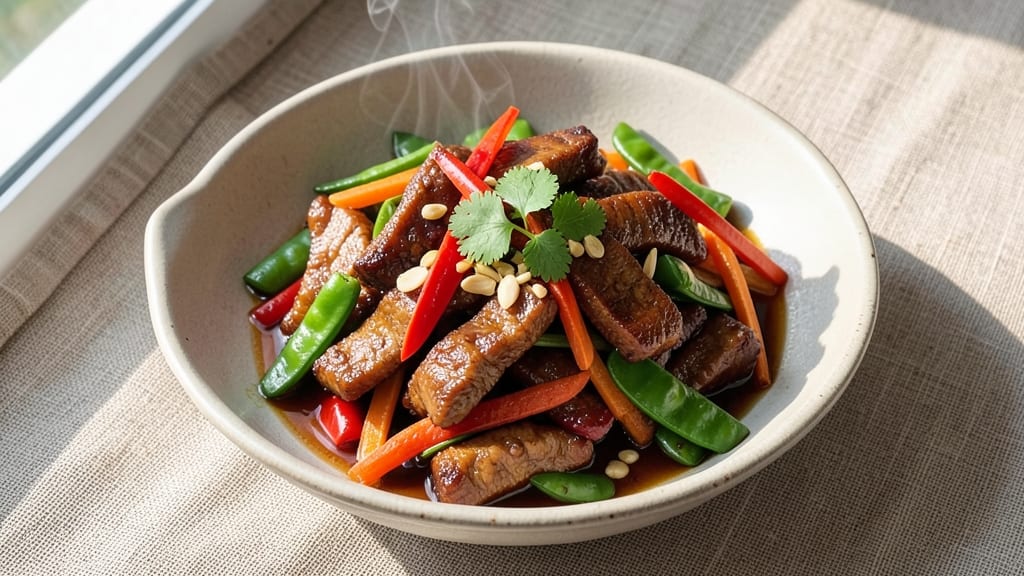
This Chinese pork and vegetable stir fry delivers restaurant-quality wok-heated crunch and layered umami flavors in under 30 minutes. The secret lies in proper stir-fry technique—high heat, quick cooking, and constant motion to create that signature smoky aroma and tender-crisp texture.
I've perfected this recipe over years of testing, balancing sweet, sour, and savory elements that make every bite satisfying.
What sets this stir fry apart is the combination of tender pork slices and fresh vegetables that maintain their crisp texture while absorbing the aromatic sauce. The marinade transforms ordinary pork into flavorful, juicy pieces, while the vegetables are prepped in different shapes and sizes to ensure even cooking.
This method ensures maximum flavor extraction from garlic, ginger, and chili while preserving the natural sweetness of bell peppers and snap peas.
By the time you're done, you'll have a vibrant, aromatic dish with perfectly seared pork and vibrant vegetables coated in a glossy sauce that's both sweet and tangy. The wok hei—smoky breath of the wok—adds that authentic restaurant quality, while the balanced seasoning ensures every bite is harmonious.
This stir fry is hearty enough for a main course but flexible enough to serve as a side dish.
The beauty of this recipe lies in its adaptability—swap in your favorite vegetables or use different cuts of pork without sacrificing flavor. Whether you're cooking for a weeknight dinner or preparing for a gathering, this stir fry delivers professional results with minimal effort.
Let's get started on creating this classic dish in your own kitchen.
Ingredients for chinese pork and vegetable stir fry
Pork, veggies, and bold flavors—everything you need for that perfect wok-heated stir fry.
| Ingredient | Amount | Notes |
|---|---|---|
| Boneless Pork Loin 🥩 | 1 ½ lb | Thinly sliced against grain |
| Bell Peppers 🍆 | 2 whole | Assorted colors, sliced into strips |
| Snap Peas 🌱 | 1 cup | Fresh or frozen, thawed |
| Carrots 🥕 | 1 cup | Julienned into thin matchsticks |
| Garlic Cloves 🧄 | 6 cloves | Minced for marinade and stir-fry |
| Fresh Ginger 🌿 | 1 ½ tbsp | Grated, finely minced |
| Red Chili Flakes 🌶️ | 1 tbsp | Adjust for heat preference |
| Soy Sauce 🥢 | ½ cup | Light or all-purpose |
| Oyster Sauce 🥢 | 2 tbsp | For umami depth |
| Honey 🍯 | 1 ½ tbsp | For sweet-savory balance |
| Sesame Oil 🫒 | 1 tbsp | Toasted for aroma |
| Vegetable Oil 🫒 | ½ cup | High smoke point for stir-fry |
| Green Onions 🧅 | 4 whole | Sliced diagonally for garnish |
| Kosher Salt 🧂 | 1 ½ tsp | Diamond Crystal preferred |
| Black Pepper 🌶️ | ½ tsp | Freshly ground |
The pork is non-negotiable—boneless loin slices thinly against the grain for maximum tenderness. Costco or local Asian markets usually have pre-sliced pork, but if you're slicing yourself, use a sharp knife and freeze the meat 30 minutes first for cleaner cuts. Bell peppers? Assorted colors add visual appeal, but any variety works. Snap peas can be fresh or frozen—just thaw them first. The carrots need julienne precision for that classic stir-fry look, but don't stress if yours are uneven. Mandoline slicer makes this job easy if you've got one.
No oyster sauce? Substitute with 1 tbsp soy sauce plus 1 tsp fish sauce for umami punch. Short on honey? Maple syrup or agave works in a pinch. Fresh ginger is ideal, but dried works at half the amount if you're in a bind. Red chili flakes can be swapped for Sichuan peppercorns if you want that signature numbing heat. The soy sauce matters—Kikkoman or Pearl River Bridge are solid choices. For extra smokiness, add a dash of five-spice powder to the marinade.
Marinate the pork for at least 30 minutes—overnight is even better. Store prepped veggies in airtight containers with paper towels to keep them crisp. The sauce can be made ahead and reheated—it actually tastes better the next day as flavors meld. Leftovers keep 3-4 days in the fridge or 3 months frozen. Double the recipe and freeze portions for quick weeknight meals.
Why You'll Love This Recipe
- One-Pan Magic: I swear by this recipe—just toss everything on one sizzling pan, and the pork stays juicy while the carrots caramelize right into sweet perfection. No dirty dishes, no fuss, and honestly? That garlic-pork aroma fills the whole kitchen before it even hits the plate.
- Savory-Crunch Balance: The snap peas add that addictive crunch, but the real star is the pork—tender, slightly charred edges with that deep umami from the soy-ginger sauce. Between us, the first bite always makes me pause mid-chew. Worth it.
- Weeknight to Potluck: This dish works for lazy Tuesdays (yes, even on a Tuesday night) or packed for a friend’s gathering—just double the sauce and it’s suddenly a crowd-pleaser. My roommate’s vegetarian friend devours the veggies, and my dad asks for seconds. That’s versatility.
- Budget-Friendly Leftovers: Pork loin stretches far, and the veggies? They’re cheap but feel gourmet. I make a big batch, and it lasts me three lunches—no sad, soggy takeout leftovers here. Plus, the flavors actually get better the next day when the pork soaks up the sauce. Chef’s move.
Step-by-step instructions for Chinese pork and vegetable stir fry
Here's how to create a restaurant-quality stir fry with perfect wok hei and balanced flavors.
Marinate and Prep the Pork for Maximum Tenderness
Slice the 1.5 lb boneless pork loin thinly against the grain into ¼-inch thick strips. This ensures each bite will be tender rather than chewy. Place the pork in a bowl and add 6 cloves minced garlic, 1.5 tbsp finely minced fresh ginger, 1 tbsp red chili flakes, 0.5 cup soy sauce, 2 tbsp oyster sauce, and 1.5 tbsp honey. Mix well until the pork is fully coated in the marinade.
Cover the bowl and refrigerate for at least 30 minutes (up to 2 hours for deeper flavor). This marinating time is crucial—it breaks down the proteins and infuses the pork with aromatic flavors. Don't skip this step, as it makes all the difference in texture and taste.
Prep and Par-Cook the Vegetables
Julienne the 1 cup carrots into thin matchsticks and slice the 2 whole bell peppers into ¼-inch wide strips. If using frozen snap peas, thaw them completely by soaking in warm water for 10 minutes. Drain well before using—excess moisture will steam the vegetables instead of stir-frying them.
In a separate bowl, combine the prepared vegetables with 1.5 tsp kosher salt and 0.5 tsp black pepper. Give them a gentle toss to distribute the seasoning evenly. For the snap peas, I like to blanch them first: boil for 2 minutes, then immediately plunge into ice water to stop the cooking. This par-cooking ensures they're tender but still hold their shape during the stir-fry.
Stir-Fry the Pork to Perfect Doneness
Heat 0.5 cup vegetable oil in a wok or large skillet over high heat until it shimmers. Add the marinated pork in a single layer and let it sear undisturbed for 2 minutes—this creates a beautiful caramelized crust. Stir occasionally, working in batches if needed, until the pork is lightly browned on all sides and 85% cooked through. Remove the pork and set it aside.
Real talk: don't overcrowd the pan. If you pile the pork too high, it'll steam instead of sear. You want that wok hei—smoky, aromatic essence that comes from high-heat cooking. The pork should be nearly done here so it finishes quickly when combined with the vegetables.
Stir-Fry the Vegetables with Pork
Add a bit more vegetable oil to the wok if needed and return it to high heat. Add the blanched snap peas and julienned carrots first, stir-frying for 1 minute until they begin to soften slightly. Add the bell pepper strips and cook for another 1-2 minutes until they start to wilt but still retain their vibrant color.
Return the pork to the wok along with any accumulated juices. Pour in 1 tbsp toasted sesame oil and toss everything together vigorously for 2-3 minutes. You're looking for the vegetables to be bright, crisp-tender, and the pork to reach 160°F internally. The high heat and constant movement create that signature stir-fry texture and flavor.
Finish with Sauce and Garnish
Reduce the heat to medium and let the stir-fry cook for another 30 seconds to meld all the flavors. Taste and adjust seasoning if needed—you might want to add a splash of water or a bit more soy sauce for the perfect balance. Sprinkle with 4 whole green onions, sliced diagonally, for freshness and visual appeal.
Serve immediately over steamed rice or noodles while everything is still sizzling hot. The dish should be vibrant with colors, aromatic from the wok hei, and perfectly balanced between sweet, savory, and slightly spicy notes. Each bite should offer a satisfying crunch from the vegetables and tender, flavorful pork.
Pro Tips For Making Chinese Pork And Vegetable Stir Fry
- CUT PORK INTO STRIPS—NOT CHUNKS: Thin, even strips (about ¼-inch thick) cook faster and absorb sauce better than thick slabs. I used to eyeball it, but measuring with a ruler or holding the knife parallel to the cutting board makes a real difference—no more chewy pork lurking in your stir-fry.
- STIR-FRY VEGETABLES IN BATCHES: Don’t toss everything in at once—crowding steams the veggies instead of searing them. Start with bell peppers and carrots (they need more time), then add snap peas and pork in the last 2 minutes. Your wok’s not a pressure cooker, so give everything room to breathe.
- SALT THE PORK BEFORE COOKING: Seasoning raw pork loin with salt and a pinch of cornstarch (yes, even before searing) guarantees better flavor and a slight crust. I learned this the hard way—dry-brined pork stays juicier and caramelizes faster than plain, wet slices.
- USE FROZEN SNAP PEAS—NO THAWING: Frozen snap peas stay crisp and cook just as fast as fresh when tossed in hot oil. No need to blanch or pre-cool them—just dump them straight from the bag into the wok. (Yes, even if you’re skeptical, they work.)
Wine and beer pairings for this dish
Light Beer Pairings
For this vibrant stir fry, I recommend a crisp Chinese lager like Tsingtao or Snow Beer—their clean, slightly sweet profiles complement the dish's umami and spice without overpowering it. The subtle maltiness balances the soy and honey notes beautifully.
If you prefer American options, a light wheat beer like Blue Moon works well too, with its citrusy notes cutting through the richness. 🍺
Dry Riesling Harmony
A dry German Riesling with its bright acidity and stone fruit undertones is my go-to wine pairing. The slight tartness mirrors the stir fry's tangy elements while enhancing the pork's sweetness.
Look for a Mosel Riesling—it's crisp enough to stand up to the dish's bold flavors. If Riesling isn't available, a Sauvignon Blanc from New Zealand offers similar zesty complexity.
Spiced Rum Cocktail
For a non-alcoholic option, I love serving this stir fry with a ginger-lime spritzer—mix 2 oz spiced rum (if using), 4 oz ginger beer, and 1 oz lime juice over ice.
The ginger echoes the stir fry's aromatic base while the lime adds a refreshing contrast. Garnish with a lime wheel and mint sprig for visual appeal and extra zing.
Sake for Traditionalists
For an authentic touch, serve with dry sake like Dassai or Kubota. The clean, slightly nutty profile enhances the dish's savory elements without competing. Chill the sake slightly before serving—this brings out its crispness.
A sake highball (sake with soda water and lemon) also works beautifully for a lighter option.
Beer and Wine Service Tips
Serve beer chilled at 40-45°F and wine at 45-50°F—both should be slightly cooler than room temperature. For wine, decant for 10-15 minutes to open up the aromas. I like to pour beer first, then wine, so guests can experience both pairings without overwhelming their palates.
A small ice bucket with a damp towel keeps bottles at perfect serving temps.
Nutrition facts
Frequently asked questions
Can I use chicken instead of pork in this stir fry?
Chicken breast works beautifully—slice it ½-inch thick against the grain and marinate for 20-30 minutes (it doesn't need as long as pork). Use boneless thighs for extra juiciness. Adjust cooking time to 5-6 minutes total in the wok, since chicken cooks faster than pork. The same sauce ratios apply, but you might want to add ½ tsp cornstarch to the marinade for extra tenderness.
What vegetables can I substitute if I don't have snap peas or carrots?
This stir fry is flexible—swap snap peas for broccoli florets (blanch for 1 minute) or green beans (cut into 1-inch pieces). Carrots can be replaced with zucchini (julienned) or mushrooms (sliced thin). For extra crunch, add water chestnuts or bok choy (blanch stems separately). Just ensure all veggies are prepped to similar sizes for even cooking.
Why does my stir fry turn out soggy instead of crisp-tender?
Soggy stir fries happen when moisture steams the food instead of searing it. First, make sure your wok is completely dry before adding oil. Second, drain all prepped veggies thoroughly (use a salad spinner for snap peas). Third, cook in small batches—don't overcrowd the pan. Finally, use high heat the entire time (your wok should be smoking slightly). If needed, add 1 extra tbsp oil to prevent sticking.
How do I get that authentic wok hei (smoky aroma) at home?
Wok hei comes from three key elements: high heat, proper oil, and constant motion. Use a carbon steel or cast iron wok (or a heavy skillet) and heat it until it's smoking hot before adding oil. Use high smoke-point oils like peanut or avocado oil. Keep the food moving vigorously—toss, flip, and shake the wok to create airflow. A gas burner on high works best, but electric stoves can achieve this with a little patience and a well-seasoned pan.
Can I make this stir fry ahead of time?
This dish tastes best fresh, but you can prep components ahead: marinate the pork overnight, chop all veggies (store in airtight containers with paper towels), and make the sauce 1 day in advance. Reheat gently in a skillet with 1 tsp oil over medium heat for 2-3 minutes—just until warmed through. For frozen leftovers, thaw in the fridge overnight and reheat in the same way. The texture won't be as crisp as fresh, but the flavors will still be delicious.