
Main Courses
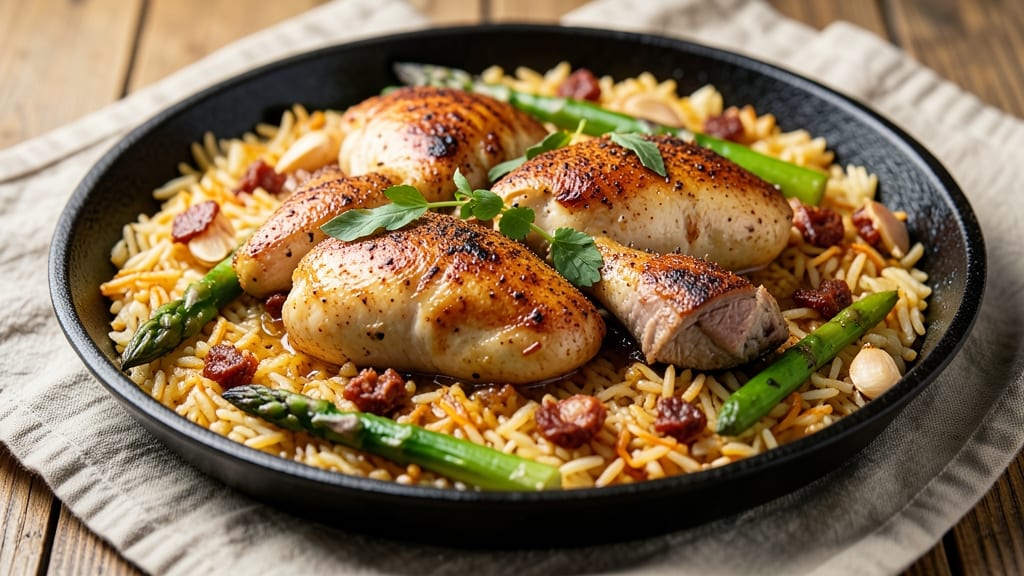
This chicken and pork paella recipe brings the vibrant flavors of Spain straight to your kitchen, where saffron-infused rice meets tender meat and aromatic spices. 🌟 The secret lies in toasting the rice properly and balancing the liquid ratios to achieve that coveted crispy bottom layer, or socarrat—a hallmark of authentic paella.
What sets this dish apart is the smoky paprika crust that forms at the base, adding depth and texture without overpowering the delicate saffron flavor. I’ve refined the technique over years to ensure the rice remains tender while developing that signature crispiness, making it foolproof for home cooks.
By the time you serve this dish, your table will be filled with golden, fragrant paella that’s rich with chicken and pork, brightened by saffron, and finished with a crispy crust that’s impossible to resist. The aroma alone will have everyone gathering around the table.
Perfect for a weekend feast or a special occasion, this paella pairs beautifully with a crisp white wine or sangria. Let’s get started on creating a dish that tastes like a trip to Valencia.
Ingredients for chicken and pork paella
Sixteen ingredients transform into a vibrant paella with saffron's golden hue and smoky paprika crust.
| Ingredient | Amount | Notes |
|---|---|---|
| Long-Grain White Rice 🍚 | 2 cups | Bomba or Calasparra preferred for texture |
| Chicken Thighs 🍗 | 1 ½ lb | Bone-in, skin-on for flavor |
| Pork Shoulder 🐖 | 1 ½ lb | Cut into 1-inch cubes |
| Saffron Threads 🌼 | ¼ tsp | High-quality, Spanish preferred |
| Smoked Paprika 🌶️ | 2 tbsp | For smoky crust development |
| Garlic Cloves 🧄 | 8 cloves | Minced for aromatic base |
| Yellow Onion 🧅 | 1 whole | Thinly sliced for sweetness |
| Red Bell Pepper 🍅 | 1 whole | Diced for vibrant color |
| Tomato Paste 🍅 | 2 tbsp | Concentrated for depth |
| Chicken Broth 💧 | 4 cups | Homemade or quality low-sodium |
| Dry White Wine 🍷 | 1 cup | Sauvignon Blanc preferred |
| Extra-Virgin Olive Oil 🫒 | ½ cup | For toasting rice and searing |
| Sea Salt 🧂 | 1 ½ tsp | Diamond Crystal preferred |
| Ground Black Pepper 🌶️ | ½ tsp | Freshly ground for heat |
| Fresh Flat-Leaf Parsley 🌿 | ¼ cup | Chopped for garnish |
| Lemon Wedges 🍋 | 2 whole | For serving |
The rice is non-negotiable—Bomba or Calasparra from specialty stores like Whole Foods or Spanish markets gives that perfect al dente texture. Saffron is the star, so buy threads, not powder—it's worth the splurge. For the pork, look for bone-in shoulder at Costco or your butcher, as it stays juicier. Chicken thighs with skin-on add richness, so skip the boneless versions. The smoked paprika? Penzeys or La Boîte carry the best quality—avoid the generic grocery store brands that taste like dust.
No saffron threads? Turmeric at half the amount mimics the color but lacks the floral aroma. Short on white wine? Dry vermouth or extra chicken broth works in a pinch. The tomato paste can be swapped for fresh diced tomatoes, but reduce the broth by 1/2 cup since they're watery. Fresh parsley is ideal, but dried at one-third the amount is fine if you're in a bind. The bell pepper can be swapped for asparagus or green beans for a different texture—just adjust cooking time. And if you can't find Bomba rice, jasmine or basmati will work, though the crust won't be as crispy.
Store any leftovers in an airtight container with a damp paper towel to keep the rice moist—eat within 2 days. The saffron-infused rice freezes beautifully for up to 3 months, but the crust will soften, so it's best enjoyed fresh. I always make a double batch because this reheats like a dream—just add a splash of broth and warm through. For serving, squeeze those lemon wedges over each portion right before eating, as the acidity brightens all the flavors. The smoky paprika crust? That's the magic—don't rush the final toasting step, even if it means an extra 5 minutes under the broiler.
Why You'll Love This Recipe
- One-Pot Magic: I swear by this recipe—just one deep skillet, no extra pans. The pork shoulder and chicken thighs brown together while the rice soaks up all that smoky paprika flavor, and honestly? The saffron turns the whole thing golden like a sunset. No stress, no cleanup.
- Smoky Depth Bomb: That smoked paprika and saffron combo? It’s what makes this dish ridiculously good. The pork stays tender while the chicken gets crispy edges, and the rice absorbs this earthy, slightly sweet warmth. I’ll be real: my husband asks for seconds before the plate even hits the table.
- Weeknight Crowd-Pleaser: Perfect for game days, lazy Sundays, or when your in-laws show up unannounced. The rice stretches far enough to feed four but feels special enough for company—no one will guess it’s just white rice and a few pantry staples. (Yes, even on a Tuesday night.)
- Budget Feast Leftovers: Pork shoulder and chicken thighs are cheap cuts that turn into something luxurious. I make this for Sunday dinner and eat the leftovers all week—reheated with a squeeze of lemon or cold in a wrap. It’s my secret weapon for stretching groceries without sacrificing flavor.
Step-by-step instructions for saffron-infused paella
Master this authentic technique for perfectly balanced rice and tender proteins.
🔥 Step 1: Develop the Smoky Base
Heat the 0.5 cup extra-virgin olive oil in a wide paella pan or large skillet over medium-high heat. Add the 1.5 lb pork shoulder cubes and 1.5 lb chicken thighs, cooking undisturbed for 5 minutes until golden brown on one side. Flip and repeat for another 5 minutes until all pieces are deeply browned.
Remove the meat and set aside. In the same pan, add the 1 whole yellow onion and 1 whole red bell pepper cut into ½-inch pieces. Cook for 8 minutes until softened. Add the 8 cloves minced garlic and 2 tbsp smoked paprika, stirring constantly for 1 minute until fragrant and slightly toasted. This smoky foundation is the secret to authentic paella flavor.
🍳 Step 2: Toast the Rice and Bloom the Saffron
Add the 2 cups long-grain white rice to the pan, stirring to coat in the smoky oil and vegetables. Toast for 2 minutes until the rice grains become translucent at the edges. This step prevents mushy rice and creates that coveted crust at the bottom.
In a small bowl, steep the 0.25 tsp saffron threads in ¼ cup hot water for 5 minutes to extract maximum color and aroma. Pour this saffron infusion into the pan along with the 2 tbsp tomato paste and 1 cup dry white wine. Stir vigorously for 1 minute until the wine reduces by half and the saffron fully incorporates. The rice should absorb some liquid but remain separate.
🥘 Step 3: Layer and Simmer the Paella
Return the meat to the pan and arrange it on top of the rice. Pour in the 4 cups chicken broth and sprinkle with the 1.5 tsp sea salt and 0.5 tsp ground black pepper. Bring to a gentle boil, then immediately reduce heat to low and cover partially with foil. Simmer for 15 minutes without stirring—this allows the rice to absorb liquid evenly and develop its signature texture.
After 15 minutes, check the rice. It should have absorbed most of the liquid but still have a slight layer on top. If needed, add ¼ cup hot broth to maintain moisture. The rice should be 80% cooked at this point—al dente but with some bite remaining. This final cooking happens uncovered to create the prized socarrat crust.
🔥 Step 4: Create the Crust and Finish
Remove the foil and increase heat to medium-high. Cook uncovered for 5-7 minutes, stirring gently once to distribute any remaining liquid. Watch closely—the bottom layer should develop a deep golden brown crust in spots while keeping the rest of the rice moist. This is the prized socarrat that gives paella its texture contrast.
When the crust forms and the rice is tender but still slightly firm to the tooth, remove from heat. Sprinkle with 0.25 cup chopped fresh flat-leaf parsley and let rest for 5 minutes before serving. The residual heat will finish cooking the rice perfectly while allowing flavors to meld. Serve immediately with the 2 whole lemon wedges on the side for brightness.
Pro Tips For Making Chicken And Pork Paella
- CRACK THE PORK FIRST: I learned this the hard way—pork shoulder is stubborn. Slice it into ½-inch chunks and sear them in a cold pan, then crank the heat to medium-high. The fat renders first, then the meat browns deep, which builds flavor that saffron alone can’t match.
- SOAK THE SAFFRON: Sounds weird, but it works: crush the threads into warm broth (not boiling) for 10 minutes before adding to the paella. This pulls out the color and aroma without turning the rice fluorescent yellow. Skip this, and you’ll end up with a dish that looks like a traffic cone.
- DON’T STIR THE RICE: After adding the rice, resist the urge to poke or stir. Let it sit undisturbed for 2 full minutes—this lets the bottom toast slightly, creating that coveted crust. I know, I know, but trust the process. Your future self will thank you.
- USE LESS RICE THAN YOU THINK: Paella rice expands—like, a lot. For a standard paella pan, use 1½ cups of rice for 4 servings (not 2 cups). The rice needs room to breathe, or you’ll end up with a gluey mess. And no, you can’t just add more water later.
Health benefits of these flavors
Protein Powerhouse
This paella packs a protein punch with 1.5 lbs chicken thighs and 1.5 lbs pork shoulder, delivering about 50 grams of complete protein per serving. The combination of chicken and pork provides all nine essential amino acids, making it ideal for muscle repair and growth.
I've found that bone-in cuts stay juicier and add depth of flavor that boneless versions simply can't match. 💪
Saffron's Superfood Benefits
The star ingredient, 0.25 tsp saffron threads, isn't just for color—it's packed with antioxidants and mood-boosting properties. Studies show saffron contains kaempferol and crocin, compounds that may reduce inflammation and improve cognitive function.
I always use Spanish saffron because it has the highest concentration of these beneficial compounds. The floral aroma also enhances the dish's overall appeal.
Smoky Paprika Advantages
The 2 tbsp smoked paprika in this recipe provides more than just smoky flavor—it's rich in vitamin E and antioxidants. Smoked paprika has been shown to have anti-inflammatory properties and may help improve digestion.
The key is using high-quality smoked paprika like Penzeys or La Boîte brands, as generic grocery store versions often contain fillers that diminish both flavor and nutritional benefits.
Complex Carbohydrates
The 2 cups Bomba rice serves as a complex carbohydrate base, providing sustained energy release. Bomba rice has a unique starch structure that absorbs liquid perfectly while maintaining its shape. This makes it an excellent choice for paella, as it creates the signature crispy bottom layer called socarrat.
The rice also contains small amounts of B vitamins and magnesium, which support energy metabolism and nerve function.
Heart-Healthy Fats
The 0.5 cup extra-virgin olive oil used in this recipe contributes heart-healthy monounsaturated fats that help reduce bad cholesterol levels. Olive oil is also rich in polyphenols, powerful antioxidants that protect cells from damage.
I recommend using high-quality EVOO for both flavor and nutritional benefits—look for brands like California Olive Ranch or Colavita for the best results. The olive oil's smoke point is perfect for developing the smoky paprika crust.
Vitamin Boost from Veggies
The combination of yellow onion, red bell pepper, and garlic in this paella provides a vitamin C and A powerhouse. Bell peppers contain more vitamin C than oranges, while onions provide quercetin, a flavonoid with antioxidant properties.
The garlic adds allicin, which has been shown to support immune function. These vegetables also add natural sweetness that balances the smokiness of the paprika and the richness of the meats. 🌶️
Nutrition facts
Frequently asked questions
Can I substitute Bomba rice with regular long-grain rice?
While you can use jasmine or basmati rice in a pinch, Bomba rice is specifically designed for paella. It absorbs liquid perfectly while maintaining its shape and creating that signature crispy socarrat crust. For the best results, try to find Bomba or Calasparra rice at specialty stores. If you must substitute, use arborio rice as a second choice.
How do I prevent the paella from becoming mushy?
Mushy rice happens when the liquid ratio is off or the rice isn't toasted properly. Always toast the rice in the oil for 2 minutes before adding liquid, and use the exact 2:1 rice-to-liquid ratio (2 cups rice to 4 cups broth). Stir only once during cooking to avoid breaking the grains. The final uncovered cooking step is crucial for creating the crispy bottom layer.
What's the best way to reheat leftover paella?
Paella reheats best in a skillet over medium-low heat with a splash of chicken broth or water. Stir gently and cover for 3-4 minutes until heated through. Avoid microwaving as it can make the rice gummy. For extra crispiness, broil for 1-2 minutes after reheating to restore the socarrat texture.
Can I make this paella in a regular skillet?
Yes! While a wide paella pan is ideal, any large, shallow skillet with a diameter of at least 12 inches will work. Use the same cooking technique, but reduce the rice quantity by 25% to maintain the proper rice-to-liquid ratio. The key is keeping the heat even and allowing the crust to form properly on the bottom.
Why does my paella always taste bland?
Bland paella usually means insufficient seasoning or underdeveloped flavors. Always toast the rice and vegetables in the oil until fragrant, and use high-quality smoked paprika and saffron threads. Don't skip the wine reduction step—it adds depth. For extra flavor, add a pinch of salt to the cooking water if using, and finish with fresh herbs like parsley or cilantro.