
Main Courses
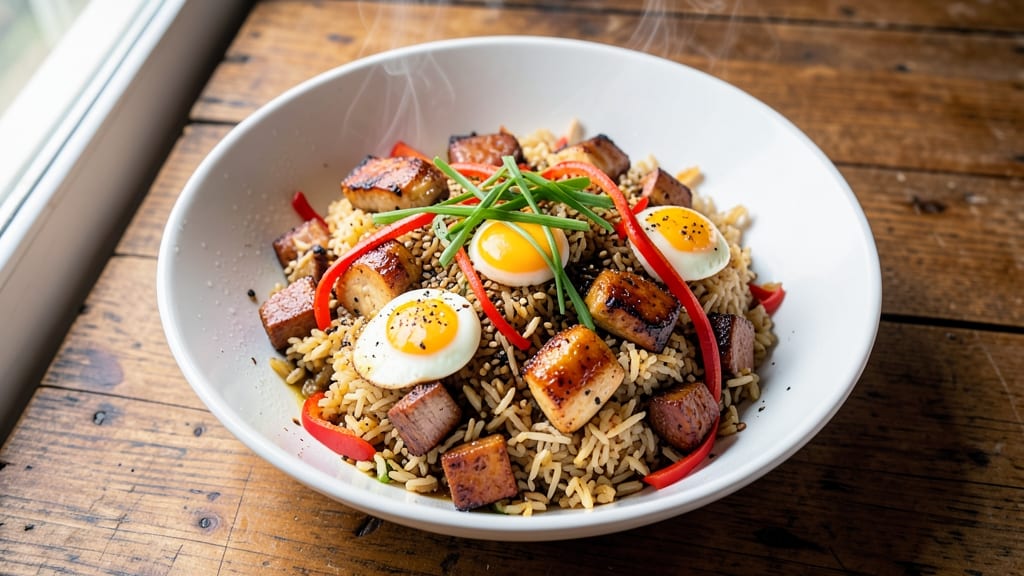
This chicken and pork fried rice recipe delivers the perfect balance of savory protein and fluffy grains, all achieved with a high-heat wok toss that creates that signature smoky aroma.
The secret lies in pre-cooking the proteins separately—chicken for tender bites and pork for rich, caramelized flavor—then combining them with day-old rice and a vibrant stir-fry sauce. Every bite offers a mix of textures: crispy edges on the pork, juicy chicken, and perfectly seasoned rice that clings to each forkful.
The technique is straightforward but critical: use cold rice for better texture, marinate the proteins in soy sauce and cornstarch for extra crispiness, and keep the wok moving to avoid soggy rice.
This dish transforms simple ingredients into a restaurant-quality meal in under 30 minutes, making it ideal for weeknight dinners or meal prep. The result? A fragrant, protein-packed bowl that’s as satisfying as it is delicious.
Ingredients for chicken and pork fried rice
High-quality proteins and day-old rice transform into restaurant-style fried rice in minutes.
| Ingredient | Amount | Notes |
|---|---|---|
| Day-Old Cooked White Rice 🍚 | 4 cups | Cold, broken into pieces |
| Boneless Chicken Breast 🍗 | 1 lb | Cut into 1-inch cubes |
| Pork Shoulder 🐖 | ¾ lb | Cut into 1/2-inch cubes |
| Large Eggs 🥚 | 2 whole | Beaten for marinade |
| Low-Sodium Soy Sauce 🥢 | ½ cup | For marinating proteins |
| Cornstarch 🌾 | 2 tbsp | For crispy coating |
| Neutral Vegetable Oil 🫒 | 3 tbsp | High smoke point preferred |
| Garlic Cloves 🧄 | 4 cloves | Minced for stir-fry sauce |
| Fresh Ginger 🌿 | 1 ½ tbsp | Grated for stir-fry sauce |
| Green Onions 🧅 | ½ cup | Sliced, white and green parts |
| Sesame Oil 🌱 | 1 tbsp | For finishing aroma |
| Diamond Crystal Kosher Salt 🧂 | 1 ½ tsp | Adjust to taste |
| White Pepper 🌶️ | ½ tsp | Freshly ground preferred |
| Frozen Peas 🥦 | ½ cup | Thawed for texture |
The proteins are everything here. Chicken breast should be cut into even 1-inch cubes for consistent cooking, while pork shoulder breaks down beautifully into tender, caramelized pieces. Trader Joe's and Whole Foods carry pre-cut pork shoulder in the frozen section, saving you time. For the best texture, marinate both proteins in soy sauce and cornstarch for at least 30 minutes—this creates that signature crispy exterior. Day-old rice is non-negotiable; fresh rice turns mushy under high heat. Look for jasmine or basmati rice if you want extra aroma, but any white rice works.
No soy sauce? Coconut aminos works at a 1:1 ratio, though the flavor will be subtly different. Short on cornstarch? Arrowroot powder is a great substitute—use the same amount. The frozen peas can be swapped for carrots or bell peppers if you prefer, but keep them small for quick cooking. Fresh ginger loses potency fast, so buy it in small amounts and grate it fresh. If you're prepping ahead, store the marinated proteins in the fridge for up to 24 hours—just pat them dry before cooking to ensure crispiness.
This dish reheats beautifully—just add a splash of water or broth to the wok and toss everything together. It keeps for 3-4 days in the fridge, though the texture suffers after day two. For longer storage, freeze portions in airtight containers for up to 3 months. The sesame oil should be added at the very end—its aroma fades quickly under heat. If you're meal prepping, make a double batch and freeze half; the flavors meld even better after a night in the fridge.
Why You'll Love This Recipe
- Pantry Rescue: I’ll never toss leftover rice again—this recipe turns it into something actually delicious. The pork shoulder adds rich, melty texture while the chicken keeps it light, and both come together in minutes without a single extra trip to the store.
- Umami Bomb: That low-sodium soy sauce? It’s the secret weapon—deep, savory, and balanced by the eggs’ creamy yolk. The pork renders into crispy bits while the chicken stays juicy, and honestly? Every bite tastes like a hug from your favorite takeout spot.
- Lunchbox Legend: Pack this cold the next day, and it’s still ridiculously good—no reheating needed. My kids grab it for school lunches, and I sneak a container for my own desk. (Yes, even on a Tuesday night.)
- Budget Powerhouse: Pork shoulder stretches farther than chicken alone, and eggs bulk it up without breaking the bank. I make double batches, freeze half, and still save enough to treat myself to coffee. Zero guilt, all flavor.
Step-by-step instructions for chicken and pork fried rice
Master this wok-tossed dish with perfectly timed protein and aromatic seasoning.
Prep and Marinate the Proteins
Cut the 1 lb boneless chicken breast into 1-inch cubes and the 0.75 lb pork shoulder into ½-inch cubes. Place both in a bowl and add the 0.5 cup low-sodium soy sauce, then toss to coat evenly. Let marinate for 15-20 minutes while you prepare the rest. This step ensures tender, flavorful proteins that won't dry out during cooking.
While marinating, beat the 2 whole large eggs in a separate bowl with 1.5 tsp diamond crystal kosher salt and 0.5 tsp white pepper. The eggs will form the creamy base of your fried rice, so whisk until completely smooth and free of lumps. This preparation keeps everything ready for the quick cooking process ahead.
Build the Stir-Fry Base
Heat 1 tablespoon of the neutral vegetable oil in a wok or large skillet over medium-high heat until shimmering. Add the marinated chicken and pork, spreading them out in a single layer. Cook for 4-5 minutes until the meat is golden brown and fully cooked through, stirring occasionally. Remove the proteins from the wok and set aside.
In the same wok, add the remaining 2 tablespoons neutral vegetable oil. Stir in the 4 cloves minced garlic and 1.5 tablespoons grated fresh ginger, cooking for 30 seconds until fragrant but not browned. This aromatic foundation is the flavor backbone of your fried rice, so don't skip this step. The oil should sizzle gently—if it smokes too much, reduce the heat slightly.
Cook the Eggs and Combine Ingredients
Pour the beaten egg mixture into the wok and scramble quickly for 20-30 seconds until just set but still slightly runny. Immediately add the 4 cups day-old cooked white rice, breaking up any clumps as you go. The rice should be cold and slightly dry—this prevents mushiness in the final dish.
Stir-fry for 1-2 minutes, letting the rice absorb the egg and aromatics. Add the 0.5 cup thawed frozen peas and the cooked chicken and pork back into the wok. Sprinkle the 2 tbsp cornstarch evenly over the mixture and toss vigorously for 30 seconds to coat everything. The cornstarch creates a light, crispy texture that contrasts beautifully with the tender proteins.
Finish with Aromatics and Serve
Drizzle the 1 tbsp sesame oil over the fried rice and toss once more to distribute evenly. Add the 0.5 cup sliced green onions, reserving a few slices for garnish. Cook for an additional 1 minute until everything is heated through and the green onions are wilted but still bright in color.
Taste and adjust seasoning with additional diamond crystal kosher salt or white pepper if needed. Transfer to a serving platter, garnish with the reserved green onion slices, and serve immediately while hot. The high heat and quick cooking preserve the texture of each ingredient, delivering a restaurant-quality dish with perfect balance of protein, rice, and vegetables.
Pro Tips For Making Chicken And Pork Fried Rice
- CUT CHICKEN SMALL: I used to slice chicken breast into big chunks, thinking it’d cook faster—wrong. Dice it into ½-inch pieces (or smaller) so every bite gets that perfect mix of tender and crispy. Pork shoulder can handle bigger cuts, but chicken dries out if you’re lazy here.
- SALT THE PORK AHEAD: Pork shoulder stays tough if you skip this. Slice it thin, pat dry, then sprinkle with ½ teaspoon salt per pound and let it sit 20 minutes before cooking. The salt breaks down fibers, and the meat turns tender instead of chewy.
- SCRAMBLE EGGS FAST: Crack eggs into a bowl first, then scramble them off-heat in a separate pan with a splash of water. Slide them into the rice last so they stay creamy—not rubbery—while everything else fries. (Yes, it’s two pans, but it’s worth it.)
- STIR-FRY IN BATCHES: I learned this the hard way—overcrowding the pan steams the rice instead of frying it. Cook half the protein first, push it to one side, then add the rest. The rice gets crispy edges, and nothing gets soggy. (Your future self will curse you if you skip this.)
Troubleshooting perfect results
Soggy Rice Fix
If your fried rice turns out mushy, it’s almost always from using fresh rice—steam releases too much moisture under high heat. Always use day-old rice (or refrigerate fresh rice for 30 minutes before using).
For extra insurance, spread the rice on a tray and let it dry slightly in the fridge for 15 minutes before stir-frying. 🌡️
Underseasoned Dish
Taste your fried rice before serving—if it’s bland, you likely didn’t marinate the proteins long enough. Boost flavor by adding ½ tsp extra soy sauce or ¼ tsp white pepper to the wok at the end.
For depth, stir in 1 tsp fish sauce (like Red Boat) or a splash of oyster sauce during the final toss. Trust me, a little goes a long way!
Protein Too Tough
Overcooking the chicken or pork is a common mistake—especially with pork shoulder. Remove the proteins from the wok when they’re just slightly pink inside (use a meat thermometer to check 145°F for pork, 165°F for chicken).
Let them rest for 2 minutes before adding back to the rice to retain juices. For extra tenderness, slice the pork thinner (¼-inch instead of ½-inch).
Burnt Eggs or Garlic
High heat is your friend, but patience is key. Scramble the eggs over medium-high heat for just 20-30 seconds—they should be silky, not browned. For garlic and ginger, cook them for no more than 30 seconds to avoid bitterness.
If your wok is too hot, reduce to medium heat and let the oil cool slightly before adding aromatics. 🔥
Peas Still Crunchy
Frozen peas need at least 1 minute of cooking time to thaw and soften. Add them 2 minutes before serving (not at the start) to ensure they’re tender but still vibrant. For extra flavor, toss them with ½ tsp soy sauce before adding to the wok.
If you’re using fresh peas, blanch them for 1 minute in boiling water first to speed up cooking.
Sticky or Greasy Texture
Too much oil is the usual culprit. Use no more than 3 tbsp total—enough to coat the wok but not drown it. For a lighter texture, wipe excess oil from the proteins with a paper towel before stir-frying.
If the rice feels greasy, add 1 tbsp extra cornstarch during the final toss to absorb excess fat. A quick toss with 1 tsp rice vinegar at the end also cuts through richness.
Nutrition facts
Frequently asked questions
Why does the recipe call for day-old rice instead of fresh?
Fresh rice releases too much steam when stir-fried, turning your fried rice mushy. Day-old rice is firmer and absorbs flavors better, giving you that perfect texture. If you're short on time, spread freshly cooked rice on a tray and refrigerate for 30 minutes to mimic day-old texture.
Can I substitute pork shoulder with another cut?
Pork tenderloin or lean ground pork work well, but slice the tenderloin ¼-inch thick for even cooking. For extra flavor, try char siu (Chinese BBQ pork)—just slice it thinly. The key is tender, bite-sized pieces that cook quickly in the wok.
How do I make this dish spicier?
Add ½ tsp chili flakes or 1 tsp sriracha to the stir-fry sauce during the final toss. For heat lovers, stir in 1 tbsp gochujang (Korean chili paste) with the soy sauce marinade. Balance the spice with a drizzle of honey or hoisin sauce to keep it complex.
What's the best way to reheat leftovers?
Spread leftover fried rice in a single layer on a baking sheet and bake at 350°F for 5-7 minutes to restore crispiness. For stovetop reheating, add 1 tbsp water or broth and toss vigorously over medium heat for 2-3 minutes. Avoid microwaving—it makes the rice gummy.
Can I make this vegetarian?
Swap the chicken and pork for extra-firm tofu (pressed and cubed) or mushrooms (shiitake or oyster). Marinate the tofu in soy sauce + cornstarch for 20 minutes before cooking. Add 1 tbsp nutritional yeast to the egg mixture for a cheesy flavor. Keep the same cooking technique for best results!