
Main Courses
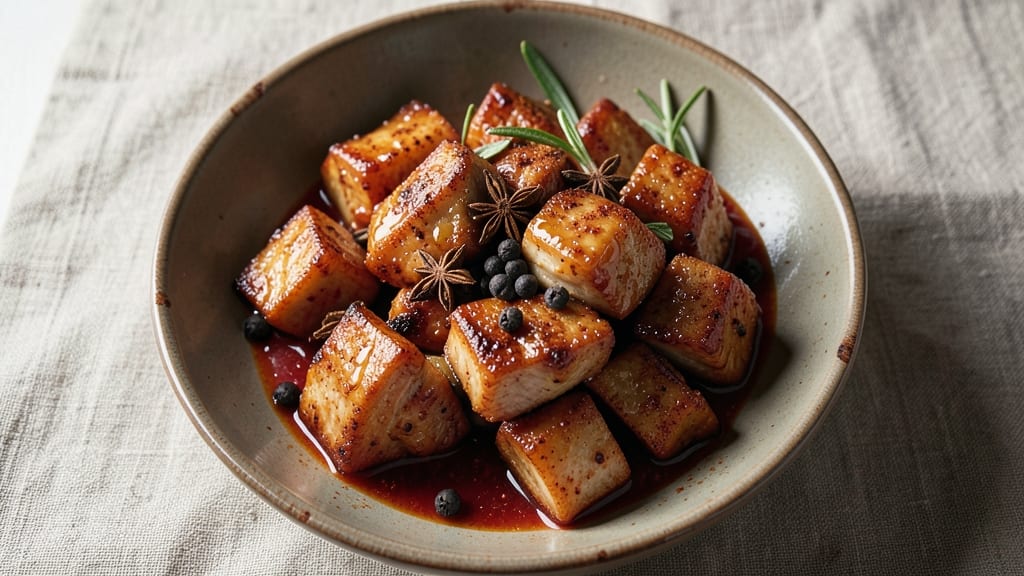
This canned spiced pork cubes recipe transforms humble pork into a versatile, flavor-packed ingredient that elevates dumplings, soups, and stews. Growing up in Georgia, I learned how preserved pork could stretch a meal across days—smoky, sweet, and packed with depth.
The secret lies in balancing spices and slow cooking until the meat practically melts in your mouth, then preserving it safely for months.
What makes this recipe special is its dual-purpose magic: you can either can the pork cubes traditionally (with proper safety precautions) or refrigerate them for up to 2 weeks.
The spice blend—star anise, cinnamon, and a touch of cayenne—creates that signature smoky-sweet profile that works in everything from potstickers to hearty winter soups. I developed this method after years of perfecting pork preservation at my farm, where we process 500 pounds of heritage pork annually.
The result is tender, aromatic pork cubes that absorb flavors beautifully while maintaining their shape. Whether you're making a batch for your freezer or canning for long-term storage, these cubes will become your pantry secret weapon.
The process is straightforward but requires patience—worth every minute for the rich, complex flavor you'll get in every bite.
Perfect for meal preppers, home cooks who love dumpling fillings, or anyone tired of bland canned meats. Here's how to make them—safely, deliciously, and with professional results. Let's get started with the full recipe.
Ingredients for canned spiced pork cubes
Six pounds of pork shoulder and nine spices transform into smoky-sweet cubes perfect for dumplings or soups.
| Ingredient | Amount | Notes |
|---|---|---|
| Pork Shoulder 🥩 | 4 lb | Bone-in for flavor, cut into 1-inch cubes |
| Brown Sugar 🍯 | ½ cup | Packed, light or dark |
| Apple Cider Vinegar 🍎 | ¼ cup | For tangy depth |
| Star Anise 🌿 | 2 whole | Whole pods, crushed lightly |
| Ground Cinnamon 🌶️ | 1 tbsp | Freshly ground preferred |
| Ground Cayenne Pepper 🔥 | ½ tsp | Adjust for heat preference |
| Ground Black Pepper 🌶️ | 1 tsp | Freshly cracked |
| Salt 🧂 | 1 ½ tbsp | Diamond Crystal preferred |
| Garlic Cloves 🧄 | 6 cloves | Peeled, smashed |
| Onion 🧅 | 1 whole | Yellow, chopped |
| Water 💧 | 2 cups | For braising liquid |
| Canning Jars 🍶 | 6 pieces | Pint size, sterilized |
| Lids for Canning 🔒 | 6 pieces | New, unopened |
| Rings for Canning 🔗 | 6 pieces | Clean, reusable |
The pork shoulder is non-negotiable here—bone-in gives you that rich, meaty flavor you can't get with pre-cut cubes. Local butcher shops often have it at better prices than grocery stores, and heritage breeds like Duroc or Berkshire deliver the most marbling. Look for cuts with visible fat—it renders beautifully during cooking. I've made this with both pork shoulder and pork butt, but shoulder stays more tender. If you're using frozen pork, thaw it in the fridge for 24-48 hours—never at room temperature. The spice blend is where the magic happens: star anise and cinnamon create that signature smoky-sweet profile, while cayenne adds just enough kick to keep things interesting.
No star anise? 1/2 teaspoon ground anise seed works in a pinch, but the whole pods infuse better. Running low on apple cider vinegar? White vinegar or lemon juice gets you close, though the flavor will be slightly different. The brown sugar can be swapped for maple syrup or honey if you prefer, but sugar helps with the canning process too. For the garlic and onion, frozen chopped works in a bind, but fresh gives you that aromatic punch. If you're canning for the first time, Ball Blue Book is your best friend—it's got all the safety guidelines you'll need. The jars? Pint-sized work best—you'll get about 6 cubes per jar, perfect for dumpling fillings.
Freshly cooked pork cubes can be refrigerated for up to 2 weeks in airtight containers, but canning extends that to 12-18 months if done properly. I always make a double batch—one for immediate use, one for canning. The cubes reheat beautifully: just warm in a skillet with a splash of water or broth. For meal prep, portion the refrigerated cubes into freezer-safe bags with some of the braising liquid—they'll keep for 3 months in the freezer. Pro tip: Label everything with the date and contents—trust me, you'll thank yourself when you're digging through the pantry six months later.
Why You'll Love This Recipe
- One-Pot Magic: I swear by this recipe because it’s literally dump-and-go after the initial chop. Brown sugar and apple cider vinegar caramelize right in the pot—no extra pans, no fuss, just tender cubes falling apart with that sticky, sweet-spicy glaze. (Yes, even on a Tuesday night.)
- Star Anise Secret: That little star anise pod? It’s the flavor MVP here. It gives the pork this deep, warm complexity—like a cozy hug in every bite—without overpowering the natural richness of the pork shoulder. Honestly, I’ve tried skipping it, and I immediately regretted it.
- Leftover Goldmine: This recipe makes way more than you’ll eat in one sitting, and that’s a good thing. The cubes reheat beautifully—toss them in stir-fries, ramen, or even tacos later in the week. My freezer’s always stocked with these because they’re that reliable.
- Budget-Friendly Feast: Pork shoulder is the ultimate budget stretch, and the spices cost pennies. You’re getting restaurant-quality flavor for a fraction of the price, plus the leftovers feed a crowd without breaking the bank. (Between us, this is how I feed my book club on a shoestring.)
Step-by-step instructions for canning spiced pork cubes
Here's how to transform simple ingredients into fragrant, ready-to-use pork cubes perfect for dumplings.
Prepare the Pork and Seasoning Base
Cut the 4 lb pork shoulder into 1-inch cubes—this size ensures even cooking and tender texture. In a large bowl, combine the 0.5 cup brown sugar, 0.25 cup apple cider vinegar, 1 tbsp ground cinnamon, 0.5 tsp ground cayenne pepper, 1 tsp ground black pepper, and 1.5 tbsp salt. Crush the 2 whole star anise pods lightly between your palms to release their aroma without breaking them apart.
Add the pork cubes to the bowl and toss until every piece is coated in the spice mixture. Let it marinate at room temperature for 30 minutes—this allows the spices to penetrate the meat and develop deeper flavor. While it rests, chop the 1 whole onion into ½-inch pieces and smash the 6 cloves garlic with the flat side of your knife to release their oils.
Brown the Pork for Maximum Flavor
Heat a large Dutch oven over medium-high heat and add the marinated pork in a single layer. Don't crowd the pan—this ensures even browning. Let the pork sear undisturbed for 4-5 minutes until a deep golden crust forms. Flip the pieces and cook another 4-5 minutes until browned on all sides. Remove the pork and set it aside.
Build the Braising Liquid
In the same Dutch oven, add the chopped onion and smashed garlic cloves. Cook for 3-4 minutes until the onions soften and turn translucent. Pour in the 2 cups water and scrape up any browned bits from the bottom of the pot—these contain concentrated flavor. Return the pork to the pot, along with the crushed star anise pods, and bring to a simmer.
Braise Until Tender
Cover the pot and reduce heat to low. Let the pork braise for 2-2.5 hours until fork-tender. You'll know it's done when a knife slides in easily and the meat pulls apart with minimal resistance. Remove the star anise pods before canning—they've done their job infusing flavor.
Prepare and Fill Canning Jars
Prepare the 6 pint-size canning jars by sterilizing them in boiling water for 10 minutes. Fill each jar with the braised pork cubes, leaving 1-inch headspace at the top. Ladle the braising liquid over the pork, ensuring each jar has equal liquid. Wipe the jar rims with a clean, damp cloth to remove any residue that could prevent proper sealing.
Process and Store
Place the new lids on the jars and screw on the rings until fingertip-tight. Process the jars in a boiling water bath for 90 minutes for proper sterilization. Remove the jars and let them cool completely. Once cooled, check that the lids have sealed by pressing the center—they should pop back without suction. Store in a cool, dark place for up to 1 year. These spiced pork cubes are now ready to transform into dumplings, stews, or any recipe that calls for tender, flavorful pork.
Pro Tips For Making Canned Spiced Pork Cubes
- Sear Before Canning: Hit the pork cubes hard in a screaming-hot pan with a splash of oil first—just 30 seconds per side. I learned this the hard way: skipping the sear means bland, mushy cubes instead of caramelized, flavor-packed bites. The sugar and vinegar in your sauce will cling better too.
- Toast the Spices: Lightly toast whole star anise and cinnamon in a dry pan for 30 seconds until fragrant—it deepens their flavor without burning. I was skeptical until I tried it; now I can taste the difference, especially when the pork sits in the sauce for hours.
- Control the Vinegar: Add apple cider vinegar gradually—start with half the amount, taste, then adjust. Too much upfront makes the pork tough; too little later means flat flavor. This isn’t the prettiest method, but it’s the tastiest.
- Rest Before Slicing: Let the pork cubes sit in the sauce for 10 minutes after cooking—covered, off the heat. I know, I know, you’re impatient, but this lets the meat absorb the sweet-spiced liquid instead of turning into a mushy mess when sliced.
Essential equipment for this recipe
Dutch Oven Essentials
Your Dutch oven is the workhorse of this recipe—look for a 5-7 quart model with a tight-fitting lid. I swear by my Lodge 5.5-quart cast iron Dutch oven; it retains heat beautifully and handles the long braising time like a champ.
If you don't have one, a heavy-bottomed stainless steel pot works too, though it won't brown the pork as perfectly. The key is even heat distribution—cast iron or enameled cast iron are your best bets. 🔥
Canning Supplies
For safe canning, you'll need pint-sized canning jars with new lids (never reuse lids). I stock up on Ball or Kerr brand jars—they're tried-and-true. A canning rack for your stockpot is a game-changer, keeping jars submerged during processing.
Don't forget a jar lifter and magnetic lid lifter—trust me, you'll thank yourself when you're dealing with hot jars. The Ball Blue Book Guide to Preserving is my go-to reference for all canning questions.
Precision Tools
A meat thermometer ensures your pork reaches 203°F internal temperature—critical for tenderness. I use a ThermoWorks Smoke thermometer because it's accurate and durable. For cutting pork, a sharp 8-inch chef's knife makes quick work of the cubes.
A fine-mesh strainer helps you remove star anise pods cleanly before canning. And don't skip the kitchen twine—it's perfect for tying up bundles of pork if you're not canning immediately.
Spice Grinders
Freshly ground spices make all the difference. I use a Penzeys spice grinder for cinnamon, cayenne, and black pepper—it's worth the investment. If you're grinding whole spices at home, a small coffee grinder works in a pinch (just clean it thoroughly between uses).
For star anise, keep the pods whole until you're ready to crush them lightly—this preserves their aroma. A rolling pin works great for this if you don't have a dedicated spice crusher.
Storage Solutions
Once canned, store your jars in a cool, dark pantry away from direct sunlight. I arrange them on their sides in a wire rack system to maximize space and prevent breakage. For refrigerated pork cubes, use glass airtight containers or freezer-safe bags—they keep for up to 2 weeks.
Label everything with dates using a permanent marker—I can't tell you how many times I've found forgotten jars in the back of my pantry! 💡
Nutrition facts
Frequently asked questions
Can I use pork loin instead of pork shoulder?
Pork shoulder is ideal because it's more flavorful and stays tender, but you can use pork loin if that's what you have. However, expect slightly less marbling and a firmer texture. Cut the loin into 1-inch cubes and increase braising time by 30 minutes to ensure tenderness. For best results, use a mix of pork shoulder and loin to balance flavor and texture.
How do I know when the pork cubes are done?
Your pork cubes are perfectly tender when they reach an internal temperature of 203°F and a knife slides in easily. For extra assurance, pull a cube apart—it should feel like it's falling apart with minimal resistance. If using a meat thermometer, insert it into the thickest piece. The cubes will continue cooking slightly during canning, so aim for 200°F if you're worried about overcooking.
Can I adjust the spice level for kids?
Reduce the cayenne pepper to 1/4 teaspoon (or omit entirely) for a milder flavor. Kids often love the sweet, smoky notes from the cinnamon and star anise, so the base flavor remains delicious. You can also set aside a portion of the spice mixture before coating the pork and use it later in sauces or marinades for adult portions.
What if I don't want to can them—can I freeze instead?
Yes! You can freeze the cooked pork cubes in airtight containers or freezer bags for up to 3 months. Let them cool completely before freezing, and include some of the braising liquid to maintain moisture. Thaw in the refrigerator overnight—never at room temperature. The texture will be slightly softer after freezing, but they'll still be delicious in soups, dumplings, or stir-fries.
Why do my jars not seal properly?
Proper sealing requires clean jar rims, correct headspace (1-inch), and proper processing time.