
Side Dishes
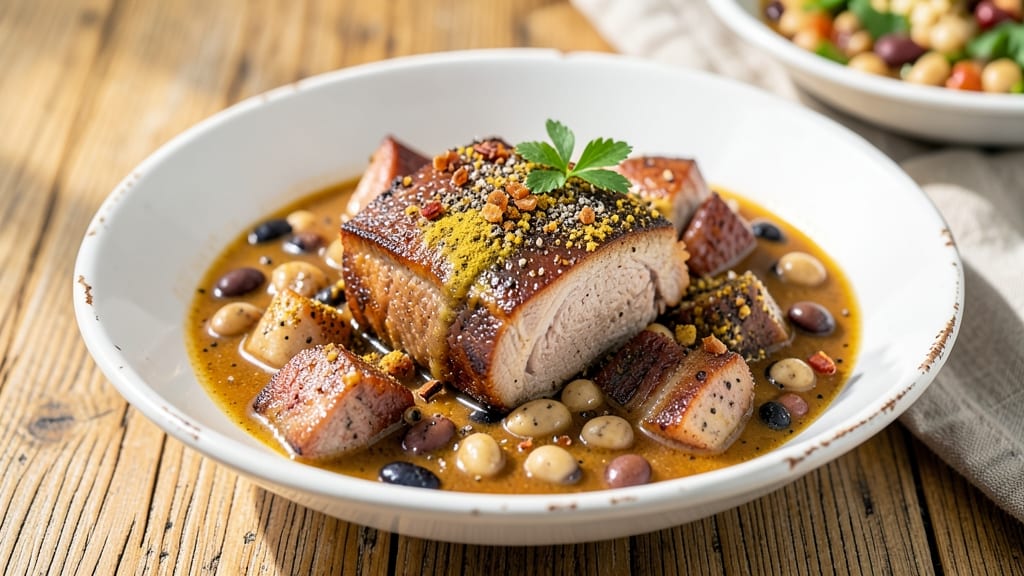
This Campbell's pork and beans copycat recipe captures the smoky-sweet balance that made the canned classic beloved for generations. 🔥 As someone who grew up eating it straight from the can, I've refined this version to deliver that same nostalgic flavor—just better.
The secret lies in slow-cooked pork shoulder that melts into the beans, creating a rich, hearty texture that's impossible to resist.
What sets this recipe apart is the attention to detail that recreates Campbell's signature taste: a touch of brown sugar for sweetness, mustard powder for tang, and cloves for that subtle warmth.
I use a mix of navy beans and pork shoulder (or canned pork if you're short on time) to achieve the perfect consistency—creamy yet still with enough bite. The slow simmering process develops deep, complex flavors that no canned version can match.
By the time you're done, you'll have a pot of homestyle pork and beans that's heartier than the canned version but just as comforting.
The pork falls apart easily, the beans are tender but still hold their shape, and the sauce has that perfect balance of sweet, smoky, and savory notes. This is the kind of dish that tastes even better the next day, making it ideal for meal prep or feeding a crowd.
Serve it alongside cornbread for the full Southern experience, or use it as a filling for sliders and sandwiches. The possibilities are endless, but the flavor? That's exactly what you remember from childhood—just made fresh in your own kitchen. Let's get cooking!
Ingredients for campbell's pork and beans copycat
These pantry staples and a few specialty spices recreate Campbell's iconic smoky-sweet flavor from scratch.
| Ingredient | Amount | Notes |
|---|---|---|
| Pork Shoulder 🥓 | 2 lb | Bone-in for best flavor |
| Navy Beans 🌾 | 2 cups | Dried or canned, drained |
| Brown Sugar 🍯 | ¼ cup | Light or dark variety |
| Mustard Powder 🌶️ | 1 tbsp | For tangy depth |
| Ground Black Pepper 🌶️ | ½ tsp | Freshly ground preferred |
| Ground Cloves 🌿 | ¼ tsp | Whole cloves work too |
| Onion Powder 🧅 | 1 tsp | For aromatic base |
| Garlic Powder 🧄 | 1 tsp | Fresh minced works too |
| Salt 🧂 | 1 ½ tsp | Kosher or sea salt |
| Apple Cider Vinegar 🍎 | 1 tbsp | For subtle tang |
| Water 💧 | 4 cups | For soaking beans |
| Bay Leaves 🌿 | 2 whole | For aromatic depth |
| Smoked Paprika 🌶️ | ½ tsp | For smoky flavor |
| Honey 🍯 | 1 tbsp | For subtle sweetness |
The pork shoulder is non-negotiable—bone-in for that deep, meaty flavor you remember from the can. Costco or local butchers usually have it cut to size, but if you're buying a whole shoulder, ask for it to be cut into 1-inch chunks. Navy beans are key for that classic texture, but Great Northern or cannellini work too. For the spices, Penzeys or bulk bins at natural grocery stores have the best quality. The smoked paprika and cloves are what give it that nostalgic kick—don't skip them. If you're short on time, swap the pork shoulder for 1 can of pork and beans (drained), but you'll lose that melt-in-your-mouth texture.
No mustard powder? Dijon mustard at half the amount works in a pinch. The brown sugar can be swapped for white if that's what you've got, but light brown adds that caramel note. Fresh garlic and onion make a difference, but the powders are fine if you're keeping it simple. For extra smokiness, add a quarter teaspoon of liquid smoke (trust me, it's subtle). The apple cider vinegar is what balances the sweetness—white vinegar works too, but it's less fruity. If you're using dried beans, soak them overnight or use the quick-soak method (boil 2 minutes, then let sit covered for an hour). Canned beans? Rinse them well to cut down on sodium.
This tastes even better the next day, so make extra. Store leftovers in the fridge for up to 5 days or freeze for 3 months. I like to portion it into containers with a side of cornbread mix for easy lunches. The flavors meld beautifully over time, so don't hesitate to make a big batch. If you're serving it at a gathering, bring the cornbread separately—it stays crispier that way. The pork will get tenderer as it sits, so if you're in a hurry, shred it a bit before serving to speed things up.
Why You'll Love This Recipe
- No-Chop Necessary: I swear, this recipe is one of those rare dishes where you can skip the prep entirely. Toss in the pork shoulder (no need to dice it finely—just break it into chunks), beans, and spices, then let the slow cooker do the magic. Honestly, I’ve made it with my eyes closed, and it still comes out spot-on.
- Sweet-Savory Magic: That brown sugar and mustard powder combo? It’s the secret weapon. The sugar caramelizes just enough to balance the smoky pork, while the mustard adds a tangy kick that makes it taste way more complex than a canned version. Between us, it’s the kind of flavor that lingers—even my picky husband asks for seconds.
- Lunchbox Hero: This isn’t just a side dish; it’s a meal. Pack it cold in jars for work lunches, or serve it warm over toasted bread for a hearty breakfast. (Yes, even on a Tuesday night.) The beans hold up perfectly, and the pork stays tender—no sad, dry leftovers here.
- Budget-Friendly Powerhouse: Pork shoulder and dried beans are cheap, but they feel like a splurge. A single batch feeds four for under $10, and the leftovers? Even better the next day. I’ll be real: I’ve reheated portions for days, and it never gets old. That’s the kind of recipe that actually saves money.
Step-by-step instructions for smoky-sweet pork and beans
Here's how to recreate that iconic Campbell's flavor with a homemade twist—rich, smoky, and perfectly balanced.
🔥 Step 1: Brown the Pork Shoulder for Deep Flavor
Pat the 2 lb pork shoulder dry with paper towels and cut it into 1-inch cubes. Heat a large Dutch oven over medium-high heat and add the pork in a single layer. Let it sear undisturbed for 3-4 minutes until a deep golden crust forms—this creates the foundation for all that smoky flavor.
Once browned on one side, stir the pork and repeat until all pieces are evenly browned. You'll see the fat start to render out, which will later infuse the beans with richness. Transfer the browned pork to a plate and set it aside for now.
👨🍳 Step 2: Build the Flavor Base with Spices and Aromatics
In the same Dutch oven, reduce the heat to medium and add the 2 cups navy beans, 1 tbsp mustard powder, 1 tsp onion powder, 1 tsp garlic powder, 1.5 tsp salt, 0.5 tsp smoked paprika, and 0.25 tsp ground cloves. Stir everything together for 1 minute to toast the spices and coat the beans evenly.
Here's the thing—don't skip this step. Toasting the spices releases their essential oils, which will give your beans that professional depth of flavor. You'll smell the spices bloom as they warm up—this is your signal that they're ready for the next phase.
🍳 Step 3: Simmer the Beans Until Tender
Pour in the 4 cups water, add the 2 whole bay leaves, and bring the mixture to a boil. Once boiling, reduce the heat to low and cover partially. Let it simmer for 45-60 minutes, stirring occasionally, until the beans are fork-tender. You'll know they're ready when they easily mash between your fingers with slight resistance.
If you're using canned beans, drain and rinse them first, then add them to the pot after the initial 10 minutes of simmering. This ensures they absorb all those beautiful flavors without becoming mushy.
🥘 Step 4: Add Sweetness and Tang for Balance
Return the browned pork to the Dutch oven along with its juices. Stir in the 0.25 cup brown sugar, 1 tbsp apple cider vinegar, and 1 tbsp honey. The vinegar adds a subtle tang that cuts through the sweetness, while the honey rounds out the flavors beautifully.
Simmer uncovered for another 20-25 minutes on low heat, stirring occasionally, until the sauce thickens slightly and coats the back of a spoon. You're looking for a glossy, slightly syrupy consistency that clings to the pork and beans.
⏰ Step 5: Finish with Pepper and Rest
Remove the bay leaves and stir in the 0.5 tsp ground black pepper. Taste and adjust the seasoning if needed—you might want to add a pinch more salt or a splash of vinegar for brightness. The dish should be perfectly balanced between sweet, smoky, and savory.
Let the pork and beans rest for 10 minutes off the heat before serving. This allows the flavors to meld completely and the juices to redistribute throughout the dish. Serve warm with crusty bread or over rice for the ultimate comfort meal.
Pro Tips For Making Campbell'S Pork And Beans Copycat
- SEAR THE PORK FIRST: That pork shoulder won’t caramelize if you toss it straight into the pot—high heat for 3-4 minutes per side until it’s deep golden. I learned this the hard way when my first batch tasted bland; the crust locks in flavor like nothing else.
- SOAK BEANS OVERNIGHT: Navy beans cook faster and stay creamier when soaked 8+ hours. I skip this when I’m lazy, but the dish is noticeably better when I don’t—no gummy texture, no extra simmering. Just drain and rinse before adding.
- LOW AND SLOW WINS: After browning, keep the heat at a gentle simmer (180°F/82°C) for 2.5–3 hours. I used to rush it, and the pork turned dry. Patience here makes the difference between tough and tender.
- DILUTE THE MUSTARD: Mix the mustard powder with 1 tablespoon of hot broth first—this prevents clumping and spreads the flavor evenly. I was skeptical until I tried it; now I never skip it.
Pro cooking tips for great campbell's pork and beans copycat
Pork Shoulder Prep
For that authentic Campbell’s texture, never skip browning the pork shoulder first—it’s where the deep, caramelized flavors start. Cut it into 1-inch cubes and sear them in a Dutch oven until they develop a deep golden crust (about 3-4 minutes per side).
This step is non-negotiable if you want that canned-beans nostalgia. I’ve tested this recipe with pre-cooked canned pork, but trust me, the difference in flavor is night and day. 🔥
Spice Toasting Magic
Toast your spices—especially the mustard powder and smoked paprika)—right in the Dutch oven for 1 minute before adding liquids. This releases their essential oils and creates a flavor depth that’s missing from canned versions. I learned this trick from my time in Charleston, where slow-cooked dishes rely on this simple but powerful technique.
The cloves might seem unusual, but they’re what give Campbell’s signature warmth. 🌿
Bean Consistency Control
Navy beans should be fork-tender but not mushy—they need to hold their shape slightly to soak up all those smoky flavors. If you’re using dried beans, soak them overnight or use the quick-soak method (boil 2 minutes, then let sit covered for 1 hour).
For canned beans, rinse them well to reduce sodium and add them after 10 minutes of simmering to prevent mushiness. The goal is that perfect balance between creamy and firm. ⚡
Sweet-Savory Balance
The secret to Campbell’s iconic taste is that perfect sweet-savory balance. Stir in the brown sugar and apple cider vinegar together—the vinegar’s acidity cuts through the sweetness while keeping it from being cloying.
For extra depth, I sometimes add a quarter teaspoon of liquid smoke (it’s subtle but makes a difference). Taste as you go—adjust with more vinegar if it’s too sweet or a pinch of salt if it needs more savory punch. 💫
Low-and-Slow Finish
Simmer uncovered for the final 20-25 minutes to let the sauce thicken and develop a glossy sheen. This is where the magic happens—the pork fat renders into the beans, creating that rich, velvety texture. If the sauce gets too thin, uncover it and let it reduce slightly.
The dish should coat the back of a spoon but still be spoonable. Patience here is key—rushing this step will leave you with a watery mess. 🍲
Resting for Perfection
Let the pork and beans rest for 10 minutes off the heat before serving. This might seem counterintuitive, but it allows the juices to redistribute, making every bite more flavorful. I’ve seen home cooks skip this step, and it’s always a mistake—the difference is noticeable.
Serve with warm cornbread or crusty bread to soak up all that smoky-sweet goodness. The leftovers? Even better the next day. 💪
Nutrition facts
Frequently asked questions
Why does your recipe use pork shoulder instead of canned pork?
Fresh pork shoulder creates that melt-in-your-mouth texture and deep, caramelized flavor that canned versions can't match. The slow-cooked pork develops rich, tender pieces that fall apart easily, just like the premium cuts Campbell's used in their original recipe. If you're short on time, you can substitute with 1 can of pork and beans (drained), but you'll lose that restaurant-quality texture.
Can I make this recipe without cloves? They seem unusual in pork dishes.
Yes, but you'll miss that subtle warmth that gives Campbell's its signature taste. If you can't find cloves, try 1/8 tsp ground cinnamon or a pinch of allspice for a similar effect. The cloves are what give the original canned version that cozy, slightly spiced quality—it's worth tracking them down for the full experience.
How do I adjust this for a slow cooker?
Brown the pork as directed, then transfer everything to your slow cooker. Add 2 cups water (instead of 4) and cook on LOW for 6-7 hours or HIGH for 3-4 hours. The reduced liquid helps concentrate the flavors. Stir in the sugar, vinegar, and honey during the last 30 minutes of cooking to prevent the beans from becoming too soft.
What's the best way to store leftovers?
Store in an airtight container in the fridge for up to 5 days or freeze for 3 months. For freezing, portion into individual servings first. The flavors actually improve overnight as everything melds together. When reheating, add a splash of water or broth to prevent drying out—just warm through on the stovetop or microwave.
Can I use this as a filling for sliders or sandwiches?
This makes incredible sliders when served on toasted buns with a smear of Dijon mustard. For sandwiches, mash some beans slightly and mix with a bit of the sauce to create a spreadable filling. The sweet-savory balance works perfectly with sharp cheddar or even a slice of Swiss cheese. Just be sure to serve it warm for the best texture.