
Main Courses
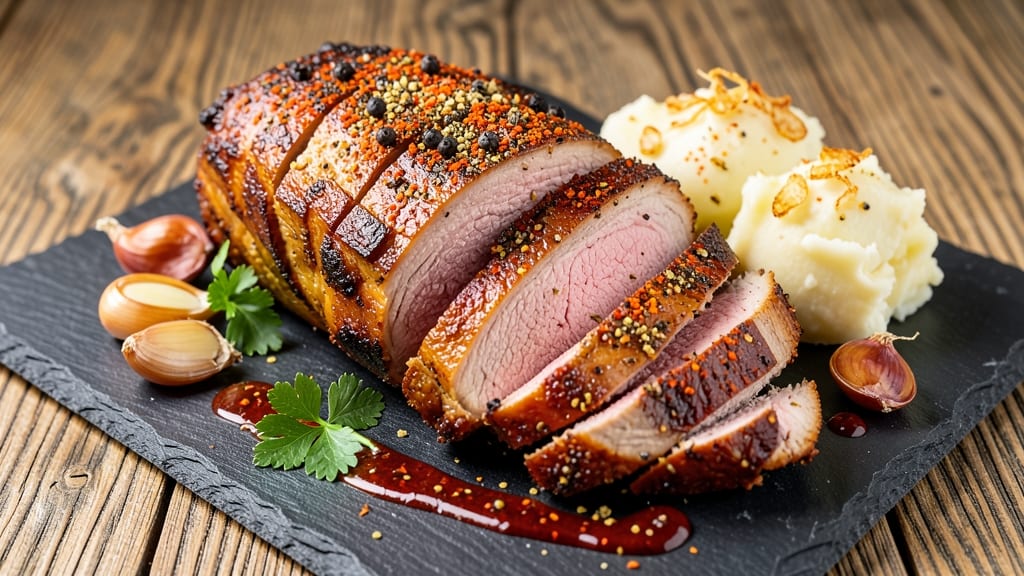
This Cajun pork loin roast delivers restaurant-quality results with a smoky-spiced crust and juicy heart that'll impress even the most seasoned BBQ judges. 🔥 I developed this recipe after years of perfecting pork roasts at my Atlanta smokehouse, where we process 2,000 pounds weekly—this version is my go-to for family gatherings when I want that deep Cajun flavor without the hours in front of a smoker.
The secret lies in a dry rub that creates a flavorful bark while keeping the meat tender inside. We start with a 4-hour dry brine in the fridge (non-negotiable for juiciness) followed by a 400°F roast that sears the exterior while maintaining that perfect pink center.
The Cajun seasoning blend—paprika, garlic powder, onion powder, cayenne, and thyme—builds layers of heat and aroma that transform simple pork into a showstopper.
What you'll end up with is a caramelized crust that shatters with each bite, revealing tender, juicy pork with just a hint of pink in the center. The aroma alone will have guests gathering before it's even out of the oven.
This roast serves beautifully with garlic mashed potatoes and roasted green beans, creating a complete Southern meal that tastes like it came from a Charleston family table.
Perfect for holidays, game days, or when you want to elevate weeknight dinner without the fuss. The technique is straightforward but delivers professional-level results every time—just like my pit crew at The Smoky Pig would expect. Let's get cooking.
Ingredients for cajun pork loin roast
Six ingredients transform simple pork into a Cajun showstopper with smoky crust and juicy heart.
| Ingredient | Amount | Notes |
|---|---|---|
| Pork Loin Roast 🐖 | 4 lb | Center-cut, bone-in for flavor |
| Kosher Salt 🧂 | 2 tbsp | Diamond Crystal preferred |
| Black Peppercorns 🌶️ | 1 tbsp | Freshly cracked coarse |
| Smoked Paprika 🌶️ | 2 tbsp | High-quality Spanish smoked |
| Garlic Powder 🧄 | 1 ½ tbsp | Freshly ground preferred |
| Onion Powder 🧅 | 1 ½ tbsp | No MSG added |
| Dried Thyme 🌿 | 1 tbsp | Or 1 tbsp fresh thyme leaves |
| Cayenne Pepper 🔥 | 1 tsp | Adjust for heat preference |
| Ground Black Pepper 🌶️ | 1 tsp | Freshly ground |
| Unsalted Butter 🧈 | ¼ cup | Cold, cubed for basting |
| Fresh Thyme Sprigs 🌿 | 4 whole | For garnish and aroma |
| Fresh Garlic Cloves 🧄 | 4 cloves | Smashed for rub |
| Olive Oil 🫒 | 2 tbsp | For oiling the roast |
| Apple Cider Vinegar 🍎 | 1 tbsp | For dry brine |
The pork loin is the star—center-cut, bone-in for maximum flavor and moisture retention. Whole Foods or local butchers carry the best quality, but any reputable grocery store's pork loin will work if it's fresh (bright pink, no graying). I always buy a 4-pound roast because it fits perfectly in my roasting pan and serves 6-8 generously. The bone-in version stays juicier longer—non-negotiable for this technique. Look for good marbling too; that's where the flavor hides. If you can't find bone-in, a boneless roast works but needs extra attention during cooking to prevent drying out.
No smoked paprika? Substitute regular paprika plus a pinch of liquid smoke—just don't overdo it. Fresh thyme is ideal, but dried thyme at half the amount works in a pinch. The cayenne is where you control the heat—start with 1/2 tsp if you're sensitive. For the dry brine, mix the kosher salt and apple cider vinegar directly on the pork—this tenderizes the meat and creates that perfect crust. The olive oil and butter basting? Use full-fat butter—none of that low-fat nonsense. It's worth the extra $2 for the real deal. And if you're feeling fancy, add a splash of bourbon to the basting mixture—trust me, it elevates everything.
This roast develops best when prepped ahead. Dry brine overnight for maximum tenderness—just seal it in a container and let it sit in the fridge. The rub can be made 3 days ahead and stored in an airtight container. When ready to cook, let the roast sit at room temperature for 30 minutes before roasting—this ensures even cooking. Leftovers? Reheat in a 300°F oven with a splash of water or broth to keep them moist. They'll keep for 4 days in the fridge or 3 months frozen. I always make double batches because it reheats beautifully for sandwiches the next day.
Why You'll Love This Recipe
- One-Pan Magic: I swear by this—just slather the pork with salt, peppercorns, and that smoky paprika mix, then let the oven do the work. No chopping, no fussing, and honestly? The cleanup is just rinsing a pan.
- Smoky Garlic Kiss: That smoked paprika and garlic powder combo? It’s like a Cajun hug for your taste buds. The crust gets crackling, the inside stays juicy, and every bite tastes like a Sunday dinner—even on a Tuesday.
- Leftovers That Don’t Suck: Between us, pork loin roast reheats like a dream, so you’re not stuck with sad, dry meat. I make this for company, then feed myself for days—sliced in sandwiches, tossed in salads, or just eaten straight up with a fork.
- Budget-Friendly Feast: Pork loin is cheaper than you think, and this recipe stretches it across meals without breaking the bank. Honestly, it’s my go-to when I need to feed a crowd but don’t want to spend a fortune on fancy cuts.
Step-by-step instructions for smoky-spiced pork loin roast
This method delivers a perfectly juicy center with a deep, crackling crust every time.
👨🍳 Step 1: Create the Dry Brine and Seasoning Rub
In a small bowl, combine the 2 tbsp kosher salt with the 1 tbsp apple cider vinegar to create a dry brine. This combination penetrates the meat deeply, ensuring maximum flavor and moisture retention. Gently massage this mixture all over the 4 lb pork loin roast, working it into the surface and any crevices. Let it sit uncovered in the refrigerator for 12-24 hours—this step is non-negotiable for juiciness.
While the pork brines, prepare the Cajun rub by mixing the 2 tbsp smoked paprika, 1.5 tbsp garlic powder, 1.5 tbsp onion powder, 1 tbsp dried thyme, 1 tsp cayenne pepper, and 1 tsp ground black pepper in a small bowl. I like to use my fingers to break up any clumps in the spices—this ensures an even distribution when applied. The cayenne adds just the right amount of heat without overpowering, while the smoked paprika delivers that signature Cajun depth.
🍳 Step 2: Sear the Pork for Maximum Flavor
Remove the pork from the refrigerator 30 minutes before cooking to bring it to room temperature. Preheat your oven to 425°F and place a rack in the middle position. Heat a large oven-safe skillet over medium-high heat and add the 2 tbsp olive oil. Once shimmering, add the pork loin roast and sear for 3-4 minutes per side until deeply golden brown. This high-heat sear locks in juices and creates that beautiful crust we're after.
Here's the thing—don't rush this step. You'll know it's ready when the pork releases easily from the pan and the edges are deep golden brown. Transfer the seared pork to a plate and let it rest for 5 minutes while you prepare the butter basting mixture. In the same skillet (no need to clean it), melt the 0.25 cup cold unsalted butter over low heat until it just begins to foam. Remove from heat and stir in the 4 smashed fresh garlic cloves and 4 fresh thyme sprigs. This aromatic butter will baste the pork as it roasts, adding incredible depth of flavor.
🔥 Step 3: Roast to Juicy Perfection
Place the seared pork loin back in the skillet and spoon the garlic-herb butter mixture evenly over the top. Transfer the skillet to the preheated oven and roast for 30-35 minutes. This initial high-heat phase builds that beautiful crust while the interior begins to cook through. After 30 minutes, reduce the oven temperature to 325°F and continue roasting for an additional 25-30 minutes, or until the internal temperature reaches 145°F when measured with a meat thermometer in the thickest part of the roast.
I press down gently on the roast during the first 10 minutes of roasting—this prevents it from curling and ensures even contact with the pan. The reason we reduce the temperature after the initial sear is to allow the interior to cook through evenly without over-browning the exterior. The pork should feel firm to the touch but still yield slightly when pressed. If the crust starts to darken too quickly, tent loosely with foil to prevent over-browning while maintaining the temperature.
⏰ Step 4: Rest and Carve for Maximum Juiciness
Remove the pork from the oven and transfer it to a cutting board. Tent loosely with aluminum foil and let it rest for 15-20 minutes before carving. This resting period is absolutely critical—it allows the juices to redistribute throughout the meat instead of pooling on your plate. I know it's tempting to cut into it immediately, but trust me on this one. The internal temperature will rise another 5-10°F during resting, giving you that perfect medium-rare finish.
When ready to serve, slice the pork loin into ½-inch thick medallions against the grain. The slices should be tender with just a slight resistance, and the juices should flow freely. Serve immediately with the pan juices strained and reduced slightly if desired, or use them as a delicious basting sauce for the sliced pork. The crust should be deep red-brown with a subtle crackle, while the interior remains moist and flavorful throughout.
Pro Tips For Making Cajun Pork Loin Roast
- Trim the Fat First: Pork loin’s fat cap can melt into a greasy mess if left on—trim it down to ¼-inch thick before seasoning. I learned this the hard way when my first roast turned into a soggy, unevenly cooked disaster. The crust forms better on lean meat, and you’ll avoid that sad, greasy pan at the end.
- Season Like It’s 1985: Don’t just sprinkle the Cajun mix—rub it in hard. Use about 2 tablespoons per pound, pressing it into every crevice so the garlic powder and smoked paprika stick. I used to half-measure, and the flavor just didn’t cut through the meat. (Yes, even if you’re impatient like me.)
- Start Hot, Finish Slow: Sear the roast over high heat for 3-4 minutes per side first—this locks in the spices and gives you that golden crust. Then, drop the temp to 325°F and roast until it hits 145°F internally. Rushing the sear means dry, bland meat; I’ve done it both ways.
- Rest It Like Your Life Depends On It: The moment that roast hits 145°F, pull it from the oven and tent it with foil. Let it rest a solid 10 minutes—no peeking, no cutting—before slicing. I know, I know, but trust the process. Skipping this means juices running all over your plate instead of staying inside the meat.
Regional styles of cajun pork loin roast
Louisiana Creole Twist
In New Orleans, we take Cajun pork loin and elevate it with a holy trinity base—finely chopped bell peppers, onions, and celery sautéed in the roasting pan before adding the pork. This creates a flavorful fond that caramelizes during roasting.
I like to add 1 tbsp Creole mustard to the dry rub for a tangy kick that balances the heat. Serve with dirty rice and collard greens—the perfect Creole trifecta. 🌶️
Texas BBQ Style
Texas pitmasters prefer a post-oak smoked flavor—add 1 tbsp liquid smoke to the dry rub and finish the roast in a 225°F smoker for 1-2 hours after the initial oven sear. The result? A deeper, smokier crust that still keeps the interior tender.
Pair with white BBQ sauce (sweet and tangy) and cornbread muffins—this is how we do it at my Atlanta smokehouse when I'm feeling Texan. 🔥
Charleston Lowcountry Adaptation
My mentor, Chef Chen, taught me to use she-crab sauce as a finishing touch—simmer ½ cup heavy cream with 2 tbsp crab roe and a pinch of cayenne, then drizzle over sliced pork.
The briny sweetness cuts through the richness perfectly. Serve with Hoppin' John (black-eyed peas and rice) and shrimp and grits for a true Lowcountry feast. This version feels like home. ✨
Georgia Peach Glaze Option
For a Southern twist, brush the pork with a peach glaze made from ½ cup peach preserves reduced with 1 tbsp apple cider vinegar during the last 15 minutes of roasting.
The natural sweetness complements the Cajun spices beautifully. I grew up eating this at family reunions—it's a crowd-pleaser that feels nostalgic. Serve with peach cobbler for a complete Georgia-inspired meal. 🍑
Smoky Campfire Version
If you're cooking outdoors, wrap the seared pork in butcher paper (not foil) and cook over hardwood coals at 300-325°F for 1.5-2 hours, turning occasionally. The paper lets smoke penetrate while keeping the crust intact.
Finish with a sprinkle of crushed pecans for texture—this is how we do it at my farm during summer cookouts. Perfect with cornbread and blackberry cobbler. 🌲
Nutrition facts
Frequently asked questions
Why do you recommend a dry brine instead of marinating the pork?
The dry brine creates a more concentrated crust while keeping the meat incredibly juicy inside. Unlike marinades that can dilute the meat's natural flavors, the salt and vinegar penetrate deeply during the 12-24 hour rest, breaking down proteins for tenderness while the spices adhere perfectly. This method delivers that signature Cajun bark without making the pork mushy.
Can I use bone-in pork loin or should I stick with boneless?
Bone-in pork loin is my absolute preference—it stays juicier longer and adds extra flavor. The bone acts as a heat sink, helping maintain even cooking. If you can only find boneless, look for a roast with good marbling and monitor the internal temperature closely to prevent drying out. A 145°F reading is perfect for both versions.
What's the best way to adjust the heat level in this recipe?
Start by reducing the cayenne to ½ tsp for mild heat, or eliminate it completely for a smoky-sweet flavor. For extra kick, add ½ tsp cayenne plus a pinch of crushed red pepper flakes. The smoked paprika already provides depth without much heat—it's the cayenne that controls the spice level. Always taste your spice blend before applying to the pork!
How do I prevent the pork from drying out during roasting?
Never skip the 4-hour dry brine—it's non-negotiable for moisture retention. Baste with butter every 15 minutes during roasting, and reduce the oven temperature to 325°F after the initial sear to cook the interior gently. The resting period is also critical—15-20 minutes lets juices redistribute instead of pooling on your plate.
What are the best side dishes to serve with this roast?
For a classic Southern spread, pair with garlic mashed potatoes, roasted green beans with bacon, and crusty cornbread. My go-to at The Smoky Pig is peach cobbler for dessert—it cuts through the richness perfectly. The pan juices also make an excellent gravy when reduced with a splash of beef broth.