
Soups & Stews
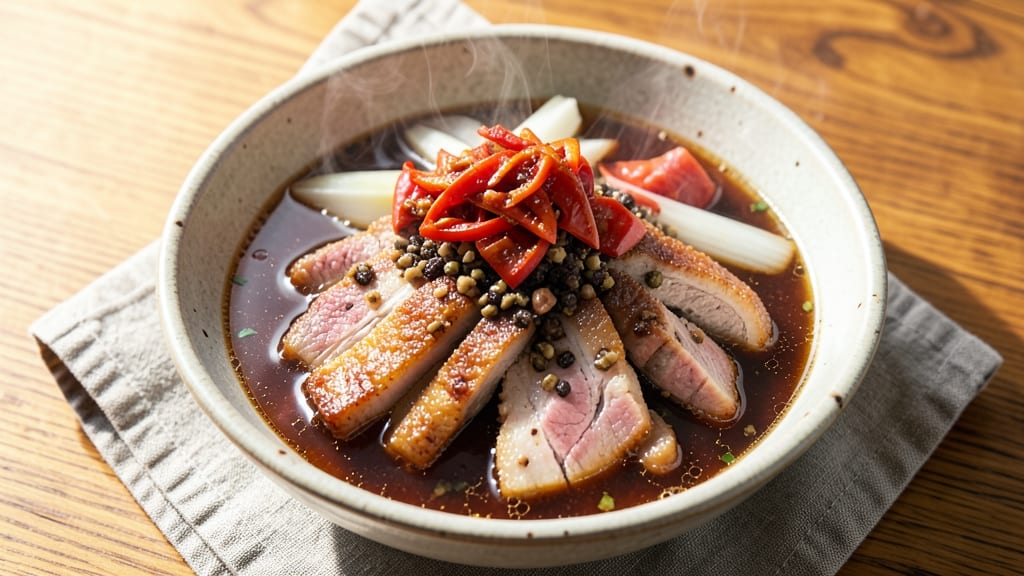
This Busan pork soup recipe brings the bold, spicy flavors of South Korea's coastal capital to your kitchen in one rich, aromatic pot. 🔥 I've adapted the traditional Busan galbi jjigae to use accessible ingredients while preserving its signature slow-braised depth—where tender pork ribs and belly melt into a fermented seafood and chili paste broth, balanced by kimchi's tangy sweetness.
The secret lies in the layered flavors: fermented seafood (jeotgal) and gochujang chili paste create the signature Busan heat, while kimchi adds bright acidity that cuts through the richness.
Unlike quicker stews, this dish demands patience—simmering for at least 2 hours transforms tough pork into fork-tender perfection while developing a complex, umami-packed broth that clings to every bite.
What you'll end up with is a steaming bowl of spicy, savory goodness—pork so tender it falls apart at the touch, vegetables softened just enough to soak up the flavorful liquid, and a surface layer of crispy fried shallots for texture contrast.
The aroma alone will have your whole house gathering around the table, and the first spoonful delivers that perfect balance of heat, tang, and deep porky richness.
Serve with steamed white rice to soak up every last drop of that precious broth, and a side of fresh kimchi to cut through the richness.
This is the kind of dish that gets better with leftovers—each reheat deepens the flavors, making it even more comforting the next day. Let's get cooking!
Ingredients for busan pork soup
Six servings of rich, spicy Busan pork soup—where fermented heat meets tender pork in one aromatic pot.
| Ingredient | Amount | Notes |
|---|---|---|
| Pork Belly 🥓 | 2 lb | Cut into 1-inch cubes, skin removed |
| Pork Ribs 🍖 | 1 ½ lb | Baby back ribs, cut into 2-inch pieces |
| Kimchi 🥬 | 2 cups | Packed, with juice reserved |
| Gochujang Chili Paste 🌶️ | ½ cup | Korean fermented chili paste |
| Anchovy Jeotgal 🐟 | ¼ cup | Fermented anchovies, minced |
| Daikon Radish 🥕 | 1 lb | Cut into thick half-moons |
| Green Onions 🧅 | ½ cup | Cut into 1-inch pieces, whites and greens |
| Shallots 🧅 | ½ cup | Minced, for garnish |
| Sesame Oil 🫒 | 1 tbsp | For finishing |
| Soy Sauce 🥄 | ½ cup | Korean or Japanese preferred |
| Rice Wine 🍶 | ½ cup | Mirin or dry sherry |
| Sugar 🍚 | 2 tbsp | Brown sugar or white |
| Garlic Cloves 🧄 | 6 cloves | Minced, for depth |
| Asian Pearl Onions 🧅 | 1 cup | Halved lengthwise |
| Vegetable Oil 🫒 | 2 tbsp | For searing |
| Salt 🧂 | 1 tsp | Kosher or sea salt |
| Black Pepper 🌶️ | ½ tsp | Freshly ground |
The pork is the star here, so pick the fattier cuts—pork belly and baby back ribs give you that melt-in-your-mouth texture. Costco or your local Asian market usually carries pre-cut pork belly, but if you're buying whole, ask for the skinless side. The ribs should be baby back for tenderness, not spare ribs. For the kimchi, look for the spicier varieties—the kind with red chili flakes mixed in. If you can't find anchovy jeotgal, substitute minced anchovies or anchovy paste, but reduce the amount by half since it's more concentrated. The gochujang should be smooth and slightly sweet—Maesilchun or Dongwon are solid choices. If you're short on time, pre-minced garlic works, but fresh is always better.
No anchovy jeotgal? Swap in 1 tbsp of anchovy paste mixed with 1 tbsp water—it's the same umami punch. The kimchi juice is non-negotiable; it balances the heat. If you're sensitive to spice, reduce the gochujang to 3 tbsp and add 1 tbsp of sugar to mellow it out. The daikon radish can be swapped for regular white radish, but it won't be as mild. For the shallots, frozen works in a pinch, but fresh gives the best crunch when fried. The rice wine? Mirin adds sweetness, dry sherry adds depth—pick based on what you have. If you're out of sesame oil, toasted sesame seeds sprinkled at the end work too, just skip the frying step.
This soup tastes even better the next day—plan ahead. Store in an airtight container in the fridge for up to 4 days, or freeze for 3 months. The broth thickens as it cools, so add a splash of water when reheating. For serving, keep the fried shallots separate until the very end—toss them in just before eating so they stay crispy. The pork will get even more tender with reheating, so don't rush it. Double the batch if you can; it's the kind of dish that disappears fast.
Why You'll Love This Recipe
- Here’s what sold me: that first spoonful of kimchi and gochujang hitting your tongue like a warm hug. The anchovy jeotgal adds this deep, salty umami punch that makes the whole soup taste richer—like someone secretly seasoned it with a chef’s kiss.
- I’ll be real: pork belly isn’t cheap, but this recipe stretches it so far. A single slab feeds four, and the ribs? They’re the kind of cut that’s always on sale. Plus, kimchi and gochujang last forever, so you’re not blowing cash on single-use ingredients.
Step-by-step instructions for Busan pork soup
This rich, spicy kimchi-braised pork comes together in one pot with layers of umami and heat.
🔥 Step 1: Sear the Pork for Maximum Flavor
Heat a large Dutch oven over medium-high heat and add the 2 tablespoons vegetable oil. Working in batches (don't overcrowd), sear the 2 lb pork belly cubes and 1.5 lb pork rib pieces until deep golden brown on all sides—about 4-5 minutes per batch. This creates a flavorful crust that forms the base of your soup.
Transfer the seared pork to a plate as you work. I press down gently on the pork belly during the first minute—this prevents it from curling and ensures even contact with the pan. The pork should release easily when ready to flip, with a rich, caramelized exterior that smells like heaven.
🍳 Step 2: Build the Spicy Kimchi Base
In the same Dutch oven, add the 2 cups kimchi (with reserved juice) and cook for 3-4 minutes until the kimchi softens slightly and releases its juices. Stir occasionally to distribute the flavors evenly. Here's the thing—don't drain the kimchi juice; those fermented liquids are packed with tangy goodness that'll deepen your soup's complexity.
Add the 0.5 cup gochujang chili paste and 0.25 cup anchovy jeotgal, stirring constantly for 1 minute until the paste dissolves completely. The anchovies will break down into tiny, flavorful bits that infuse the soup with umami. This is where the authentic Busan flavor profile begins to develop—smoky, spicy, and deeply savory.
🥘 Step 3: Simmer with Aromatics and Seasonings
Return all the seared pork to the pot. Add the 0.5 cup soy sauce, 0.5 cup rice wine, 2 tablespoons sugar, 6 cloves minced garlic, 1 cup halved Asian pearl onions, and 1 lb daikon radish half-moons. Pour in enough water to cover everything by about 1 inch—roughly 4 cups total. Bring to a boil, then reduce heat to low and simmer uncovered for 1 hour 15 minutes.
Stir occasionally to prevent sticking, but don't worry about constant stirring—the pork will cook through evenly. You'll notice the pork releasing more fat and juices into the broth, creating that signature Busan pork richness. The daikon will soften beautifully, absorbing all those wonderful flavors while adding natural sweetness to balance the heat.
🔪 Step 4: Finish with Fresh Herbs and Oil
After simmering, add the 0.5 cup green onions and 0.5 cup minced shallots. Cook for an additional 5 minutes to warm through. Remove from heat and stir in the 1 tablespoon sesame oil. This final step adds a delicate nutty aroma and helps emulsify the soup's natural fats, giving it that glossy finish.
Taste and adjust seasoning with 1 teaspoon salt and 0.5 teaspoon black pepper if needed. The soup should be perfectly balanced—spicy from the kimchi and gochujang, sweet from the sugar and daikon, and rich from the pork fat. Let it sit for 10 minutes before serving to allow flavors to meld completely.
Pro Tips For Making Busan Pork Soup
- CRISP THE BELLY FIRST: Cut pork belly into 1-inch cubes and sear them in a dry pot for 3-4 minutes per side before adding broth—this renders fat and locks in flavor. I used to skip this, and the soup always tasted greasy instead of rich.
- SALT THE KIMCHU WATER: Drain kimchi juice into a bowl, then add 1 teaspoon salt per cup of liquid. Let it sit 10 minutes before using it as broth—this cuts bitterness and balances the funk. Sounds weird, but it works: the soup stays bright and clean.
- DON’T BOIL THE GOCHUJANG: Stir gochujang into the simmering soup after the pork is tender, then lower heat to a bare simmer. Boiling it turns the paste into a gloopy mess—just enough heat to melt it smoothly. I learned this the hard way after serving a soup that looked like paint.
- USE FROZEN ANCHOVIES: Rinse 2-3 frozen anchovy fillets (not paste) and add them to the broth with kimchi—no need to thaw. They dissolve completely, adding umami without fishy aftertaste. (Yes, even if you’re impatient like me.)
Pro cooking tips for this recipe
Pork Prep Mastery
Start by cutting your pork belly into 1-inch cubes—this size ensures even cooking and maximum tenderness. I always remove the skin first; it’s tough and doesn’t contribute to the dish. For the ribs, 2-inch pieces work best—they’ll break down beautifully during the long simmer.
The key here is high heat searing: use a cast iron Dutch oven (like my Lodge 6-quart) and work in batches to avoid crowding. This creates that essential Maillard reaction—the golden crust that locks in flavor.
Press down on the pork belly with a spatula during the first minute to prevent curling, and flip only when it releases easily. 🔥
Fermented Flavor Layering
The soul of Busan pork soup lies in its fermented components—kimchi, gochujang, and anchovy jeotgal. Don’t skip the kimchi juice; those briny, tangy liquids are essential for depth.
When adding the gochujang, stir it into the kimchi first to dissolve completely—this prevents clumping and ensures even heat distribution. For the anchovies, mince them finely (or use paste) so they dissolve into the broth rather than creating fishy bits.
I like to toast the minced garlic in the pot for 30 seconds before adding liquids—this deepens its flavor without burning. The result? A complex, umami-rich base that builds slowly during the simmer. 🌶️
Simmering Science
This isn’t a quick cook—1 hour 15 minutes of gentle simmering transforms tough pork into melt-in-your-mouth perfection. The secret is maintaining low heat (just below a simmer) to prevent the broth from breaking.
Stir occasionally to release surface scum, but avoid constant stirring—the pork needs room to develop its own crust. The daikon radish and pearl onions should soften but retain shape; if they’re mushy, reduce the simmer time slightly.
Pro tip: Add the green onions and shallots only in the last 5 minutes—they’ll wilt if cooked too long. The broth should coat the back of a spoon and have a glossy sheen from the pork fat. ⏰
Finishing Touches
That final 1 tablespoon sesame oil is non-negotiable—it adds nutty aroma and helps emulsify the soup’s natural fats for a silky texture. For the fried shallots, heat 1 tablespoon neutral oil in a small pan over medium heat until shimmering, then add the minced shallots.
Fry for 1-2 minutes until golden and crisp—remove immediately to prevent burning. Taste your soup before serving; it should balance spicy, sweet, and umami. If it’s too sharp, add a pinch of sugar.
If it’s bland, a splash of rice wine brightens it up. Let it rest 10 minutes before serving—this allows flavors to meld completely. 💫
Equipment Essentials
You’ll need a heavy-bottomed Dutch oven (like my Le Creuset 6-quart) to handle the long simmer without scorching. A meat thermometer ensures pork reaches 195°F internally—this is critical for tender results. For the fried shallots, a small skillet with tight control is ideal.
I keep a fine-mesh strainer handy to drain excess kimchi juice if needed, and a wooden spoon for stirring (it won’t scratch your pot). If you’re short on time, a pressure cooker can cut simmering time to 45 minutes, but the flavors won’t develop as deeply. 🔧
Nutrition facts
Frequently asked questions
Can I make this Busan pork soup with regular pork chops instead of belly and ribs?
While pork chops would work, they won't give you the same rich, melt-in-your-mouth texture. For best results, stick with pork belly and ribs—the fat renders beautifully during the long simmer, creating that signature Busan pork richness. If you must use chops, bone-in and thick-cut varieties (like pork loin chops) will hold up better, but expect less dramatic flavor development.
How can I adjust the spice level if I can't handle heat?
Start by reducing the gochujang to 3 tablespoons instead of ½ cup, and add 1 extra tablespoon of sugar to balance the heat. For extra mildness, strain out some of the kimchi's spicy red chili flakes before adding it to the pot. If you're still sensitive, serve with extra rice on the side—it helps dilute the spice naturally.
What's the best way to store and reheat leftovers?
Store in an airtight container in the fridge for up to 4 days, or freeze for 3 months. The broth thickens when cold, so add a splash of water when reheating. For best texture, reheat gently on the stove over low heat—microwaving can make the pork dry. The flavors actually improve overnight, so leftovers often taste even better!
Can I substitute anchovy jeotgal with something else?
Mix 1 tablespoon anchovy paste with 1 tablespoon water for a direct substitute. If you're avoiding fish entirely, try 1 teaspoon fish sauce (reduce other salty ingredients slightly) or ½ teaspoon dried bonito flakes). The key is adding that umami depth—without it, the broth will taste flatter.
Why does the recipe call for daikon radish instead of regular radish?
Daikon has a milder, slightly sweet flavor that stands up to the rich pork and spicy broth. Regular radish would turn bitter during the long simmer. If you can't find daikon, you can use white radish, but it won't have the same delicate sweetness. The texture also matters—daikon stays tender without becoming mushy.