
Side Dishes
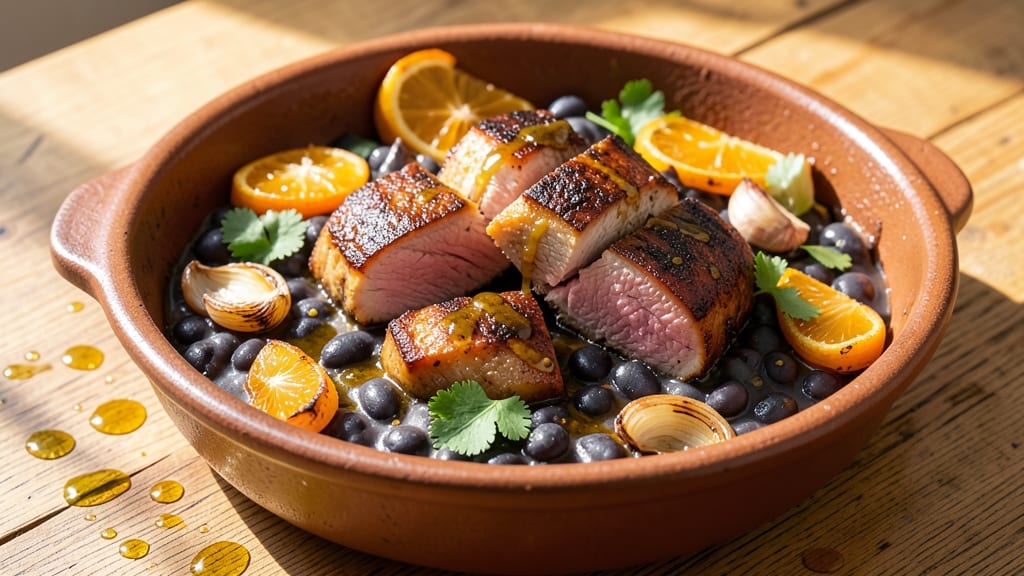
This Brazilian pork and black beans recipe brings the bold flavors of a Brazilian feijoada to your table with a smoky garlic twist. I developed this one-pot method after years of perfecting slow-cooked pork and beans—where rich, tender meat meets hearty black beans in a single aromatic pot.
The secret lies in layering spices, using a touch of dendê oil for that signature Brazilian depth, and letting everything simmer until the pork falls apart effortlessly. It’s the kind of dish that transforms a simple weeknight into a taste of Brazil’s vibrant street food culture.
The beauty of this recipe is its simplicity: just a few quality ingredients working together to create restaurant-quality results. You’ll start with a pork shoulder, slow-cooked until it’s fork-tender, while black beans absorb all the smoky, garlicky flavors from the broth.
Traditional Brazilian techniques like using jerimum (pumpkin) and pimenta-malagueta (Malagueta pepper) add complexity without overwhelming the dish. The result is a deeply satisfying meal that’s perfect for feeding a crowd or meal prepping for the week.
What you’ll end up with is a steaming pot of tender pork and black beans, where each bite delivers layers of smoky, garlicky, and slightly spicy flavors. The beans are creamy and rich, while the pork is melt-in-your-mouth tender, all infused with the warm, earthy notes of dendê oil.
Serve it with fluffy white rice and a sprinkle of farofa for the full Brazilian experience. This is comfort food at its finest—bold, hearty, and impossible to resist.
Whether you’re craving a taste of Brazil or just looking for a foolproof one-pot meal, this recipe delivers. The slow cooking process means minimal effort on your part, but maximum flavor and satisfaction. Let’s get cooking—your taste buds will thank you.
Ingredients for brazilian pork and black beans
Just 14 ingredients for a Brazilian feast that tastes like a restaurant’s secret menu.
| Ingredient | Amount | Notes |
|---|---|---|
| Pork Shoulder 🥓 | 3 lb | Bone-in for best flavor |
| Dried Black Beans 🫘 | 2 cups | Soaked overnight or quick-soaked |
| Dendê Oil 🫒 | 2 tbsp | For authentic Brazilian flavor |
| Garlic Cloves 🧄 | 8 cloves | Minced for smoky depth |
| Yellow Onion 🧅 | 1 whole | Diced, medium size |
| Jerimum (Pumpkin) 🎃 | 1 cup | Cubed, skin removed |
| Pimenta-Malagueta Pepper 🌶️ | 1 tsp | Or substitute with cayenne |
| Bay Leaves 🍃 | 2 whole | For aromatic depth |
| Cumin Seeds 🌿 | 1 tsp | Toasted for warmth |
| Salt 🧂 | 1 ½ tsp | Adjust to taste |
| Black Pepper 🌶️ | ½ tsp | Freshly ground |
| Chicken Broth 💧 | 4 cups | Low-sodium preferred |
| Fresh Cilantro 🌿 | ¼ cup | Chopped, for garnish |
| Lime 🍋 | 1 whole | Juiced, for brightness |
The pork shoulder is the star—bone-in cuts stay juicier and add depth to the broth. Look for a well-marbled piece at Whole Foods or your local butcher shop (they’ll often cut it for you). If you can’t find dendê oil, smoked paprika at half the amount works in a pinch, but trust me, it’s worth hunting down at a Latin market or online. The black beans? Dried is best—canned lacks that earthy texture. Soak them overnight or use the quick-soak method (boil 2 minutes, then let sit for an hour).
Pimenta-malagueta is the spicy soul of this dish. If you can’t find it, cayenne or Malagueta pepper are good swaps (start with half the amount). Jerimum (pumpkin) adds a subtle sweetness—substitute with butternut squash if needed. The cumin seeds? Toast them whole in a dry pan for 30 seconds before grinding—they’ll smell like a Brazilian kitchen. For extra richness, add a splash of dark beer with the broth. And if you’re feeling fancy, finish with a sprinkle of farofa (toasted cassava flour) before serving.
This dish tastes even better the next day—3-4 days in the fridge, no problem. Freezes beautifully for up to 3 months (portion into containers for easy reheating). Store the cilantro separately to keep it fresh. The pork will get even more tender with time, so don’t rush it. For meal prep, double the recipe—it’s perfect for lunches all week. Leftovers reheat well with a splash of water or broth to loosen everything up.
Why You'll Love This Recipe
- One-Pot Magic: I swear by this—just toss everything in one pot and walk away. The beans soak overnight (or use canned in a pinch), and the pork shoulder melts into tender perfection while the onions caramelize. Minimal chopping, zero fuss, and that golden dendê oil ties it all together like a flavor hug.
- Dendê Oil Magic: Honestly, this is where the recipe shines. A splash of dendê oil—it’s like liquid sunshine—transforms the dish from "good" to "I need seconds." That nutty, slightly sweet aroma? It clings to the pork and beans like a spice hug, making every bite taste like a trip to Salvador.
- Weeknight Workhorse: Between us, this is my go-to when I’m too tired to think. Serve it over rice for a hearty dinner, stuff it in tacos for a fun weekend twist, or even pile it onto toast for breakfast (yes, really). The leftovers? They’re just as good the next day—better, even, as the flavors deepen.
- Budget Feast: Pork shoulder and dried beans stretch into a meal that feeds four for under $15. I’ll be real: my grocery bill smiles every time I make this. Plus, the beans soften just enough to be kid-approved, and the rich dendê oil makes it feel special without breaking the bank. Win-win.
Step-by-step instructions for smoky garlic-spiced one-pot magic
Here's how to create a rich, flavorful Brazilian pork and black bean dish in one pot.
Prepare the Pork Shoulder and Soak the Black Beans
Pat the 3 lb pork shoulder dry with paper towels and cut it into 2-inch chunks. This size ensures even cooking and maximum flavor penetration. Place the pork in a large Dutch oven or heavy pot—this is your one-pot magic happening right here.
In a separate bowl, combine the 2 cups dried black beans with enough cold water to cover by 2 inches. Let them soak for at least 8 hours (or overnight) for best texture. If you're short on time, do a quick soak: cover the beans with boiling water, then let them sit for 2 hours. Drain and rinse before using.
Sauté Aromatics and Brown the Pork
Heat the 2 tbsp dendê oil in the Dutch oven over medium-high heat until shimmering. Add the 8 cloves minced garlic cloves and 1 whole yellow onion (diced). Sauté for 4-5 minutes until the onion softens and the garlic turns golden—this builds the flavor foundation.
Add the pork shoulder chunks in a single layer, letting them sear undisturbed for 3-4 minutes per side until deeply browned. This step is crucial—it locks in juices and creates that smoky depth. Once browned, remove the pork and set it aside temporarily.
Build the Flavor Base with Spices and Pumpkin
In the same pot, add the 1 tsp toasted cumin seeds and 1 tsp pimenta-malagueta pepper. Toast them for 30 seconds until fragrant—this releases their essential oils. Add the 2 whole bay leaves, 1.5 tsp salt, and 0.5 tsp black pepper, stirring to coat the bottom of the pot.
Pour in the 4 cups chicken broth and scrape up any browned bits from the bottom (this is called deglazing and adds tons of flavor). Add the drained black beans and 1 cup cubed jerimum (pumpkin). Bring everything to a gentle boil, then reduce heat to low and cover partially. Let it simmer for 45 minutes, stirring occasionally.
Cook the Pork Until Tender
Return the pork to the pot, spooning some of the bean mixture over the top to keep it moist. Cover and simmer for 1.5 to 2 hours on low heat, until the pork is fork-tender and easily pulls apart. You'll know it's done when the internal temperature reaches 205°F—this ensures melt-in-your-mouth texture.
During the last 30 minutes, check the liquid level and add water if needed to keep the beans from drying out. The pumpkin should be tender but still hold its shape—this adds a subtle sweetness that balances the smoky flavors.
Finish with Fresh Herbs and Brightness
Once the pork is tender, remove it from the pot and shred it using two forks. Return the shredded pork to the pot and stir in the juice of 1 whole lime and 0.25 cup chopped fresh cilantro. Let it simmer uncovered for 5 minutes to let the flavors meld—this final step brightens the dish and ties everything together.
Taste and adjust seasoning if needed. Serve immediately over rice or with warm crusty bread. The one-pot magic delivers a hearty, flavorful meal that's perfect for feeding a crowd—every bite combines tender pork, smoky beans, and a hint of tropical brightness.
Pro Tips For Making Brazilian Pork And Black Beans
- CRANK THE HEAT: Start your pork shoulder in a screaming-hot Dutch oven—no babying it. The first 10 minutes at max heat build that deep, caramelized crust that holds up through hours of slow cooking. (Yes, even if you’re impatient like me.)
- SOAK BEANS UNTIL SOFT: Skip the overnight soak—just cover dried black beans in water and simmer for 2 minutes, then let them sit off heat for 1 hour. They’ll soften faster and hold their shape better, so you don’t end up with a mushy, gluey mess later.
- DON’T SKIP THE DENDÊ: That golden oil isn’t just for color—it’s the soul of the dish. Use 2 tablespoons at the end, swirling it into the beans while they simmer. The nutty, slightly bitter heat cuts through the richness of the pork and balances the garlic. (Trust me, I’ve tried skipping it.)
- SLOW COOK THE PORK: Low and slow is non-negotiable here. After searing, drop the heat to a bare simmer (180°F/82°C) and let the pork shoulder cook for 3–4 hours, turning occasionally. Rushing it makes the meat dry and chewy—no one wants tough pork in their beans.
Regional styles of this brazilian pork and black beans
Bahian Feijoada
In Bahia, the birthplace of feijoada, this dish takes center stage as a Sunday family tradition. The Bahian version includes collard greens (couve) and dried shrimp (camarão seco) alongside the pork and beans.
I always add ½ cup dried shrimp to the pot during the last 30 minutes of cooking—they soak up the smoky flavors beautifully. Serve with farofa (toasted cassava flour) and a side of couve for the full Bahian experience. 🌶️
Rio de Janeiro Style
Rio’s feijoada is lighter on the pork, focusing more on the beans and a touch of orange zest to brighten the dish. Swap the jerimum for ½ cup orange segments> and add 1 tsp grated orange zest> with the lime at the end.
The city’s version often includes sausage (linguiça)>, so add ½ lb sliced linguiça> when browning the pork. Garnish with orange slices> for a festive touch.
Southern Brazilian Churrasco Influence
In the churrasco regions of Rio Grande do Sul, feijoada gets a smoky grill twist. After cooking the pork in the pot, transfer it to a grill or grill pan for 5-7 minutes> to char the edges.
The smoky aroma elevates the dish, and the crispy exterior contrasts with the tender pork. Serve with grilled pão de queijo> (cheese bread) and a side of vinagrete> (Brazilian salsa). This fusion keeps the hearty flavors while adding a smoky depth.
Nordestino Spicy Kick
The Northeast’s feijoada is all about heat and freshness. Add 1 tbsp malagueta pepper paste> (or extra pimenta-malagueta) and finish with ½ cup chopped cilantro and 1 jalapeño (seeds removed, minced)>.
The region’s version often includes dendê oil> not just for flavor but as a garnish—drizzle 1 tsp> over each serving before eating. Pair with tapioca flour crepes> for a lighter alternative to rice.
Modern Brazilian Fusion
For a contemporary take, blend the traditional flavors with modern techniques. Use a slow cooker> for the pork and beans (cook on low for 6-8 hours>), then finish with a blender purée of 1 cup beans> mixed back in for creaminess.
Top with crispy fried shallots> and a dollop of goat cheese>. This version keeps the soul of feijoada while adding a gourmet touch that appeals to younger palates.
Nutrition facts
Frequently asked questions
Can I substitute bone-in pork shoulder with bone-in ribs or pork belly?
You can use pork belly for extra richness, but ribs will cook faster and may dry out. For ribs, cut them into 2-inch pieces and reduce cooking time to 1 hour after the initial simmer. Pork belly should be cooked uncovered for the last 30 minutes to render fat. The key is tender meat—use a meat thermometer for 205°F internal temp.
What if I can't find dendê oil? What's the best substitute?
For authentic flavor, hunt for dendê oil at Latin markets or online. In a pinch, use ½ tbsp smoked paprika + ½ tbsp olive oil for depth. For extra richness, add 1 tbsp coconut oil—it mimics the slight sweetness. The dish will still taste delicious, but the signature Brazilian note will be subtler.
How do I make this dish spicier without overpowering it?
Start with ½ tsp pimenta-malagueta and adjust to taste. For heat lovers, add 1 sliced jalapeño (seeds removed) during the last 30 minutes of cooking. The beans absorb heat well—taste and add more spice gradually. For smoky heat, finish with ½ tsp crushed red pepper flakes.
Can I make this in an Instant Pot or slow cooker?
For Instant Pot: Sauté aromatics, brown pork, then pressure cook on high for 45 minutes with beans. Natural release 10 minutes, then shred pork and finish with lime. For slow cooker: Combine everything and cook on low for 6-8 hours, adding broth as needed to prevent drying.
Why did my beans turn mushy? How can I fix it?
Mushy beans usually mean overcooking or too much liquid. Next time, simmer uncovered for the last 15 minutes to thicken the sauce. For this batch, blend ½ cup beans with ¼ cup broth and stir back in to add creaminess. Always use dried beans (not canned) and avoid overcrowding the pot.