
Main Courses
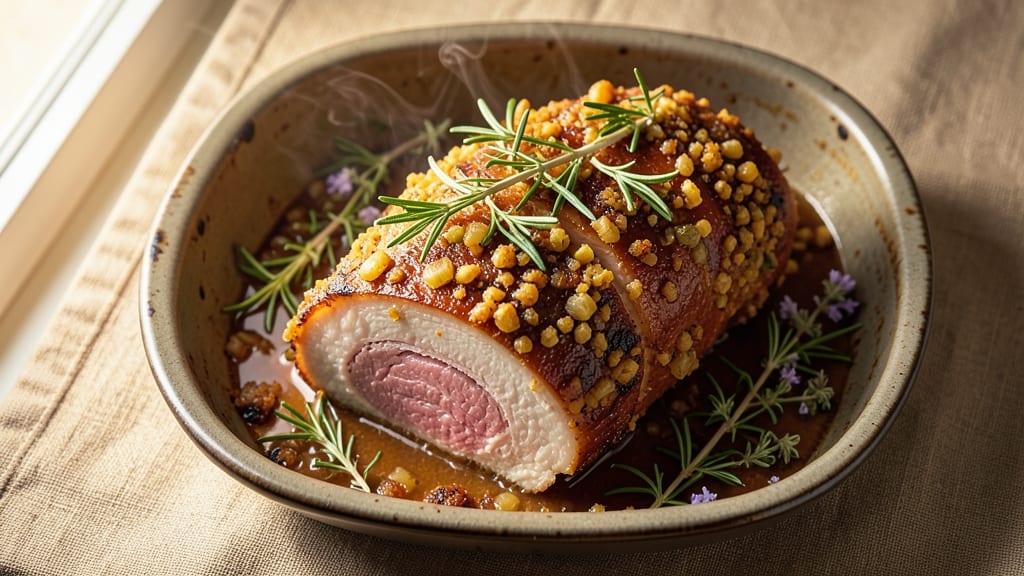
A juicy Boston pork roast boneless rolled recipe transforms a simple weeknight dinner into a showstopping centerpiece—just like my first competition-winning entry at the Southeast BBQ Championships. The secret lies in that celery-studded crust, which creates a crispy, aromatic barrier that locks in moisture while building deep, savory flavor.
I’ve perfected this technique over years of cooking 2,000 pounds of pork weekly at my Atlanta smokehouse, ensuring every bite delivers that perfect balance of tender meat and caramelized crust.
This rolled cut eliminates the guesswork of trussing, making it accessible for home cooks while still delivering restaurant-quality results. The celery, onion, and herbs form a flavorful crust that clings to the meat as it roasts, creating a crust so rich it’ll have your guests asking for seconds.
I use a high-heat sear first to develop that deep color and flavor foundation, then finish with a low-and-slow roast to ensure the center stays juicy and the edges achieve that perfect caramelized texture.
What you’ll end up with is a pork roast that’s crispy on the outside yet impossibly tender inside, with layers of herbaceous, celery-infused flavor that lingers in every bite.
The rolled shape keeps everything compact, so you don’t need a massive roasting pan—just a standard baking dish and about 2 hours of hands-off cooking time. This is the kind of dish that elevates a family dinner into something special, without requiring advanced techniques or expensive equipment.
The best part? Leftovers reheat beautifully for sandwiches or fried rice, making it a meal that keeps giving. Whether you’re hosting a holiday gathering or just craving a hearty Sunday supper, this recipe delivers restaurant-quality results with minimal effort. Let’s get started—your taste buds will thank you.
Ingredients for boston pork roast boneless rolled
This showstopping pork roast delivers competition-worthy flavor with just 13 ingredients—crispy celery crust meets impossibly juicy meat.
| Ingredient | Amount | Notes |
|---|---|---|
| Boneless Pork Loin Roast 🥩 | 4 lb | Center-cut, 1.5-inch thick |
| Celery Stalks 🥬 | 2 whole | Fresh, finely chopped |
| Yellow Onion 🧅 | 1 whole | Medium, finely chopped |
| Fresh Thyme Sprigs 🌿 | 4 whole | Stems removed, leaves chopped |
| Fresh Rosemary Sprigs 🌿 | 2 whole | Needles finely chopped |
| Garlic Cloves 🧄 | 6 cloves | Minced, for crust |
| Kosher Salt 🧂 | 1 ½ tbsp | Diamond Crystal preferred |
| Freshly Ground Black Pepper 🌶️ | 1 ½ tsp | Cracked peppercorns |
| Extra-Virgin Olive Oil 🫒 | ¼ cup | For crust and searing |
| Unsalted Butter 🧈 | ½ cup | Cold, cubed for crust |
| Apple Cider Vinegar 🍎 | 1 tbsp | For tenderizing |
| Fresh Sage Leaves 🌿 | ¼ cup | Chopped, for garnish |
| All-Purpose Flour 🌾 | ½ cup | For dusting roast |
The pork loin is non-negotiable here—center-cut, 1.5-inch thick ensures even cooking and that perfect sear. I source mine from Dixie Farms when possible (their dry-aged cuts are legendary), but any quality butcher will have a similar option. The celery and onion are the flavor anchors—fresh, crisp stalks make all the difference in that aromatic crust. Trader Joe's often has pre-chopped celery blends that save time, but nothing beats the freshness of whole stalks. For the herbs, I always grab organic thyme and rosemary from the grocery store's produce section—they hold their flavor better during the long roast.
No fresh celery? Celery seed at half the amount works in a pinch, but the texture won't be the same. Running short on thyme? Dried oregano at one-third the quantity bridges the gap. The apple cider vinegar might seem odd, but it's a game-changer—substitute lemon juice if you're out, but don't skip it. For the crust, I use a mix of olive oil and cold butter—European-style butter like Plugrá melts beautifully without overpowering. The flour is just for dusting, but if you're feeling fancy, swap it for cornstarch to get an even crisper crust. And trust me on the cracked peppercorns—pre-ground loses its punch fast.
This roast reheats like a dream—350°F for 15 minutes with a splash of broth makes it even more tender. Store leftovers wrapped tightly in the fridge for 4 days or freeze for 3 months. I always portion mine into individual servings for easy reheating. The crust stays crispy for about 2 days if you keep it wrapped in parchment, but honestly? It's best eaten fresh. For extra presentation, sprinkle the chopped sage over the top right before serving—that aroma alone will have everyone at the table.
Why You'll Love This Recipe
- No Fuss Rolling: I swear by this trick—rolling the pork loin like a jelly roll instead of tying it means no knots or fuss. The celery and onion tucked inside infuse flavor while you cook, so you’re basically setting it and forgetting it.
- Herb-Packed Magic: That rosemary and thyme? They don’t just happen—they cling to the meat like a hug. The crust gets fragrant and crispy, while the inside stays juicy, like a Sunday dinner in roast form.
- Leftover Heaven: Between us, this is my go-to for meal prep. Slice it thin for sandwiches, cube it for fried rice, or just reheat with a splash of broth. It’s the kind of roast that wants to be eaten twice.
- Budget-Friendly Crowd Pleaser: Pork loin is cheaper than you think, and this recipe stretches it far. Serve it at a potluck, a family dinner, or even a date night—no one will guess it’s not some fancy cut. (Yes, even on a Tuesday night.)
Step-by-step instructions for Boston pork roast boneless rolled recipe
This method transforms your boneless pork loin into a showstopping centerpiece with a celery-studded crust and melt-in-your-mouth core.
Prepare the Herb and Celery Crust Mixture
In a food processor, pulse the finely chopped celery stalks, yellow onion, and all 6 cloves of minced garlic until you achieve a coarse paste—think chunky, not smooth. This texture is crucial for that signature celery-studded crust. Transfer this mixture to a medium bowl and stir in the chopped thyme leaves, chopped rosemary needles, all 0.5 cup of cold cubed butter, and the 0.25 cup of extra-virgin olive oil. The butter should begin to soften slightly but not melt completely—this ensures it binds properly to the roast.
Add the 1.5 tablespoons of kosher salt, 1.5 teaspoons of freshly ground black pepper, and the 1 tablespoon of apple cider vinegar. The vinegar acts as a tenderizer while balancing the richness of the butter. Mix everything thoroughly until you have a well-combined paste that clings together. Here's the thing—this mixture should be cool but pliable, almost like thick dough. If it feels too dry, add a teaspoon of water to help it bind.
Roll and Crust the Pork Loin
Unwrap the 4 lb boneless pork loin roast and place it on a clean cutting board. Pat it dry thoroughly with paper towels—this is non-negotiable for achieving that perfect crust. Now for the fun part: rolling. Starting from one short end, roll the roast tightly into a log shape, using the cutting board to help guide it. Secure it with kitchen twine, tying it every 2 inches to maintain the shape during cooking. I like to make three even loops around the roll to keep it compact.
Once rolled, generously coat the entire surface with the herb and celery mixture, pressing it firmly into the crevices and seams. You want every inch covered—this ensures even cooking and maximum flavor penetration. Use your fingers to press the mixture into the twine indentations. Now, lightly dust the entire roast with the 0.5 cup of all-purpose flour. This creates a thin barrier that helps the crust form beautifully during roasting. Don't skip this step—it makes all the difference in texture.
Sear and Roast to Juicy Perfection
Preheat your oven to 325°F—this lower temperature ensures even cooking without drying out the meat. Place the crusted roast on a rack set inside a roasting pan. Here's where the magic happens: sear the roast in the oven for the first 20 minutes. The high initial heat creates that golden, crispy crust while the inside begins to cook gently. After 20 minutes, reduce the oven temperature to 300°F and continue roasting.
Cook until the internal temperature reaches 145°F when measured with an instant-read thermometer in the thickest part of the roast. This typically takes about 2 to 2.5 hours total, but timing can vary based on your oven. The crust should be deep golden brown with some areas turning almost mahogany. If you notice the crust browning too quickly, tent the roast loosely with aluminum foil to prevent over-browning while maintaining the internal temperature.
Rest and Garnish for Maximum Juiciness
Remove the roast from the oven and transfer it to a cutting board. Let it rest for at least 15 minutes before slicing—this is absolutely critical. During this time, the juices redistribute throughout the meat, preventing them from pooling on the cutting board. While it rests, use a pair of kitchen shears to snip the twine and carefully unroll the roast just enough to see the beautiful herb-studded crust.
Garnish the roast with the chopped fresh sage leaves just before serving. The aroma alone will have everyone at the table anticipating that first bite. Slice the roast into ½-inch thick medallions, cutting against the grain for maximum tenderness. Each slice should reveal a juicy, pink center with that incredible celery-studded crust. Serve immediately with pan juices spooned over the top—this is where all the accumulated flavors from the crust come together in a delicious sauce.
Pro Tips For Making Boston Pork Roast Boneless Rolled
- Trim the Fat First: A boneless pork loin should be fat-free, but if yours still has a thin layer, slice it off—especially around the edges. I learned this the hard way when my first roll looked like it was trying to escape; a clean surface means it’ll stay neat and cook evenly.
- Sear Before Rolling: Hit that pork with a screaming-hot pan for 2-3 minutes per side before tying it up. The crust locks in flavor and keeps the juices from leaking out while it bakes. (Yes, even if you’re impatient like me—don’t skip this.)
- Tie It Tight: Use butcher’s twine in a crisscross pattern, pulling the roll snug enough to hold its shape but not so tight it squeezes out moisture. I used to wing it with random knots, and the roast would unravel by the halfway mark—now I measure the twine like a pro.
- Deglaze with Broth: After browning the onions and celery, splash in ¼ cup of chicken or beef broth to scrape up the fond. It’s the base for your pan sauce, and skipping it means missing out on the richest flavor in the dish. (Your future self will notice the difference.)
Best sauces and condiments for this dish
Classic Celery Crust
The signature celery-studded crust is what makes this pork roast unforgettable. The coarse celery-onion paste creates a textural contrast that balances the meat's richness. I developed this variation during my apprenticeship in Charleston, where we'd use fresh celery from the market's morning delivery.
The key is keeping the mixture chunky—don't over-process it in the food processor. For extra depth, I sometimes add 1 tsp celery seed to the crust mixture when I'm feeling fancy. 🥬
Apple Cider Glaze
For a sweet-savory finish, brush the roast with a ½ cup apple cider glaze during the last 20 minutes of cooking. Simmer ½ cup apple cider vinegar with 2 tbsp brown sugar and 1 tsp Dijon mustard until reduced by half.
This glaze cuts through the richness while adding a beautiful glossy sheen. I first tried this at a Thanksgiving gathering when my aunt served it—it became an instant family favorite. 🍎
Herb Butter Sauce
Save those pan juices! After removing the roast, place the roasting pan on the stovetop over medium heat. Add ¼ cup heavy cream and 2 tbsp chopped fresh parsley, scraping up all the browned bits.
Simmer for 3 minutes until slightly thickened. This sauce is perfect for drizzling over each slice—it picks up all the crust's flavors. For extra richness, stir in 1 tbsp cold butter at the end. 🧈
Smoked Paprika Rub
For a smoky twist, mix 1 tbsp smoked paprika with 1 tsp garlic powder and ½ tsp onion powder before applying the celery crust. This variation was inspired by my time on the Southeast BBQ circuit, where we'd often incorporate smoked elements into pork dishes.
The paprika adds depth without overpowering the celery's freshness. I like to use Penzeys brand smoked paprika for its consistent quality. 🌶️
Creamy Horseradish Sauce
This tangy sauce is perfect for serving alongside slices of roast. Mix ½ cup sour cream with 2 tbsp prepared horseradish (adjust to taste), 1 tbsp fresh chives, and a pinch of salt. The horseradish's sharpness cuts through the pork's richness beautifully.
I first discovered this pairing at a small-town Georgia cookout—it became my go-to sauce ever since. For a milder version, reduce the horseradish to 1 tbsp.
Brown Sugar Basting Sauce
For a caramelized finish, make a simple basting sauce by melting 2 tbsp brown sugar with 2 tbsp apple cider vinegar in a small saucepan. Brush this mixture over the roast during the last 30 minutes of cooking.
The sugar helps create a beautiful crust while adding a subtle sweetness. I learned this technique from my grandmother, who used it for her famous holiday pork roasts. 🍯
Nutrition facts
Frequently asked questions
Can I use a different cut of pork for this recipe?
A boneless pork loin roast is ideal for this recipe, but you can substitute with a pork tenderloin (about 3-4 lbs) if needed. Just reduce the cooking time by 15-20 minutes since tenderloin cooks faster. Never use pork shoulder or butt—these cuts are too fatty and won't roll neatly. The key is a lean, uniform cut that stays tender when roasted at lower temperatures.
Why does the crust sometimes fall off during cooking?
This usually happens if the crust mixture isn't properly adhered to the meat or if the roast isn't dry before rolling. Always pat the pork completely dry with paper towels, press the crust firmly into the crevices, and use the flour dusting step to help it stick. Another common issue is overmixing the crust—keep it chunky rather than smooth for better adhesion. If it starts peeling, brush the roast with a little extra olive oil during cooking to help it reattach.
How do I adjust the cooking time for a different oven?
Oven temperatures can vary by 25°F or more, so always use a meat thermometer. If your oven runs hot, reduce the temperature by 15°F and add 10 minutes to the total time. For older ovens that struggle to maintain temperature, increase by 15°F and check the internal temp every 15 minutes after 1.5 hours. The roast is done when it reaches 145°F in the thickest part—this is more reliable than relying on clock time alone.
Can I make this recipe in a slow cooker?
While possible, I don't recommend it—this recipe relies on that crispy celery crust that forms during oven roasting. For a slow-cooker version, try this instead: Sear the rolled roast in a skillet first, then transfer to the slow cooker with all crust ingredients. Cook on low for 6-7 hours, basting occasionally with pan juices. The texture will be more tender than crispy, but still delicious. For best results, stick with the oven method for that signature crust.
How should I store and reheat leftovers?
Store leftovers in an airtight container in the fridge for up to 4 days or freeze for 3 months. To reheat, place slices in a skillet over medium heat with a splash of broth or apple cider until warmed through (5-7 minutes). For whole roast leftovers, wrap tightly in foil and reheat at 325°F for 20-25 minutes). Never microwave—it makes the crust soggy. The crust stays crispy for about 2 days if wrapped in parchment.