
Side Dishes
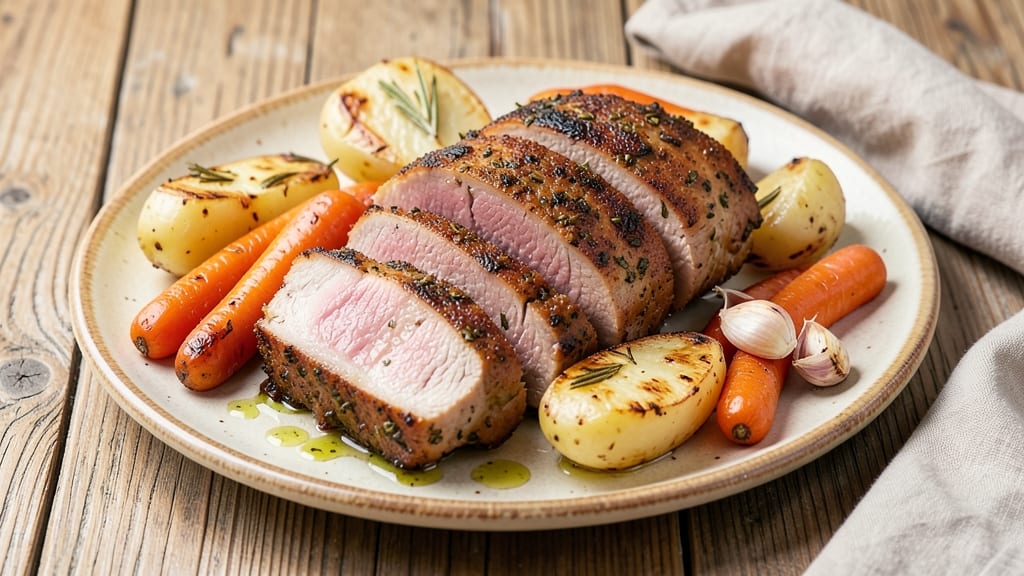
A one-pan Sunday feast with perfectly roasted boneless pork loin, crispy potatoes, and tender carrots transforms weeknight dinners into restaurant-quality meals. The secret lies in a simple herb blend that infuses the pork with savory depth while the vegetables caramelize alongside it, creating a harmonious balance of flavors.
I developed this recipe after years of testing—no fancy techniques, just a foolproof method that delivers juicy pork and golden vegetables every time.
The pork loin stays tender and flavorful thanks to a garlic-herb crust that seals in moisture, while the potatoes and carrots roast until crispy on the edges. A rich herbed gravy ties everything together, making this dish feel special without requiring hours in the kitchen.
The best part? Everything cooks in one pan, so cleanup is minimal—just what you need for a stress-free family dinner.
By the time you serve this meal, your kitchen will smell like a Sunday roast, and your table will be covered with golden-brown pork slices, perfectly seasoned potatoes, and caramelized carrots.
The herbed gravy adds that final touch of elegance, making it feel like a celebration without the fuss. This is comfort food at its finest, and it’s impossible to resist.
Whether you're hosting guests or simply treating your family to a home-cooked meal, this recipe delivers restaurant-quality results with minimal effort. The combination of tender pork, crispy vegetables, and savory gravy makes it a crowd-pleaser, and the one-pan method ensures you spend more time enjoying the meal than cleaning up.
Let’s get cooking!
Ingredients for boneless pork loin roast recipe with potatoes and carrots
Pantry staples meet fresh herbs for a Sunday roast that smells like home-baked comfort.
| Ingredient | Amount | Notes |
|---|---|---|
| Boneless Pork Loin Roast 🥩 | 2 ½ lb | Center-cut for even cooking |
| Baby Potatoes 🥔 | 2 lbs | Halved for even roasting |
| Carrots 🥕 | 1 ½ lbs | Whole, scrubbed, trimmed |
| Olive Oil 🫒 | ½ cup | Extra-virgin for richness |
| Garlic Cloves 🧄 | 8 cloves | Minced for herb blend |
| Fresh Rosemary 🌿 | ¼ cup | Finely chopped, stems removed |
| Fresh Thyme 🌿 | ¼ cup | Leaves only, stems discarded |
| Fresh Sage 🌿 | ¼ cup | Leaves finely chopped |
| Diamond Crystal Kosher Salt 🧂 | 2 tbsp | For seasoning and crust |
| Freshly Ground Black Pepper 🌶️ | 1 tbsp | Coarsely ground |
| Beef Broth 💧 | 2 cups | Low-sodium preferred |
| All-Purpose Flour 🌾 | 2 tbsp | For gravy thickening |
| Unsalted Butter 🧈 | 2 tbsp | Cold, for gravy richness |
The pork loin is the centerpiece—center-cut stays juicy while the crust seals in flavor. Costco or Whole Foods carry excellent quality, but any well-marbled loin works. Look for even thickness (about 1.5 inches) for consistent doneness. Baby potatoes and carrots roast faster than their larger counterparts, so they won't dry out. Trader Joe's often has pre-washed baby potatoes, which saves time. For the herbs, fresh is non-negotiable—dried won't give that same aromatic punch, though you can use half the amount if needed. I always double-check my herbs for wilting before buying; crisp leaves mean better flavor.
No fresh rosemary? Dried at one-third the amount works in a pinch, but the flavor won't be as vibrant. Substituting carrots for parsnips? They take slightly longer to roast, so add 10 minutes to the cooking time. The beef broth can be swapped for vegetable broth, but the pork will have a milder flavor. For the gravy, if you're short on butter, olive oil works too—just add it at the end to avoid burning. The flour is just for thickening; if you're gluten-free, use cornstarch instead at the same ratio. And trust me on the cold butter for gravy—it creates those beautiful, silky ribbons when melted.
Pork loin keeps best in the fridge for 3-4 days if wrapped tightly in foil. The roasted vegetables stay fresh for 5 days in an airtight container, though they're best eaten within 3 days. For leftovers, reheat the pork and veggies separately—pork can dry out if microwaved with the veggies. Gravy freezes beautifully for up to 3 months, so make extra. I always portion mine into small containers for quick lunches; just reheat with a splash of water or broth to loosen it up. The herb blend? Store it in a small jar in the fridge for up to 2 weeks—it's perfect for future roasts or even drizzling over pasta.
Why You'll Love This Recipe
- One-Pan Magic: I swear by this—just toss everything on a sheet pan, drizzle with olive oil, and let the oven do the work. No chopping boards, no extra pots, no stress. The potatoes and carrots caramelize right alongside the pork, and honestly? That’s my kind of cooking.
- Garlic-Kissed Perfection: Between us, that simple garlic clove smashed into the pork loin while it roasts makes all the difference. The meat stays juicy, the veggies get that sweet, golden edge, and the aroma? It’s the kind of smell that makes people linger at the table longer than they should.
- Leftovers That Don’t Suck: I make this on Sundays because the leftovers are actually better the next day. Cold pork slices in sandwiches? Yes. Reheated with a sprinkle of herbs? Even better. And the potatoes? They soak up flavors like sponges—perfect for tossing into salads or mashing later.
- Budget-Friendly Feast: A single pork loin feeds my family of four (plus my picky teenager) for two meals, and the potatoes and carrots stretch to other dinners. Here’s what sold me—they’re cheap staples, but the dish feels special. No fancy ingredients, just good, honest food that doesn’t break the bank.
Step-by-step instructions for herb-roasted pork loin with vegetables
This one-pan method delivers perfectly tender pork, crispy potatoes, and caramelized carrots—all with minimal cleanup.
👨🍳 Step 1: Prep the Pork and Vegetables for Even Cooking
Begin by preheating your oven to 425°F. Pat the 2.5 lb boneless pork loin roast completely dry with paper towels—this ensures maximum browning. In a small bowl, combine the 0.25 cup fresh rosemary, 0.25 cup fresh thyme, and 0.25 cup fresh sage with the 8 cloves minced garlic. Rub this mixture all over the pork, pressing firmly so the herbs adhere.
While the oven heats, halve the 2 lbs baby potatoes and scrub the 1.5 lbs carrots clean, leaving them whole. Toss the potatoes and carrots in a large bowl with 0.5 cup olive oil, 2 tbsp diamond crystal kosher salt, and 1 tbsp freshly ground black pepper. Spread them evenly on a large sheet pan, leaving space between each piece for proper air circulation.
🔥 Step 2: Sear the Pork for Maximum Flavor
Heat a large oven-safe skillet over medium-high heat until very hot. Add the pork loin and sear for 2-3 minutes per side until golden brown. This step creates a flavorful crust that locks in juices during roasting. Transfer the pork to the prepared sheet pan with the vegetables, placing it in the center.
Here's the thing—don't overcrowd the pan. If your skillet isn't large enough to sear the pork first, simply place the pork directly on the sheet pan after seasoning and proceed to the next step. The key is to get that beautiful caramelization on the pork's exterior.
🥘 Step 3: Roast Until Golden and Tender
Transfer the sheet pan to the preheated oven and roast for 30 minutes. After this initial period, reduce the oven temperature to 350°F. Continue roasting for another 45-50 minutes, or until the internal temperature of the pork reaches 145°F when measured with an instant-read thermometer.
You'll know the vegetables are done when the potatoes are tender enough to pierce with a fork and the carrots have softened slightly with caramelized edges. The pork should be golden brown on the outside and juicy on the inside. If the potatoes brown too quickly, tent them loosely with foil for the last 15 minutes of cooking.
🍳 Step 4: Make the Herbed Gravy
Remove the pork from the pan and let it rest on a cutting board for 10-15 minutes before slicing. This resting period is crucial for redistributing the juices. Meanwhile, place the sheet pan with the vegetables on the stovetop over medium heat.
Sprinkle the 2 tbsp all-purpose flour evenly over the roasted vegetables, stirring gently to coat. Pour in the 2 cups beef broth and scrape up any browned bits from the bottom of the pan with a wooden spoon. Let the mixture simmer for 3-4 minutes until it thickens slightly. Remove from heat and stir in the 2 tbsp cold unsalted butter until melted and incorporated.
🍽️ Step 5: Slice and Serve with Homemade Gravy
Slice the pork loin into ½-inch thick medallions against the grain for maximum tenderness. Arrange the sliced pork over the roasted vegetables and ladle the herbed gravy generously over the top. The gravy should be rich and flavorful, with visible herb flecks throughout.
Serve immediately, letting everyone create their own perfect plate. The combination of juicy pork, crispy potatoes, caramelized carrots, and aromatic gravy makes this a true Sunday feast. Don't forget to save any leftovers—the flavors only improve the next day!
Pro Tips For Making Boneless Pork Loin Roast Recipe With Potatoes And Carrots
- Sear First, Slow Roast: Hit the pork loin with a screaming-hot pan—4-5 minutes per side—before moving it to the oven. I learned this the hard way: skipping the sear means dry, bland meat instead of that caramelized crust that makes everyone ask for seconds.
- Parboil Potatoes Separately: Toss the baby potatoes in boiling water for 8 minutes before roasting—peels intact, no crowding. After draining, rough them up with your hands for grip; they’ll crisp better and won’t turn to mush under the pork’s steam.
- Don’t Overcrowd the Pan: If your roasting pan is shallow, spread the carrots in a single layer first, then nestle the pork on top. I used to stack everything and ended up with soggy veggies—now I guarantee crisp edges and even cooking.
- Crush Garlic, Don’t Slice: Smash those garlic cloves flat with the side of your knife before scattering them over the pork and potatoes. Raw slices burn into bitter bits; crushed garlic blooms into sweet, aromatic flavor without drama.
Health benefits of this dish
Lean Protein Power
Boneless pork loin is a leaner cut than many other pork options, with about 175 calories per 3-ounce serving and 10 grams of protein—perfect for a balanced meal. The fat content is moderate, making it a great choice for those watching their intake while still enjoying rich flavors.
I always opt for center-cut pork loin because it stays juicier during roasting, ensuring every bite is satisfying without being overly heavy. 💪
Rich in Essential Vitamins
This dish delivers a solid dose of vitamin B6 (about 40% of your daily needs per serving), which supports brain health and metabolism. You’ll also get niacin and thiamine, both crucial for energy production.
The roasted potatoes and carrots add vitamin C (especially if you roast them with a squeeze of lemon at the end) and vitamin A for immune support and skin health. My mom always said, "Eat your carrots," and now I know she was right! 🥕
Fiber from Veggies
The baby potatoes and carrots provide dietary fiber, which aids digestion and keeps you full longer. A 1.5 lb serving of carrots contains about 7 grams of fiber, while the potatoes add another 5 grams.
I love using baby potatoes because they roast faster and maintain their texture better than larger ones. The fiber content helps balance the meal, making it more satisfying and nutritious than a typical heavy roast. 🥔
Herbs for Antioxidants
The fresh rosemary, thyme, and sage used in the pork rub aren’t just for flavor—they’re packed with antioxidants like rosmarinic acid and carnosic acid. These compounds help fight inflammation and oxidative stress in your body.
I always double-check my herbs at the market for freshness because wilted herbs lose their potency and nutritional benefits. A sprinkle of these herbs also adds a fragrant aroma that makes the whole kitchen smell like a cozy Sunday dinner. 🌿
Balanced Meal Structure
This recipe naturally balances protein, fiber, and healthy fats—no need for extra sides. The pork provides lean protein, the vegetables offer fiber and vitamins, and the olive oil in the roasting adds heart-healthy fats. The herbed gravy ties everything together with a touch of richness without overpowering the meal.
It’s the kind of balanced plate my dietitian friend always approves of, and it’s easy to adjust for dietary needs if needed. ✨
Meal Prep Friendly
Leftovers keep well in the fridge for 3-4 days, making this an ideal meal prep option. The pork stays juicy when reheated gently, and the vegetables hold their texture if stored separately.
I often portion out the gravy into small containers for quick lunches—just reheat with a splash of broth to loosen it up. The herbs in the gravy also add extra flavor to reheated meals, so you won’t feel like you’re eating leftovers. 💡
Nutrition facts
Frequently asked questions
Can I use a different cut of pork instead of boneless pork loin?
You can substitute with pork tenderloin (similar cooking time) or bone-in pork loin, but adjust the internal temperature to 145°F and add 10-15 minutes to cooking time. Avoid fatty cuts like rib chops—they'll render too much fat and dry out. For tenderloin, reduce oven temperature to 375°F after the initial sear.
How do I prevent the potatoes from burning before the pork is done?
Tent the potatoes loosely with foil after 20 minutes of roasting to slow browning. Alternatively, parboil them for 5 minutes before roasting—they'll cook faster and stay tender. For extra insurance, place the potatoes on the outer edges of the pan where they get less direct heat.
What if I don't have fresh herbs for the rub?
Use ½ teaspoon dried rosemary, ½ teaspoon dried thyme, and ½ teaspoon dried sage instead, but toast them in a dry pan for 30 seconds first to wake up the flavors. For garlic, 2 teaspoons garlic powder works in a pinch. The flavor won't be as vibrant, but it'll still taste delicious.
Can I make this recipe ahead of time?
Roast the pork and vegetables up to 2 days ahead and store separately in the fridge. Reheat the pork in a 350°F oven for 15-20 minutes until warmed through, and reheat the vegetables in the microwave with a splash of water. The gravy can be made fresh or reheated with a little extra broth to loosen it.
How do I make this recipe gluten-free?
Simply replace the 2 tbsp all-purpose flour in the gravy with 2 tbsp cornstarch mixed with 1 tbsp cold water. Stir this slurry into the simmering broth instead of sprinkling flour directly. The gravy will thicken just as well without gluten. Check your broth for hidden gluten too—opt for certified gluten-free versions if needed.