
Main Courses
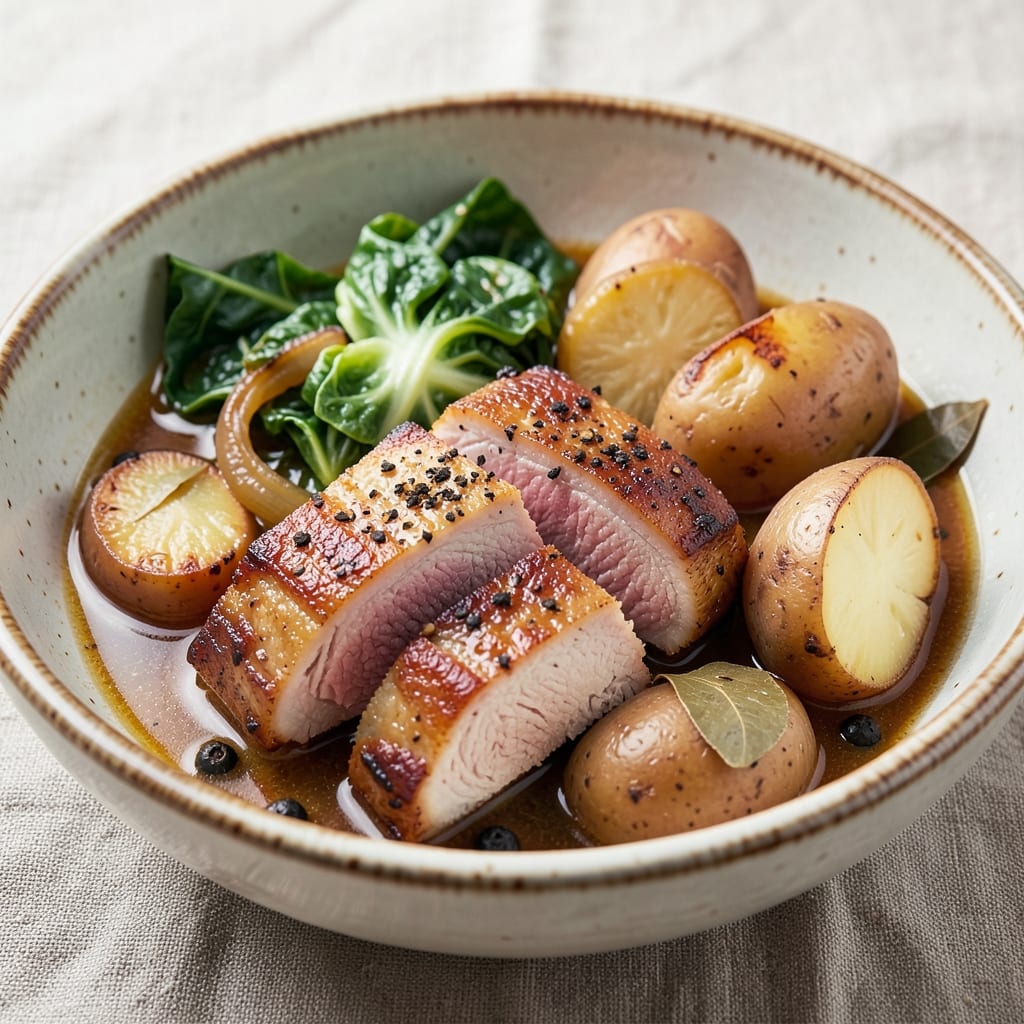
This boiled pork and cabbage recipe delivers the kind of hearty, comforting meal that feels like a warm hug on a cold day. Growing up in small-town Georgia, I learned that slow-simmered pork and cabbage transforms simple ingredients into something deeply satisfying—tender meat that practically melts in your mouth and cabbage that softens just enough to soak up every flavorful drop of the broth.
The secret lies in the technique: starting with a well-seasoned pork shoulder (never skip the salt!) and letting it simmer low and slow until it falls apart. I add bay leaves, peppercorns, and a splash of apple cider vinegar to the broth—not just for flavor, but to create that signature tangy depth that makes this dish unforgettable. The cabbage cooks down into rich, caramelized leaves that cling to the pork like a blanket.
What you’ll end up with is a foolproof one-pot meal that’s rich, savory, and packed with texture—crispy pork edges, tender meat, and cabbage that’s just shy of falling apart. The aroma alone will have everyone gathering around the table, and the leftovers? Even better the next day, if you can resist eating it all in one sitting.
This recipe works perfectly as a standalone meal or paired with crusty bread to soak up every last bit of that flavorful broth. Whether you're feeding a family or cooking for one, it’s the kind of dish that turns ordinary weeknights into something special. Let’s get started.
Ingredients for boiled pork and cabbage
Pork shoulder, cabbage, and potatoes—simple ingredients that transform into a comforting, tender meal.
| Ingredient | Amount | Notes |
|---|---|---|
| Pork Shoulder 🐖 | 3 lb | Bone-in for best flavor |
| Green Cabbage 🥬 | 1 whole | Heavier heads preferred |
| Russet Potatoes 🥔 | 4 medium | Cut into 2-inch chunks |
| Yellow Onion 🧅 | 1 whole | Quartered, skin on |
| Bay Leaves 🌿 | 2 whole | Fresh if possible |
| Black Peppercorns 🌶️ | 1 tbsp | Crushed, not ground |
| Apple Cider Vinegar 🍎 | ¼ cup | For tangy depth |
| Kosher Salt 🧂 | 2 tbsp | Adjust to taste |
| Water 💧 | 8 cups | Enough to cover meat |
| Garlic Cloves 🧄 | 4 cloves | Smashed, not minced |
| Carrots 🥕 | 3 medium | Cut into 1-inch pieces |
| Celery Stalks 🥬 | 3 whole | Cut into 2-inch pieces |
The pork shoulder is everything here. Look for a piece with good marbling—that's what gives you tender, juicy meat. I always grab mine from Costco when I'm doing a big batch, but the regular supermarket stuff works fine. If you're buying a whole shoulder, ask the butcher to cut it into chunks for you—2-3 inch pieces so they cook evenly. The cabbage should be firm with crisp outer leaves, and the potatoes? Russets are ideal—they hold up better than red potatoes. For the veggies, I like to get them pre-cut if I'm short on time, but chopping them yourself gives you better control over size.
No pork shoulder? Pork butt works just as well—they're basically the same cut. Short on cabbage? Substitute green cabbage with half red cabbage for a milder flavor. The carrots and celery can be swapped for whatever veggies you've got—turnips or parsnips add nice earthiness. If you don't have apple cider vinegar, white vinegar or lemon juice works in a pinch. The key is the balance of flavors—the vinegar cuts through the richness of the pork, and the bay leaves add that subtle herbal depth. Don't skip the garlic, though—it's what ties everything together.
This dish tastes even better the next day, so double the recipe if you can. The broth keeps for 5 days in the fridge, and the meat stays tender for 3 days if stored properly. I like to portion it into containers with the broth and veggies—freezes beautifully for up to 3 months. For serving, I always keep a loaf of crusty bread on hand to soak up that rich broth. Leftovers reheat perfectly—just add a splash of water or broth to keep everything moist.
Why You'll Love This Recipe
- One-Pot Magic: I swear by this—just toss in the pork shoulder, potatoes, onion, and cabbage, then let the water do the work. No flipping, no fussing, just set it and forget it while you handle the rest of dinner.
- Pork So Tender: That slow-simmered shoulder falls apart with every bite, while the bay leaves and onion build a deep, savory broth. Honestly, the first time I tried it, I nearly licked the pot clean.
- Leftovers? My Favorite: This dish only gets better the next day. Reheat the pork and cabbage with a splash of water, and it’s like a hearty stew—perfect for quick lunches or feeding unexpected guests.
- Budget-Friendly Feast: Pork shoulder and cabbage stretch for miles, and potatoes bulk it up without breaking the bank. Between us, this is how I feed my whole family for under $15. No guilt, just flavor.
Step-by-step instructions for boiled pork and cabbage
Here's how to create a hearty, comforting meal with melt-in-your-mouth pork and perfectly tender vegetables.
Prepare the Pork Shoulder for Cooking
Start by rinsing the 3 lb pork shoulder under cold water and patting it completely dry with paper towels. This step is crucial—any moisture on the meat will prevent proper browning and create steam instead of a flavorful crust. Place the pork in a large Dutch oven or heavy pot that can accommodate all the ingredients without crowding.
Add the 2 whole bay leaves, 1 tbsp crushed black peppercorns, and 2 tbsp kosher salt directly to the pot. Gently press the spices onto the meat's surface so they adhere well. This ensures even seasoning throughout the cooking process. The bay leaves will infuse the meat with aromatic depth, while the peppercorns add a subtle, warm spice that complements the rich pork flavor.
Prep and Add the Vegetables
While the pork is seasoning, prepare the vegetables. Cut the 4 medium russet potatoes into 2-inch chunks, the 3 medium carrots into 1-inch pieces, and the 3 whole celery stalks into 2-inch sections. Peel and quarter the 1 whole yellow onion, leaving the skin on for added texture and flavor. Core and break the 1 whole green cabbage into wedges, removing any tough outer leaves.
Add the onions to the pot with the pork, followed by the potatoes, carrots, and celery. Arrange the cabbage wedges around the pork, leaving space for them to expand as they cook. The vegetables should fit snugly but not be packed tightly—this allows them to absorb the pork's juices and develop rich flavor. If your pot is large enough, you can layer the vegetables in stages to ensure even cooking.
Simmer the Pork and Vegetables
Pour the 8 cups water over the pork and vegetables, ensuring the pork is fully submerged. Add the 4 smashed garlic cloves and 0.25 cup apple cider vinegar to the pot. The vinegar adds a bright, tangy note that cuts through the richness of the pork, balancing the dish beautifully. Bring the liquid to a gentle boil over medium-high heat, then immediately reduce the heat to low to maintain a steady simmer.
Cover the pot with a tight-fitting lid and let the mixture simmer for 2 hours. This low-and-slow cooking method ensures the pork becomes fork-tender without drying out, while the vegetables absorb the pork's juices and develop a deep, savory flavor. Check occasionally to ensure the water level doesn't drop below the pork—add a splash of hot water if needed. The cabbage should be tender but still hold its shape, and the potatoes should be easily pierced with a fork.
Finish and Serve with Confidence
Once the pork reaches an internal temperature of 203°F (use a meat thermometer to check the thickest part of the shoulder), remove it from the pot and let it rest on a cutting board for 15 minutes. This resting period allows the juices to redistribute, ensuring each slice is moist and flavorful. While the pork rests, skim any excess fat from the broth if desired—this step keeps the dish lighter without sacrificing flavor.
Slice the pork into ½-inch thick pieces and return it to the pot with the vegetables. Taste the broth and adjust the seasoning with additional kosher salt or a splash of apple cider vinegar if needed. Serve the pork and vegetables directly from the pot, allowing everyone to enjoy the rich, savory broth along with the tender meat and vegetables. This dish is even better the next day, as the flavors deepen and the pork becomes even more tender with time.
Pro Tips For Making Boiled Pork And Cabbage
- Parboil Pork First: Toss the pork shoulder into simmering water for 10 minutes before adding everything else—this guarantees even cooking and prevents the meat from drying out later. I used to skip this, and the pork always ended up tough on the outside or raw inside. ---
- Core the Cabbage: Cut out the thickest part of the cabbage head before shredding—it’s the toughest and chews like cardboard if left in. Save yourself from gnawing on tough bits by slicing off that stubborn center first. ---
- Salt the Potatoes Early: Toss the potatoes into the water with the pork, not after—salting them later means they’ll taste bland no matter how much you season afterward. Trust me, the first 20 minutes of cooking is when they soak up flavor. ---
- Use Two Onions: Dice one onion finely for flavor, and slice the second into thick wedges to layer with the pork—this adds sweetness and prevents the meat from sticking to the pot. I learned this from my grandma, who swore by "two onions for every cut of meat."
Perfect pairings for this recipe
Crusty Bread Pairings
There’s nothing better than serving this dish with a warm, crusty loaf to soak up every last drop of that flavorful broth. I love using a sourdough boules from my local bakery—its open crumb and tangy flavor complement the pork beautifully. For a quick homemade option, try a no-knead bread baked in a Dutch oven. The crispy crust and soft interior make it perfect for mopping up the juices. 🥖
Tangy Mustard Sauce
Drizzle the pork and cabbage with a Dijon mustard sauce to cut through the richness. Mix 2 tablespoons Dijon mustard, 3 tablespoons sour cream, and 1 tablespoon apple cider vinegar with a splash of the cooking broth. This adds a bright, creamy contrast that elevates the dish. Trust me, it’s a game-changer for balancing flavors. 🌶️
Pickled Vegetable Garnish
Brighten the plate with quick-pickled red onions or carrots. Thinly slice ½ red onion and 2 carrots, then soak in ½ cup apple cider vinegar, 1 tablespoon sugar, and ½ teaspoon salt for 20 minutes. The tangy crunch adds a refreshing bite that cuts through the richness of the pork. 🥕
Herbed Butter Addition
For an extra touch of luxury, serve the dish with a garlic-herb butter. Mix ½ cup softened butter with 2 minced garlic cloves, 1 tablespoon chopped parsley, and ½ teaspoon dried thyme. Dollop it on top of the pork and cabbage just before serving—it melts into the dish and adds a rich, aromatic finish. ✨
Creamy Mashed Potatoes
If you want to stretch this into a full meal, serve it alongside creamy mashed potatoes. Use the leftover broth from the pot to make them—simmer 2 cups of the broth with ½ cup butter and ½ cup heavy cream, then mash with 2 cups cooked potatoes and ½ cup sour cream. The flavor connection is seamless. 🥔
Spiced Apple Slaw
For a refreshing contrast, try a spiced apple slaw. Thinly slice 2 apples and ½ cabbage, then toss with 2 tablespoons olive oil, 1 tablespoon apple cider vinegar, 1 teaspoon cinnamon, and ½ teaspoon salt**. The sweetness and crunch balance the hearty pork perfectly. 🍎
Nutrition facts
Frequently asked questions
Why does my pork turn out tough instead of tender?
The key is low-and-slow cooking—never rush it! Pork shoulder needs at least 2 hours of simmering at low heat to break down collagen. If yours is tough, you may have cooked it too fast or didn't use enough liquid. Try adding 1 extra cup of water and simmering 30 minutes longer next time. The internal temp should reach 203°F for perfect tenderness.
Can I use a slow cooker for this recipe?
Transfer everything to a 6-quart slow cooker, cover with water, and cook on low for 8 hours or high for 5 hours. The slow cooker maintains consistent heat, making it even easier to get tender meat. Just check the water level halfway through and add more if needed. The cabbage will soften perfectly while the pork stays juicy.
What if I don’t have apple cider vinegar?
No problem! Substitute with white vinegar or lemon juice in the same amount. The acidity is what brightens the dish—just avoid balsamic or wine vinegars, as they can overpower the pork. For extra depth, add a pinch of smoked paprika or a bay leaf to compensate for the missing tang.
How do I store leftovers without drying out the pork?
Let the pork cool completely, then store it in the broth with vegetables in an airtight container. Reheat gently on the stove with a splash of water or broth to restore moisture. Leftovers keep for 3 days in the fridge or 3 months in the freezer. For reheating, warm to 165°F—the broth will help keep everything tender.
Can I make this vegetarian?
Not traditionally, but you can adapt it! Swap the pork for firm tofu or tempeh (press and marinate first) or mushrooms for umami depth. Use vegetable broth instead of water and add smoked paprika or liquid smoke for that savory richness. The cabbage and potatoes will still shine—just reduce cooking time to 45-60 minutes.