
Main Courses
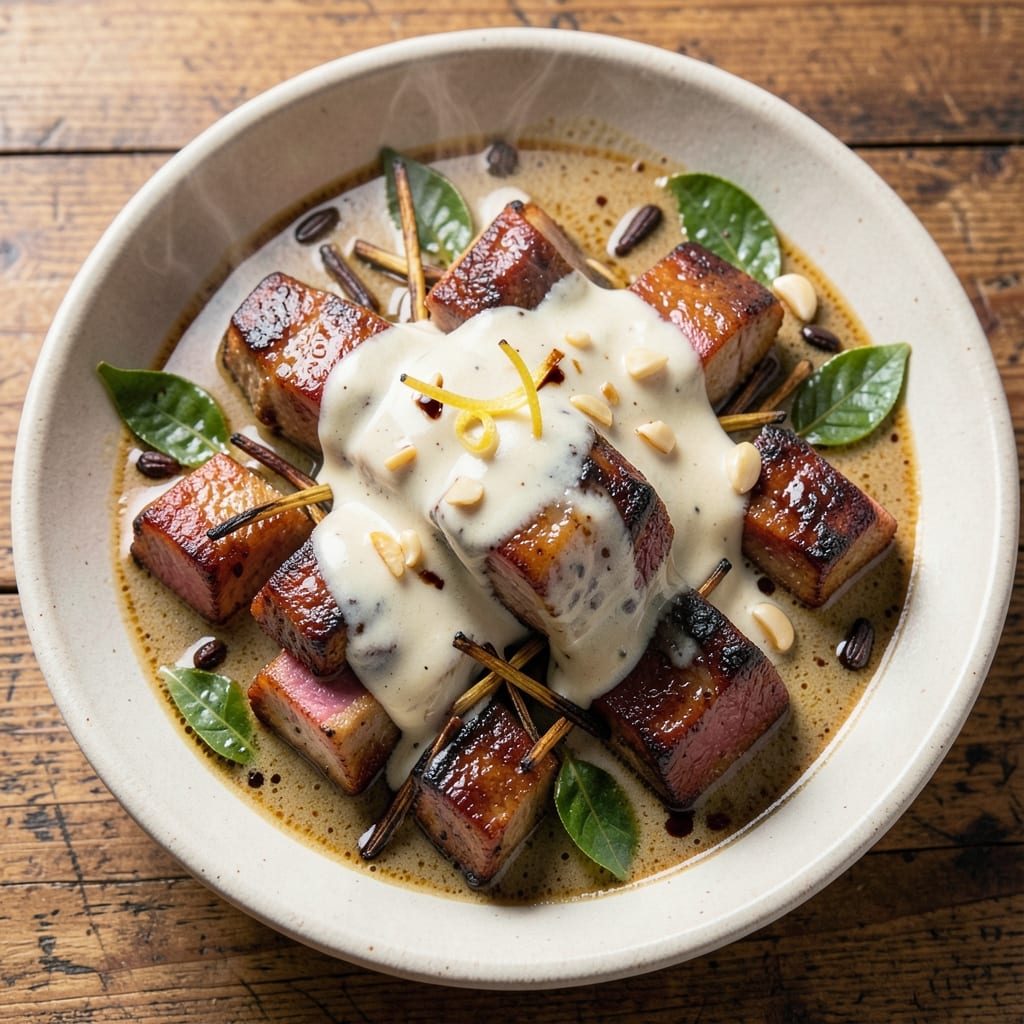
This black pork curry recipe transforms simple ingredients into a rich, aromatic masterpiece that balances smoky depth with creamy coconut notes. Growing up in Georgia, I learned how pork’s natural richness pairs beautifully with bold spices—this dish channels that tradition while adding a modern twist. The key lies in charring aromatics until they’re fragrant and caramelized, forming the foundation for layers of flavor that develop as the curry simmers.
The process begins with marinating pork shoulder in a blend of soy sauce, garlic, and ginger, then searing it until deeply browned before stewing in a fragrant coconut milk base. Black cardamom and star anise lend complexity, while lemongrass and kaffir lime leaves brighten the sauce. What makes this curry special is its balance—tender pork, velvety sauce, and just enough heat to linger without overpowering.
By the time it’s done, you’ll have a dish that’s hearty enough for a family dinner but elegant enough for guests. The pork falls apart effortlessly, soaking up the aromatic sauce, while the charred spices add a smoky backbone. Serve it over jasmine rice or with warm naan to soak up every last drop of that rich, spiced coconut goodness.
This recipe delivers restaurant-quality results with a technique that’s approachable yet impressive. Whether you’re cooking for a crowd or treating yourself to a flavorful weeknight meal, the depth of flavor and tender texture make it worth every minute of simmering time.
Ingredients for black pork curry
Pork shoulder, aromatic spices, and coconut milk create this restaurant-worthy curry with deep, charred flavors.
| Ingredient | Amount | Notes |
|---|---|---|
| Pork Shoulder 🍖 | 2 ½ lb | Bone-in for flavor, cut into 1.5-inch cubes |
| Soy Sauce 🥢 | ⅓ cup | Low-sodium preferred for balance |
| Garlic Cloves 🧄 | 8 cloves | Minced, fresh preferred |
| Fresh Ginger 🌿 | ¼ cup | Finely grated, peeled |
| Coconut Milk 🥥 | 2 cans | Full-fat, 13.5 oz each |
| Black Cardamom Pods 🌶️ | 4 whole | Lightly crushed, aromatic |
| Star Anise Pods 🌿 | 2 whole | Lightly crushed |
| Lemongrass Stalks 🌿 | 2 whole | Bruised, lower halves only |
| Kaffir Lime Leaves 🍋 | 4 whole | Torn into strips |
| Yellow Curry Paste 🌶️ | 2 tbsp | High-quality, store-bought or homemade |
| Cinnamon Sticks 🌿 | 1 whole | 2-inch pieces |
| Brown Sugar 🍚 | ¼ cup | Packed, light variety |
| Red Curry Powder 🌶️ | 1 tbsp | Adjust for heat preference |
| Vegetable Oil 🫒 | ¼ cup | High smoke point |
| Salt 🧂 | 1 ½ tsp | Kosher or sea salt |
The pork shoulder is the backbone of this dish—look for well-marbled cuts at your butcher or grocery store's meat counter. Costco or Whole Foods often carry excellent quality, but any reputable butcher will have a great selection. The bone-in version adds extra flavor as it simmers, but boneless works too if you're short on time. For the coconut milk, full-fat is non-negotiable—it creates that velvety texture. Avoid the 'lite' versions. The fresh ginger and garlic should be vibrant—no wrinkled or sprouting cloves. If you can't find kaffir lime leaves, substitute lime zest plus a bay leaf for brightness.
No black cardamom? Substitute 1 tsp ground cardamom—it won't be identical but works in a pinch. Star anise is crucial for that subtle licorice note, but if you're missing it, a pinch of ground anise seed will help. For the curry paste, Maesri or Thai Kitchen brands are reliable, but any good-quality paste will work. The lemongrass can be frozen if you buy it fresh—just thaw before using. If you're making this ahead, prep all the aromatics (ginger, garlic, spices) the night before and store them in the fridge for convenience. The brown sugar helps balance the heat without overpowering the dish—light brown sugar works best for subtle caramel notes.
This curry tastes even better the next day as flavors meld. Store leftovers in an airtight container in the fridge for up to 5 days, or freeze for 3 months in portion-sized containers. The sauce thickens as it cools, so add a splash of coconut milk or water when reheating. For serving, keep those charred aromatics (lemongrass, lime leaves) nearby—toss them into the rice while the curry reheats for an instant flavor boost. The pork will be fork-tender, so handle it gently when serving.
Why You'll Love This Recipe
- One-Pot Magic: I swear by this—just toss everything in a single pot and walk away. The pork shoulder practically melts into tender perfection while the garlic and ginger sizzle into a fragrant paste, no fancy steps required.
- Umami Bomb: That soy sauce isn’t just seasoning—it’s the star. The deep, savory punch from the black soy (or regular, if you’re in a pinch) cuts through the richness of the coconut milk, leaving you with a dish that’s ridiculously more flavorful than takeout.
- Lunchbox Hero: Between us, this is my go-to for meal prep. The curry thickens beautifully when reheated, and I pack it into jars with steamed rice—no soggy bottoms, just hearty, satisfying bites that taste like you actually cooked them.
- Budget Stretch: Pork shoulder is cheap, and this recipe stretches it into three or four meals without skimping on taste. Honestly, the first time I made it, I had enough leftovers to feed my book club, and no one even noticed I wasn’t serving something "fancy."
Step-by-step instructions for black pork curry
This aromatic curry builds flavor through layered techniques—charred aromatics, slow simmering, and balanced spices.
Char and Prepare Aromatics
Heat a dry skillet over medium-high heat. Add the 2 whole lemongrass stalks, 4 whole kaffir lime leaves, 1 whole cinnamon stick, 4 whole black cardamom pods, and 2 whole star anise pods. Toast for 2-3 minutes until fragrant and slightly charred—this deepens their flavor. Remove and set aside.
In the same skillet, add the 0.25 cup vegetable oil and heat until shimmering. Add the 8 cloves minced garlic and 0.25 cup finely grated fresh ginger. Cook for 1-2 minutes until golden and fragrant—don't let them burn. Transfer to a bowl and set aside with the charred aromatics.
Brown the Pork Shoulder
In a large Dutch oven or heavy pot, heat the same skillet over medium-high heat until hot. Working in batches, sear the 2.5 lb pork shoulder cubes until deeply browned on all sides—about 3-4 minutes per side. This step builds rich, caramelized flavor. Transfer the browned pork to a plate.
Return the pot to medium heat and add the 2 tbsp yellow curry paste, stirring for 1 minute to toast the spices. Pour in the 0.33 cup soy sauce and scrape up any browned bits from the bottom—this releases flavor locked in the fond.
Build the Curry Base
Return the pork to the pot along with the charred aromatics and garlic-ginger mixture. Add the 1 tbsp red curry powder and 0.25 cup packed brown sugar, stirring to combine. Pour in the 2 cans coconut milk and bring to a gentle simmer over medium heat. Add the 1.5 tsp salt and stir well.
Partially cover the pot and simmer for 1 hour, stirring occasionally, until the pork is tender and the sauce has thickened slightly. The flavors should meld beautifully—this is where patience pays off. If the sauce reduces too much, add ¼ cup water to maintain balance.
Finish and Serve
Once the pork is fork-tender and the sauce coats the back of a spoon, taste and adjust seasoning—add more salt or soy sauce if needed. The curry should be rich, aromatic, and perfectly balanced between sweet, salty, and spicy.
Serve immediately over steamed jasmine rice, garnished with fresh cilantro if desired. The charred aromatics add depth, while the coconut milk creates a velvety finish. Each bite delivers tender pork in a complex, deeply spiced sauce that's both comforting and exciting.
Pro Tips For Making Black Pork Curry
- Brown the Pork First: Don’t skip the initial sear—cut the pork shoulder into 2-inch chunks and cook them in a hot pan with 1 tablespoon of oil until deep brown, about 5-6 minutes per side. This step builds flavor that won’t dissolve into the sauce later, and the color tells you it’s ready. ---
- Use Double Soy Sauce: Start with half the soy sauce in the pan while browning the pork, then add the rest later. The first batch caramelizes into a sticky, glossy crust that clings to the meat, while the second batch balances the depth without overpowering. (Yes, even if the recipe only calls for one.) ---
- Blend Ginger Roughly: Skip the food processor—grate fresh ginger with the skin on and use a wooden spoon to smash it into a chunky paste. This keeps the texture vibrant and prevents the curry from turning into a smooth, pasty mess. (I learned this after accidentally making a gray sludge.) ---
- Simmer Low and Slow: After adding coconut milk, reduce heat to a bare simmer—just enough to see tiny bubbles at the edges. Rushing this step makes the curry split, and the pork stays chewy instead of meltingly tender. (Your patience here is the difference between "meh" and "wow.")
Flavor customization for this black pork curry
Spice Level Control
Adjust the heat to your preference by tweaking the red curry powder and black cardamom. For a mild version, reduce the curry powder to ½ tbsp and use 2 black cardamom pods. If you love heat, add 1 tsp chili flakes or a pinch of cayenne pepper at the end. I often keep a small bowl of chili flakes on the table for guests to customize their portion. 🌶️
Sweet-Spicy Balance
This curry thrives on the interplay between sweet and spicy. If your sauce tastes too sharp, add 1 tbsp more brown sugar or a splash of honey. For extra depth, stir in 1 tsp tamarind paste—it adds tanginess without overpowering. My favorite trick? A pinch of ground white pepper at the end adds warmth without heat. 💫
Creamy Variations
For a richer texture, stir in ½ cup heavy cream or ½ cup Greek yogurt in the final 10 minutes of simmering. This works especially well if you prefer a smoother sauce. If you're watching calories, swap the coconut milk for light coconut milk and add 1 tbsp cornstarch mixed with water to thicken it. 🥥
Herb and Citrus Boost
Brighten the dish with fresh herbs and citrus. Toss in ¼ cup chopped cilantro or thai basil at the end for a fresh finish. A squeeze of lime juice right before serving cuts through the richness. For a tangy twist, add 1 tbsp fish sauce—it deepens the umami without overpowering. 🍋
Protein Swaps
While pork shoulder is ideal, you can adapt this curry for other proteins. Swap the pork for chicken thighs (reduce simmering time to 30 minutes) or firm tofu (simmer for 20 minutes and add 1 tbsp soy sauce extra). For seafood lovers, use shrimp or scallops—simmer for just 5-7 minutes to avoid overcooking. 🍤
Slow Cooker Adaptation
For hands-off cooking, sear the pork as directed, then transfer everything to a 6-quart slow cooker. Cook on low for 6-7 hours or high for 4 hours. The slow cooker enhances the tenderness, and the flavors meld beautifully. Just stir in the coconut milk and aromatics at the end to avoid curdling. ⏳
Nutrition facts
Frequently asked questions about black pork curry
What makes this black pork curry different from regular pork curry?
This recipe uses black cardamom and charred aromatics (like lemongrass and kaffir lime leaves) to create a deeper, smokier flavor profile. The slow simmer with coconut milk and brown sugar balances the richness of pork shoulder, while the toasted spices add complexity that traditional curries often miss.
Can I use regular cardamom instead of black cardamom?
Yes, but the flavor will be subtly different. Black cardamom has a stronger, almost peppery aroma. If substituting, use 1 tsp ground regular cardamom and add ½ tsp ground black pepper to mimic the depth. The dish will still be delicious, just with a milder spice profile.
How do I prevent the curry from becoming too watery?
Simmer uncovered for the last 15 minutes to reduce the sauce naturally. If it still seems thin, mix 1 tbsp cornstarch with 2 tbsp water, stir into the curry, and simmer for 2-3 minutes until thickened. Avoid adding too much coconut milk at once—start with 1 can and adjust as needed.
What's the best way to reheat leftovers?
Gently reheat on low heat in a pot with a splash of water or coconut milk to prevent drying. For best results, cover and warm over medium-low heat for 10-15 minutes, stirring occasionally. Microwaving can make the sauce uneven—always stir well after reheating.
Can I make this curry in an Instant Pot?
Sear the pork as directed, then add all ingredients and cook on high pressure for 30 minutes. Quick-release the pressure, then simmer on sauté mode for 5 minutes to thicken the sauce. The Instant Pot cuts cooking time by nearly half while keeping the flavors rich and balanced.