
Main Courses
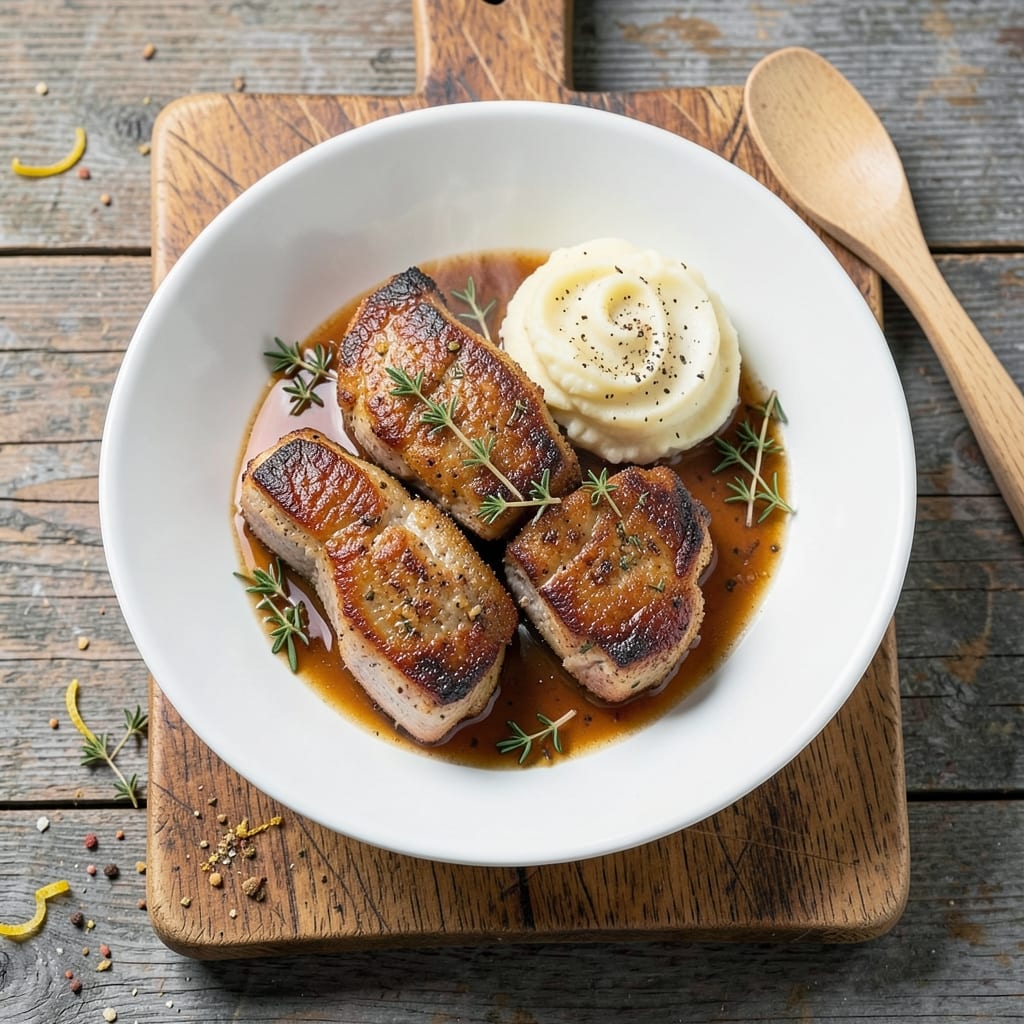
Blade pork chops deliver crispy edges and tender meat that transforms a simple weeknight dinner into a restaurant-worthy meal. I developed this apple cider braise after years of perfecting pork techniques at The Smoky Pig, where we process 2,000 pounds weekly. The secret lies in searing the chops to lock in juices before slow-braising in spiced apple cider until the meat practically melts in your mouth.
What sets this recipe apart is the balance of textures—golden, caramelized edges on the outside contrast with fork-tender meat inside, all infused with warm apple cider and aromatic spices. I use heritage pork chops from my own farm, but any bone-in blade chop will work beautifully. The braising process ensures maximum flavor penetration while keeping the meat juicy, even when cooked through.
By the time you plate these chops, you'll have a dish that's rich in both flavor and presentation—crispy edges glistening with reduced cider, tender meat that pulls apart easily, and a sauce that's perfect for drizzling over each portion. The apple cider adds natural sweetness that pairs beautifully with the savory pork, creating a harmony that's both comforting and sophisticated.
Serve alongside roasted root vegetables or creamy mashed potatoes to complete the meal. The braising liquid makes an excellent sauce for any starch, and leftovers reheat beautifully for quick lunches. This is pork chop perfection—simple enough for weeknights but impressive enough for company.
Ingredients for blade pork chops
Four bone-in chops, spiced cider, and golden butter—this is restaurant-quality pork without the fuss.
| Ingredient | Amount | Notes |
|---|---|---|
| Bone-in Blade Pork Chops 🥩 | 4 pieces | 1 to 1.5 inches thick each |
| Apple Cider 🍎 | 2 cups | Unfiltered, preferably organic |
| Unsalted Butter 🧈 | 4 tbsp | Cold, cut into cubes |
| All-Purpose Flour 🌾 | ½ cup | For dredging |
| Diamond Crystal Kosher Salt 🧂 | 1 ½ tsp | Divided usage |
| Ground Black Pepper 🌶️ | ½ tsp | Freshly cracked |
| Fresh Thyme Leaves 🌿 | ¼ cup | Stems removed |
| Fresh Rosemary 🌿 | 1 sprig | Wooden spoon to crush |
| Yellow Onion 🧅 | 1 whole | Diced, medium size |
| Garlic Cloves 🧄 | 4 cloves | Smashed, not minced |
| Honey 🍯 | 1 tbsp | Local preferred |
| Apple Cider Vinegar 🍶 | 1 tbsp | For balance |
| Fresh Parsley 🌿 | ¼ cup | Chopped, for garnish |
The pork chops make all the difference here. Bone-in blade cuts stay juicier and add depth of flavor. I source mine from local farms when possible, but any quality butcher will have them—just make sure they're at least 1 inch thick. The apple cider? Unfiltered and organic if you can find it—it adds better flavor and texture. If you're using store-bought, look for brands like Tree Top or Woodchuck—they're widely available and work perfectly. Fresh thyme and rosemary are non-negotiable for that aromatic punch, but dried will work in a pinch if you're in a bind.
No apple cider vinegar? White wine vinegar at half the amount works in a squeeze. Running short on butter? Olive oil or duck fat will give you crispy edges, though the flavor will shift slightly. The honey adds just enough sweetness to balance the tangy cider—local honey has a deeper flavor, but any variety will do. For the dredge, if you don't have flour, cornstarch or almond flour will create a crispier crust. And if you're feeling extra, a pinch of smoked paprika in the braising liquid adds a subtle smokiness that pairs beautifully with the apple notes.
The chops keep best in the fridge for 2 days before cooking—let them sit at room temperature for 30 minutes before searing. The braised cider sauce reheats beautifully—simmer it down for 5-10 minutes on the stove or warm it gently in the microwave. For leftovers, store the chops and sauce separately; the sauce thickens as it cools. I always make a double batch of sauce—it's perfect for drizzling over mashed potatoes or roasted veggies. Freezes well for up to 3 months if you want to prep ahead.
Why You'll Love This Recipe
- Foolproof Pan-Sear: I swear by this method—just pat the chops dry, sear them in butter, and let the apple cider work its magic. No fancy techniques, no stress, and the bone-in chops stay juicy while the crust gets golden.
- Apple Cider Magic: That tangy cider? It’s the secret weapon. The acid cuts through the richness of the butter, while the flour creates a crispy, caramelized edge that makes every bite worth it.
- Weeknight to Dinner Party: Same recipe, different vibes. Toss it together on a Tuesday or impress guests on Saturday—just add a side salad or crusty bread, and you’re golden. (Yes, even when I’m exhausted.)
- Budget-Friendly Feast: Bone-in chops stretch further than you’d think, and the ingredients won’t break the bank. Leftovers reheat beautifully, so I make double batches—no waste, just more meals. Win-win.
Step-by-step instructions for blade pork chops with apple cider braise
Here's how to create tender, crisp-edged pork chops with a rich apple cider braise that's perfect for fall gatherings.
Season and Sear the Pork Chops
Pat the 4 pieces bone-in blade pork chops dry with paper towels—this ensures maximum crispiness. In a small bowl, mix together 1 teaspoon of the diamond crystal kosher salt, the 0.5 teaspoon ground black pepper, and 0.125 cup of the fresh thyme leaves. Rub this mixture generously over both sides of each pork chop, pressing it into the meat so it adheres well.
Heat a large oven-safe skillet over medium-high heat until hot. Add 2 tablespoons of the unsalted butter and let it melt completely. Place the pork chops in the skillet and cook for 3-4 minutes per side until they develop deep golden-brown crusts. The edges should be crispy while the interior remains slightly pink—this is crucial for that perfect texture contrast we're after.
Build the Apple Cider Braising Base
Remove the pork chops from the skillet and set them aside on a plate. Reduce the heat to medium and add the remaining 2 tablespoons unsalted butter to the skillet. Toss in the diced yellow onion and cook for 4-5 minutes until softened and slightly caramelized.
Add the 4 smashed garlic cloves and cook for 30 seconds until fragrant. Sprinkle in the remaining 0.375 teaspoon diamond crystal kosher salt and the 1 sprig fresh rosemary (crush it lightly with a wooden spoon to release its oils). Pour in the 2 cups apple cider and bring to a gentle simmer, scraping up any browned bits from the bottom of the pan—this adds incredible depth of flavor.
Braise Until Fork-Tender
Return the pork chops to the skillet, spooning some of the braising liquid over them. Transfer the skillet to a preheated 375°F oven and braise for 45-50 minutes, or until the pork chops reach an internal temperature of 195°F and are fork-tender. The braising liquid should reduce to about 1 cup, creating a rich, syrupy sauce.
Here's the thing—don't peek at the pork chops during cooking. Every time you open the oven, you lose heat and moisture. Instead, trust the thermometer and the visual cues: the pork should look glossy and the sauce should be thickened and aromatic.
Finish with Sweet and Tangy Balance
Remove the pork chops from the oven and transfer them to a serving platter. Increase the heat under the braising liquid to medium-high and let it reduce further for 2-3 minutes until it coats the back of a spoon. Stir in the 1 tablespoon honey and 1 tablespoon apple cider vinegar, simmering for another 1-2 minutes until the sauce glistens and has a balanced sweet-tangy flavor.
Spoon the finished sauce over the pork chops and garnish with the remaining 0.125 cup fresh thyme leaves and 0.25 cup chopped fresh parsley. The contrast of crispy edges on tender meat with that rich, aromatic sauce is what makes this dish truly special.
Pro Tips For Making Blade Pork Chops
- SEAR THE BONE FIRST: That bone-in blade chop needs a good head start—get your pan screaming hot and sear the meaty side down for 3-4 minutes until deep brown. I learned this the hard way: skipping this step means the bone won’t render enough flavor into the cider later, and your sauce will taste thin and sad.
- DRY THE CHOPS WELL: Pat those chops thoroughly with paper towels before dredging in flour—wet meat won’t crisp up, and your crust will turn to glue. I used to rush this, and the first bite always felt soggy. Take the extra 30 seconds; your future self will notice.
- SALT THE CIDER: Toss in ½ teaspoon of kosher salt with the apple cider while it simmers—it brightens the acid and balances the richness of the butter. Sounds simple, but I’ve made this dish without it, and the flavor just didn’t pop the same way. Trust me, it’s worth it.
- REST THE CHOPS UNDER FOIL: As soon as they come off the pan, tent them loosely with foil and let them sit for 5 minutes. The meat keeps cooking, and the juices redistribute—no one wants a dry chop, especially when you’ve gone to the trouble of using bone-in cuts. (Yes, even if you’re impatient like me.)
Serving suggestions for this blade pork chops
Classic Southern Sides
Nothing complements these chops like creamy mashed potatoes—I make mine with buttermilk and a touch of sour cream for that velvety texture. The apple cider braise sauce drizzled over the top adds a perfect sweet contrast. For a heartier option, cornbread with honey butter takes this dish straight to Sunday dinner territory. 🥗
Roasted root vegetables—carrots, parsnips, and sweet potatoes—caramelize beautifully alongside the chops. Toss them in olive oil, salt, and rosemary, then roast at 400°F for 30-35 minutes until tender. The earthy flavors balance the pork's richness without overpowering it.
Fresh Fall Vegetables
For a lighter option, sautéed green beans with crispy pancetta add a pop of color and texture. Cook the beans in olive oil with garlic and a splash of apple cider vinegar—just enough to brighten their flavor. The crispy edges on the pork chops will make every bite feel special. 🍽️
Apple salad with crisp apples, arugula, and a light vinaigrette is another winner. The acidity cuts through the richness of the pork, and the apples echo the cider in the braise. I like to add toasted walnuts for crunch and a sprinkle of fresh thyme to tie everything together.
Bread and Sauce Pairings
Warm crusty bread or biscuits are essential for soaking up that delicious braising sauce. I love using sourdough with a thick crust—it holds up to the rich flavors while providing the perfect vehicle for every last drop. For extra indulgence, serve with whipped honey butter on the side. 🍞
The braising sauce itself is versatile—use it as a dipping sauce for the bread or drizzle it over polenta for a creamy, comforting base. If you have leftovers, it reheats beautifully and works wonders on roasted Brussels sprouts or mashed cauliflower.
Nutrition facts
Frequently asked questions
Why do blade pork chops need to be bone-in for this recipe?
The bone-in blade cut stays juicier during cooking because the bone acts as an insulator, helping retain moisture. It also adds depth of flavor as it renders slowly during the braising process. Plus, the bone creates a natural handle for serving—no more flipping awkwardly!
Can I substitute apple cider with something else if I can't find it?
Yes! Use 1 cup apple juice + 1 cup beef or chicken broth for similar sweetness and depth. For a tangier profile, try white grape juice + 1 tbsp apple cider vinegar. The key is balancing sweetness and acidity—just adjust to taste at the end.
How do I know when the pork chops are fully cooked?
Use a meat thermometer to check for 195°F internal temperature—this ensures tender, fork-pull-apart texture. The edges should be deep golden brown while the meat remains juicy. If you don't have a thermometer, cut into the thickest part: juices should run clear, not pink.
Can I make this recipe in a slow cooker instead of the oven?
Sear the chops first, then transfer them to a slow cooker with the braising ingredients. Cook on Low for 6-7 hours or High for 3-4 hours. The slow cooker will give you even more tender meat, but you may need to reduce the sauce separately at the end to thicken it.
What's the best way to reheat leftovers?
Reheat chops in a 350°F oven for 10-15 minutes with a splash of apple cider to keep them moist. Warm the sauce separately on the stovetop over low heat** until bubbly. Never microwave—it makes the meat tough and the sauce watery.