
Soups & Stews
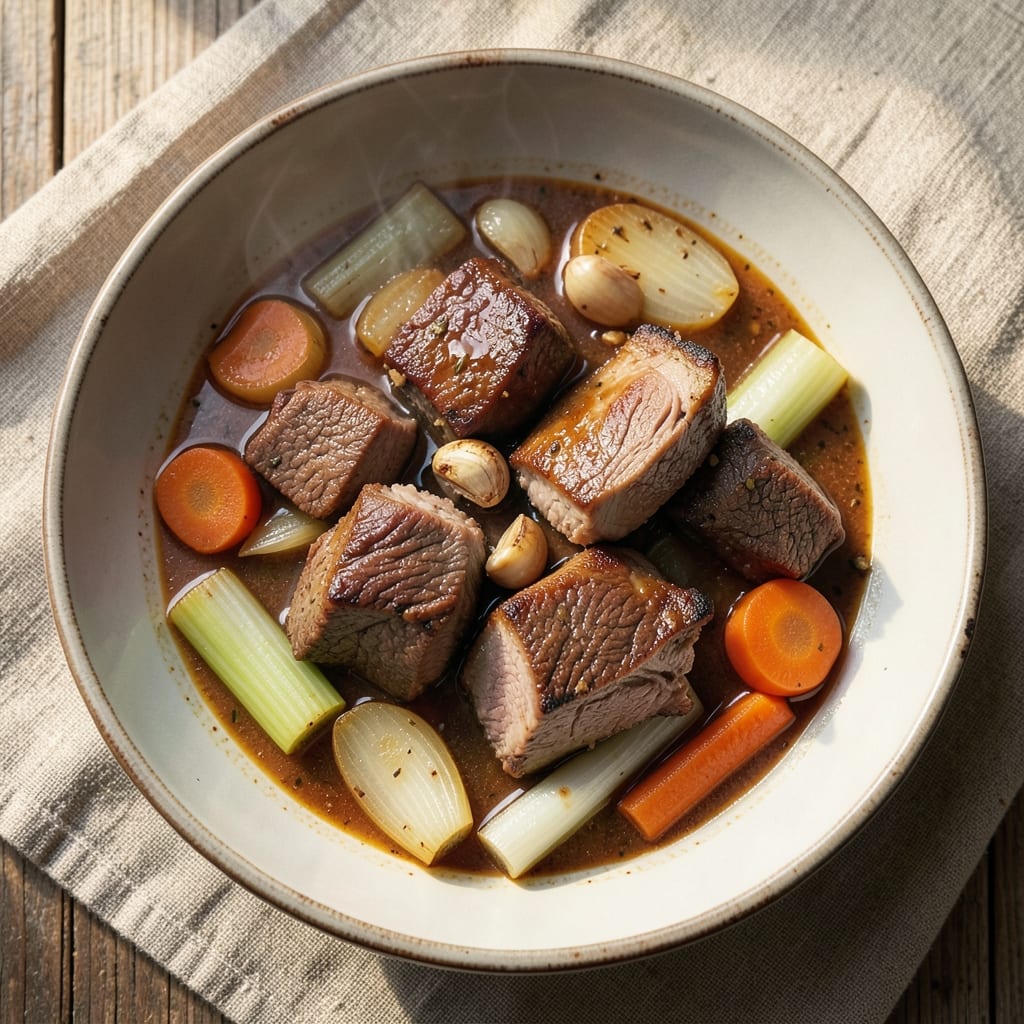
This beef and pork stew recipe delivers the kind of deep, caramelized richness that transforms tough cuts into melt-in-your-mouth perfection. 🔥 After years of perfecting slow-cooked braises in my Charleston kitchen, I've developed a method that builds layers of flavor through proper browning and long, low simmering—exactly what makes this dish restaurant-quality at home.
The foundation begins with searing the beef and pork in batches to develop that essential Maillard crust, followed by deglazing the pan to capture every bit of flavor. Caramelized onions form the sweet, golden base that ties everything together, while aromatic vegetables like celery and carrots add depth. This isn't just a stew—it's a flavor journey that rewards patience with every spoonful.
By the time it's done, you'll have a pot of deeply aromatic stew where the beef is fork-tender and the pork falls apart at the touch. The broth is rich but not heavy, perfectly balanced with herbs and spices that let the meat shine. The caramelized onions add sweetness that cuts through the richness, creating harmony in every bite.
This recipe works equally well for weeknight dinners or holiday gatherings, scaling beautifully to feed a crowd. The technique I've perfected ensures you'll never have dry meat or watery broth again. Let's get cooking—your taste buds will thank you.
Ingredients for beef and pork stew
Six ingredients transform tough cuts into melt-in-your-mouth perfection—slow-simmered to golden richness.
| Ingredient | Amount | Notes |
|---|---|---|
| Chuck Roast Beef 🥩 | 2 lb | Cut into 1.5-inch cubes |
| Pork Shoulder 🐖 | 2 lb | Cut into 1.5-inch cubes |
| Yellow Onions 🧅 | 3 whole | Sliced into 1/4-inch strips |
| Celery Stalks 🥬 | 4 whole | Diced into 1/4-inch pieces |
| Carrots 🥕 | 4 whole | Cut into 1/4-inch slices |
| Garlic Cloves 🧄 | 6 cloves | Minced for depth of flavor |
| Tomato Paste 🍅 | ½ cup | For rich, concentrated flavor |
| Red Wine 🍷 | 1 cup | Bold dry variety preferred |
| Beef Broth 💧 | 3 cups | Homemade or quality store-bought |
| Bay Leaves 🌿 | 2 whole | For aromatic depth |
| Fresh Thyme 🌿 | ¼ cup | Leaves only, chopped |
| Black Peppercorns 🌶️ | 1 tbsp | Freshly cracked for heat |
| Salt 🧂 | 1 ½ tsp | Kosher or sea salt |
| Olive Oil 🫒 | ¼ cup | For searing meat |
| Flour 🌾 | ¼ cup | All-purpose for dredging |
The beef and pork cuts are everything here. Chuck roast for the beef and pork shoulder for the pork—both need that long cook to break down. Grab them from the butcher counter if you can, or the pre-cut sections at Costco or Kroger work perfectly. Look for good marbling in the meat—those little fat streaks melt into flavor. The onions? Yellow onions caramelize best, but red or white will work in a pinch. Slice them evenly so they cook at the same rate. Celery and carrots are just for flavor, so don’t stress about perfection—just chop them into similar-sized pieces.
No red wine? Beef broth with a splash of balsamic works just as well. Fresh thyme is ideal, but dried thyme at one-third the amount gets you close. The tomato paste can be from a tube or a can—just measure it out. If you’re short on time, pre-minced garlic from the jar saves steps, though fresh is always better. The flour isn’t for thickening—it’s just to help the meat brown better when you sear it. Skip it if you’re in a hurry, but trust me on this: that crust makes all the difference. For the broth, homemade is best, but even the good store-bought stuff works.
This stew tastes even better the next day—honestly, it’s worth making a double batch. Keeps in the fridge for 5 days and freezes beautifully for 3 months. I like to portion it into containers so I can grab a lunch for the week. The meat gets even more tender as it sits, so don’t rush it. If you’re serving a crowd, double the recipe—it scales perfectly. Just remember to taste as you go, especially when you’re deglazing the pan. That’s where the magic happens.
Why You'll Love This Recipe
- One-Pot Magic: I swear by this—just toss in the chuck roast, pork shoulder, and those classic veggies (onions, celery, carrots), cover with broth, and let the slow cooker do the work. No extra pans, no fuss, and the flavors meld together like a dream.
- Rich, Deep Umami Bomb: That combo of beef and pork? It’s a flavor explosion. The chuck roast stays tender while the pork shoulder gets fall-apart juicy, and the onions caramelize right in the pot—no extra steps needed. Honestly, the first bite makes me close my eyes.
- Leftovers That Don’t Suck: This stew actually improves the next day. I make a big batch on Sunday, and by Wednesday, it’s even better—just reheat and serve. My kids beg for it, and my wallet thanks me for not ordering takeout.
- Budget-Friendly Crowd-Pleaser: You’re getting two budget-friendly proteins (chuck roast and pork shoulder) for the price of one fancy cut. Plus, the veggies stretch the meal, so it feeds a family without breaking the bank. (Yes, even on a Tuesday night.)
Step-by-step instructions for deep-simmered beef and pork stew
Here's how to build layers of flavor that turn tough cuts into melt-in-your-mouth perfection.
🔥 Step 1: Sear the Meat for Deep Flavor
Heat a large Dutch oven over medium-high heat until hot. Add 2 tablespoons of the olive oil and let it shimmer. Working in batches (don't overcrowd), add the 2 lb chuck roast beef and 2 lb pork shoulder cubes, searing each piece for 2-3 minutes per side until deeply browned. The meat should release easily when ready to flip.
This searing step creates the Maillard reaction—those beautiful browned bits that pack intense flavor. Transfer the browned meat to a plate and set aside. Repeat with the remaining meat, adding more olive oil if needed. Don't rush this step; patience here makes all the difference in the final depth of flavor.
👨🍳 Step 2: Build the Flavor Base with Caramelized Vegetables
In the same Dutch oven, reduce heat to medium and add another 2 tablespoons olive oil. Add the 3 sliced yellow onions, 4 diced celery stalks, and 4 sliced carrots. Cook for 8-10 minutes, stirring occasionally, until the vegetables soften and begin to caramelize.
Here's where the magic happens: those caramelized onions and vegetables form the flavor foundation of your stew. You'll know they're ready when they're tender but still hold their shape with just a hint of golden color. Add the 6 minced garlic cloves and cook for another 30 seconds until fragrant—don't let it burn, or you'll get bitter flavors.
🍳 Step 3: Create the Rich Sauce Base
Sprinkle the 25 cup flour over the vegetables and stir to coat evenly. Cook for 1-2 minutes until lightly toasted. Pour in the 1 cup red wine, scraping up any browned bits from the bottom of the pot. Let it simmer for 3-4 minutes until the wine reduces by half.
Add the 5 cup tomato paste, 3 cups beef broth, 2 whole bay leaves, 25 cup chopped fresh thyme, 1 tbsp cracked black peppercorns, and 1.5 tsp salt. Stir well to combine all ingredients. The mixture should be bubbling gently—this is your flavor broth that will infuse the meat during the long simmer.
⏰ Step 4: Simmer Until Tender and Flavorful
Return all the meat to the Dutch oven and bring the stew to a gentle boil. Then reduce heat to low and cover partially, leaving a small gap for steam to escape. Let it simmer for 2.5-3 hours, stirring occasionally, until the meat is fork-tender and falls apart easily.
This long simmering time is crucial—it breaks down the tough muscle fibers and allows all the flavors to meld together. You'll know it's done when the meat is so tender that a fork slides through it with minimal resistance. The stew should have thickened slightly from the natural reduction of the liquids.
🥘 Step 5: Adjust and Serve with Perfect Texture
Remove the bay leaves and adjust seasoning if needed. Taste and add more salt or pepper if desired. The stew should be rich and flavorful but not overly salty. If it's too thick, add a splash of water or broth to reach your preferred consistency.
Serve the stew hot, ladling it over crusty bread or with mashed potatoes. The aroma alone will make your kitchen smell like a cozy country dinner. Each bite should deliver tender meat, caramelized vegetables, and that deep, complex sauce that comes from hours of simmering. This is comfort food at its finest!
Pro Tips For Making Beef And Pork Stew
- SEAR MEAT IN BATCHES: I learned this the hard way—trying to brown both the chuck roast and pork shoulder at once in a crowded pan just steams them. Work in two rounds: sear the beef first until deep brown, then pull it out and repeat with the pork. The extra effort guarantees a rich, caramelized base that lifts the whole stew.
- CUT ONIONS THIN AND LONG: I used to chop them into tiny cubes, and they’d turn to mush by the halfway point. Instead, slice the yellow onions into ¼-inch-thick half-moons—thin enough to soften quickly but thick enough to hold shape. (Yes, even if you’re impatient like me.)
- DON’T SKIP THE FAT RENDERING: After burning three batches, I finally figured out: let the pork shoulder’s fat render before adding liquid. Cook it uncovered on medium-low for 10 minutes, stirring occasionally, until it releases enough golden fat to coat the pan. This builds flavor without needing extra oil.
- ADD CARROTS LAST: My grandmother swore by this, and she was right: tossing in whole carrots with the onions and celery turns them to mush before the meat’s done. Instead, cut them into ½-inch chunks and add them only in the final 30 minutes. They’ll soften perfectly without disappearing into the stew.
Flavor customization for beef and pork stew
Smoky BBQ Twist
Swap the red wine for 1 cup BBQ sauce (I love Sweet Baby Ray's Original) and add 2 tbsp smoked paprika when building the flavor base. This Southeast-inspired variation brings deep, smoky notes that pair perfectly with the tender meat. For extra richness, finish with 2 oz bourbon when deglazing the pan—trust me, it elevates everything. 🔥
Herb-Infused Variations
Want to change up the herbs? Swap the thyme for rosemary (add 2 sprigs during simmering) or tarragon (use 1 tbsp chopped) for a French-inspired twist. For a Mediterranean touch, add 1 tsp dried oregano and ½ tsp cinnamon—the warmth complements the meat beautifully. Always adjust seasoning after adding new herbs.
Sweet Heat Profile
Add 2 tbsp honey or maple syrup when combining the sauce base to balance the richness with natural sweetness. For heat, stir in 1 tsp cayenne pepper or 2 tbsp hot sauce (like Cholula) at the end. This variation works especially well with pork shoulder—it caramelizes beautifully with the sweetness. 🌶️
Creamy Finish Option
For a velvety texture, stir in ½ cup heavy cream or ½ cup coconut milk during the last 30 minutes of simmering. This adds richness without overpowering the meat. I also recommend adding ½ cup grated Parmesan at the end for a cheesy depth that’s perfect for serving with crusty bread. The creaminess mellows out the bold flavors while keeping the dish hearty.
Spiced North African Style
Transform this stew with 1 tsp ground cumin, 1 tsp coriander, and ½ tsp cinnamon when building the flavor base. Use orange juice instead of red wine (add ½ cup with the broth) for a bright, citrusy twist. Finish with 1 tbsp harissa paste for a slow-building heat that’s unlike anything else. This variation feels exotic but still cozy—perfect for a weeknight dinner that feels special. 🌟
Umami Boost
For an extra layer of depth, add 2 tbsp soy sauce or 1 tbsp fish sauce when combining the sauce base. These ingredients add a savory punch that enhances the meat’s natural flavors. I also recommend adding 2 dried shiitake mushrooms (rehydrated) to the vegetables for an earthy, umami-rich note. This works especially well if you’re using leaner cuts of beef or pork.
Nutrition facts
Frequently asked questions about beef and pork stew
Can I substitute pork shoulder with another cut?
For similar results, try pork ribs (remove meat from bones) or pork butt. Both break down beautifully. If using pork chops, cut them into smaller pieces and add them later in the cooking process (1 hour before serving) so they don't overcook. The key is choosing fatty cuts that stay tender during long simmering.
Why does my stew taste watery even after simmering?
Watery stew usually means one of two things: either the meat wasn't seared properly (no flavor foundation) or the liquid wasn't reduced enough. First, always sear meat until deeply browned. Second, after simmering, uncover the pot and cook on medium-low heat for 15-20 minutes to reduce the liquid. If it's still too thin, remove the meat, reduce the sauce further, then return the meat to soak up the flavor.
How do I make this stew in a slow cooker?
Transfer all ingredients to your slow cooker after searing the meat and building the flavor base. Cook on low for 8 hours or high for 5-6 hours. The meat should be fork-tender when done. Since slow cookers don't concentrate flavors as much, taste and adjust seasoning at the end. For extra richness, finish with 1 tbsp butter or 1 tbsp olive oil stirred in during the last 15 minutes.
What's the best way to reheat leftover stew?
Reheat gently in a pot over low heat or in the microwave at 50% power in 2-minute intervals, stirring between each. Avoid high heat which can make the meat dry. For best results, add 2-3 tablespoons of water or broth to restore moisture. The stew actually tastes better the second day as flavors meld further. Store leftovers in an airtight container for up to 5 days.
Can I make this stew in an Instant Pot?
Yes! Follow the same initial steps for searing and building the flavor base. Then transfer everything to your Instant Pot and cook on high pressure for 45 minutes, followed by a 10-minute natural release. The meat will be tender but slightly firmer than stove-top simmering. For extra richness, finish with 1 tbsp cornstarch mixed with 2 tablespoons water stirred in during the last 5 minutes of cooking.