
Main Courses
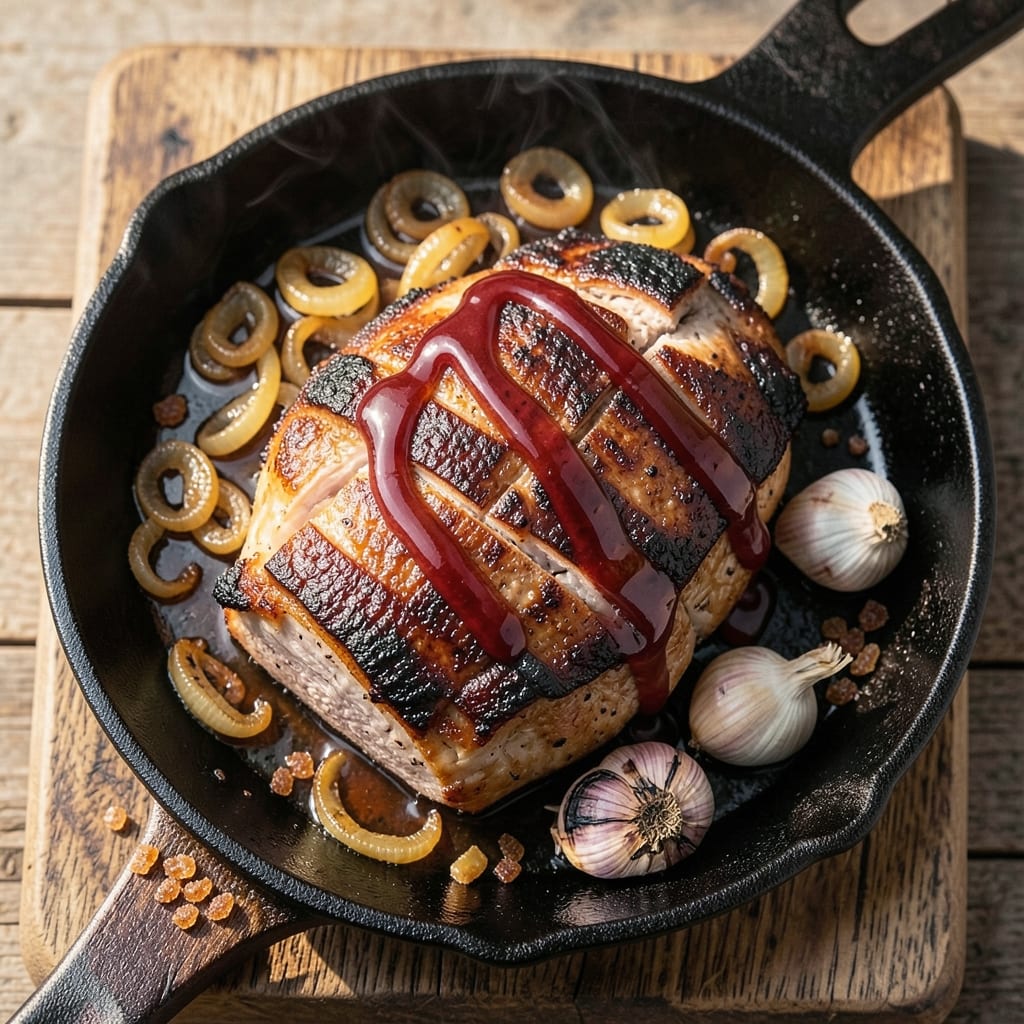
A BBQ pork shoulder roast transforms tough, lean meat into fall-off-the-bone tenderness with apple cider braising—a technique I perfected after years of experimenting with slow-cooked pork. The key? A perfect balance of heat, moisture, and time that creates a caramelized bark without a hint of dryness. This isn’t just another pulled pork recipe; it’s a method that delivers restaurant-quality results in your home kitchen, with a depth of flavor that comes from the slow infusion of apple cider and spices.
The process starts with a dry rub of smoked paprika, brown sugar, and garlic powder, which builds a flavorful crust before the meat even hits the heat. Then, the real magic happens: the pork shoulder braises in apple cider, which tenderizes the meat while adding a subtle sweetness that cuts through the richness. Whether you’re smoking it low and slow or roasting it in the oven, the result is juicy, flavorful, and effortlessly impressive—no need for a smoker or fancy equipment. The bark stays crispy, the meat stays moist, and every bite is packed with layers of smoky, tangy, and sweet flavors.
By the time you’re ready to serve, you’ll have a perfectly cooked pork shoulder that slices cleanly and serves beautifully. The apple cider braising ensures there’s no dryness, no matter how long you cook it, and the bark adds a satisfying crunch. This dish pairs perfectly with classic BBQ sides like coleslaw, cornbread, or roasted potatoes, making it ideal for gatherings or a cozy family dinner. The best part? It’s a foolproof method that works every time, even if you’re new to slow cooking.
Once you try this recipe, you’ll never go back to store-bought or basic pulled pork again. The combination of the apple cider braise, the smoky rub, and the slow-cooked tenderness makes it a standout dish that’s worth the time and effort. Let’s get started—your taste buds (and your guests) will thank you.
Ingredients for bbq pork shoulder roast
This pork shoulder recipe transforms tough meat into fall-off-the-bone perfection with apple cider and smoky spices.
| Ingredient | Amount | Notes |
|---|---|---|
| Pork Shoulder (Bone-In) 🐖 | 5 lb | With fat cap intact for flavor |
| Apple Cider 🍎 | 2 cups | Unpasteurized for best flavor |
| Yellow Onion 🧅 | 1 whole | Chopped into 1-inch pieces |
| Garlic Cloves 🧄 | 6 cloves | Smashed but not minced |
| Smoked Paprika 🌶️ | 2 tbsp | For deep smoky flavor |
| Brown Sugar 🍚 | 2 tbsp | Light or dark works |
| Garlic Powder 🧄 | 1 tbsp | Freshly ground preferred |
| Salt 🧂 | 1 tbsp | Kosher or sea salt |
| Black Pepper 🌶️ | 1 tsp | Freshly cracked |
| Olive Oil 🫒 | 1 tbsp | For rub application |
| Fresh Thyme 🌿 | 4 sprigs | Or 1 tsp dried thyme |
| Fresh Rosemary 🌿 | 2 sprigs | For aromatic depth |
| Beef Broth 🍲 | 1 cup | Low-sodium preferred |
| Honey 🍯 | 1 tbsp | For glaze (optional) |
The pork shoulder is the star—look for one with a good fat cap at Costco or your local butcher. Bone-in stays juicier, and the fat renders beautifully. If you can't find bone-in, a 5-pound boneless shoulder works too, but expect slightly less moisture. The apple cider should be unpasteurized for that authentic tang—Mott's or local orchard brands are perfect. Fresh thyme and rosemary add layers of aroma, but dried works in a pinch (use half the amount). For the rub, Penzeys smoked paprika gives the best depth, but regular grocery store brands are fine too.
No apple cider? Unsweetened apple juice plus 1 tsp apple cider vinegar mimics the tang. Running short on thyme? Fresh oregano or marjoram works beautifully. The beef broth adds richness without overpowering—low-sodium is key so you don't need to adjust seasoning later. For the glaze, honey is traditional, but maple syrup or agave gives a similar sweetness. If you're short on time, skip the glaze entirely—the bark from the rub is flavorful enough. The onions and garlic get chopped roughly—no need for precision here, just even pieces that'll soften nicely during braising.
This roast tastes even better the next day—plan ahead! Store leftovers in the fridge for 5-6 days or freeze for 3 months. I like to slice it thin against the grain and serve on buns with extra apple cider drizzled on top. The bark stays crispy for about 2 days if stored properly, so make extra for sandwiches. For reheating, cover with foil and warm in a 350°F oven for 15 minutes—no microwave needed, trust me.
Why You'll Love This Recipe
- One-Pan Magic: I swear by this—just toss the pork, onions, and spices on a sheet pan, pour in the apple cider, and walk away. The bone-in shoulder stays juicy while the edges caramelize, and the cider reduces into a glossy, smoky glaze that does half the work for you.
- Smoky-Sweet Obsession: That first bite? The crispy paprika crust gives way to tender meat soaked in apple cider’s tangy depth—like a cross between a fall BBQ and a cozy braise. Honestly, my kids think it’s "fancy," but it’s really just garlic, onions, and a little patience.
- Budget Hero, Crowd Pleaser: A bone-in pork shoulder costs less than half the price of pre-cut cuts, and the flavors stretch across multiple meals. Plus, it’s the kind of dish that disappears at potlucks—no one will guess it’s this unfussy. (Yes, even on a Tuesday night.)
Step-by-step instructions for apple cider-braised pork shoulder
Here's how to transform that pork shoulder into melt-in-your-mouth perfection with a crispy bark and moist interior.
Season and Sear the Pork Shoulder
Start by patting the 5 lb pork shoulder dry with paper towels—this helps the seasoning stick and creates that coveted bark. In a small bowl, mix together the 2 tbsp smoked paprika, 2 tbsp brown sugar, 1 tbsp garlic powder, 1 tbsp salt, and 1 tsp black pepper. Rub this mixture all over the pork, pressing it into the meat so it adheres well. Let it sit at room temperature for 30 minutes while you prep the rest.
Heat a large Dutch oven over medium-high heat and add the 1 tbsp olive oil. Once shimmering, carefully place the pork shoulder fat-side down in the pot. Sear for 8-10 minutes until the fat is golden brown and crispy in spots. Flip and sear the other side for another 5 minutes. This initial sear locks in flavors and gives you that beautiful crust.
Build the Flavor Base
Remove the pork shoulder from the pot and set it aside. In the same Dutch oven, add the chopped 1 whole yellow onion and smashed 6 cloves garlic. Cook for 3-4 minutes until the onions soften and the garlic becomes fragrant. You want them to caramelize slightly but not burn—this adds sweetness to your braise.
Stir in the 4 sprigs fresh thyme and 2 sprigs fresh rosemary, crushing them slightly to release their oils. Pour in the 2 cups apple cider and scrape up any browned bits from the bottom of the pot—this is where all the flavor hides. Bring to a gentle simmer, then reduce heat to maintain a steady bubble.
Braise Until Tender
Return the pork shoulder to the Dutch oven, fat-side up. Pour in the 1 cup beef broth and add the pork back to the pot. Cover tightly with a lid and transfer to a preheated 300°F oven. Braise for 3-4 hours, checking occasionally to ensure there's enough liquid. If it gets too low, add a splash of water or apple cider.
Here's the magic: when the internal temperature reaches 195-203°F (use a meat thermometer), the collagen will have broken down completely, giving you that fork-tender texture. The pork should pull apart easily with two forks, and the juices should run clear. This typically takes about 3-4 hours, but your oven may vary.
Finish with the Glaze (Optional)
Once the pork reaches the perfect temperature, remove it from the oven and transfer it to a cutting board. Tent loosely with foil and let it rest for 15-20 minutes while you prepare the glaze. In a small saucepan, combine the braising liquid from the Dutch oven with the 1 tbsp honey. Simmer for 5-7 minutes until slightly thickened.
Brush this glaze over the pork shoulder just before serving. The honey adds a touch of sweetness that balances the smoky, savory flavors. Slice against the grain for maximum tenderness, and serve with extra braising liquid spooned over the top for that restaurant-quality presentation.
Pro Tips For Making Bbq Pork Shoulder Roast
- USE A MEAT THERMOMETER: I learned this the hard way—pork shoulder can look done but still need 15 minutes more. Aim for 203°F internal temp (yes, it’ll pull back to 195°F when rested). No guessing, no dry meat.
- CHAR THE ONIONS FIRST: Skip the raw onion chunks—they’ll just stew into mush. Sear 2 sliced onions in a hot pan with 1 tbsp oil until deep caramelized (10-12 mins). Toss them into the apple cider later, and the sauce will taste 10x richer.
- DON’T RUSH THE APPLE CIDER: I used to dump it in early, but now I reduce it first. Simmer 1 cup cider in a saucepan until syrupy (about 10 mins), then mix in the paprika and garlic. The sauce won’t dilute the pork’s flavor, and it’ll cling better to the meat.
- REST IT UNDER FOIL: Cutting into pork shoulder too soon is a crime. After pulling it from the oven, tent it loosely with foil and let it sit 20-30 minutes. The juices redistribute—no sad, dry slices. (Yes, even if you’re impatient like me.)
Troubleshooting your bbq pork shoulder roast
Dry, Tough Meat
Overcooking is the #1 cause of dry pork shoulder. The magic happens between 195°F and 203°F—any hotter, and you'll cook off moisture. I've ruined more pork shoulders than I care to admit by pushing past 205°F, so trust your thermometer! If your oven runs hot, lower the temperature to 275°F and extend cooking time. The fat cap should render nicely, but if it looks dry, add ½ cup apple cider every hour to keep it moist. 💫
Uneven Cooking
Uneven cooking often comes from inconsistent heat distribution. If your oven has hot spots, rotate the Dutch oven halfway through cooking. For gas ovens, place a baking sheet on the lower rack to deflect heat. I swear by a Meater thermometer for accuracy—it tracks both surface and internal temps simultaneously. If the edges cook faster, tent the pork loosely with foil to slow the process. 🌡️
Bark Falling Off
The bark is your flavor insurance, but it can turn to dust if the pork moves too much or the oven temperature fluctuates. Let the pork rest 30 minutes after searing before braising—this helps the rub adhere better. For extra stability, place the Dutch oven on a wire rack instead of directly on the oven rack. If the bark starts peeling, brush it with a 1:1 mix of apple cider and honey just before serving to restore crispiness. 🍯
Soggy Bark
Steam is the bark's enemy. If your pork shoulder ends up with a mushy crust, it's likely from too much liquid in the Dutch oven. After searing, reduce the apple cider to 1 cup instead of 2 and add the beef broth separately. I also recommend not covering the pot tightly—use a loose lid or foil tent to allow some steam to escape while still trapping heat. 🔥
Weak Flavor
Flavor fades when the braising liquid gets diluted. Always scrape up those fond bits from the bottom of the pot—they're packed with caramelized goodness. For extra depth, add 1 bay leaf and 1 tsp fish sauce to the braising liquid (trust me, it works!). If your pork tastes bland, finish it with a smoky glaze made from 1 tbsp apple cider vinegar + 1 tbsp brown sugar, reduced by half. 🌶️
Stringy Texture
Stringy pork usually means it didn't reach the collagen breakdown zone (195-203°F). If your meat thermometer shows 185°F after 4 hours, increase oven temp to 325°F and cook another 30-60 minutes. For a true test, pull a fork out—if it slides through easily with no resistance, you're golden. If not, keep cooking in 15-minute increments until it does. Patience is key here! 💪
Nutrition facts
Frequently asked questions about BBQ pork shoulder roast
Can I use boneless pork shoulder instead of bone-in?
Yes, but expect slightly less moisture since bone-in pork stays juicier. A 5-pound boneless shoulder works perfectly—just trim excess fat to ¼-inch thickness before seasoning. The cooking time remains similar, but monitor the internal temp closely to avoid dryness.
What's the best way to store leftovers?
Slice the pork thinly against the grain and store in an airtight container with some of the braising liquid. It keeps for 5-6 days in the fridge or 3 months in the freezer. For reheating, cover with foil and warm in a 350°F oven for 15 minutes—never microwave, or the bark will turn soggy.
Can I substitute apple cider with something else?
Use unsweetened apple juice + 1 tsp apple cider vinegar for tang, or swap for 1 cup chicken broth + 1 tbsp brown sugar. For deeper flavor, try ½ cup red wine + ½ cup beef broth. The key is balancing sweetness and acidity—avoid plain water or you'll lose that signature depth.
How do I know when it's fully cooked?
Use a meat thermometer—it's done when the internal temp hits 195-203°F in the thickest part. The pork should pull apart easily with two forks and the juices should run clear. If it's not there after 4 hours, increase oven temp to 325°F and cook another 30-60 minutes.
What are the best sides to serve with this?
Classic BBQ sides work perfectly: creamy coleslaw, buttery cornbread, or roasted sweet potato wedges. For something lighter, try a crisp apple salad with walnuts and goat cheese. The smoky-sweet pork pairs beautifully with tangy pickled jalapeños or a drizzle of spicy mustard.