
Main Courses
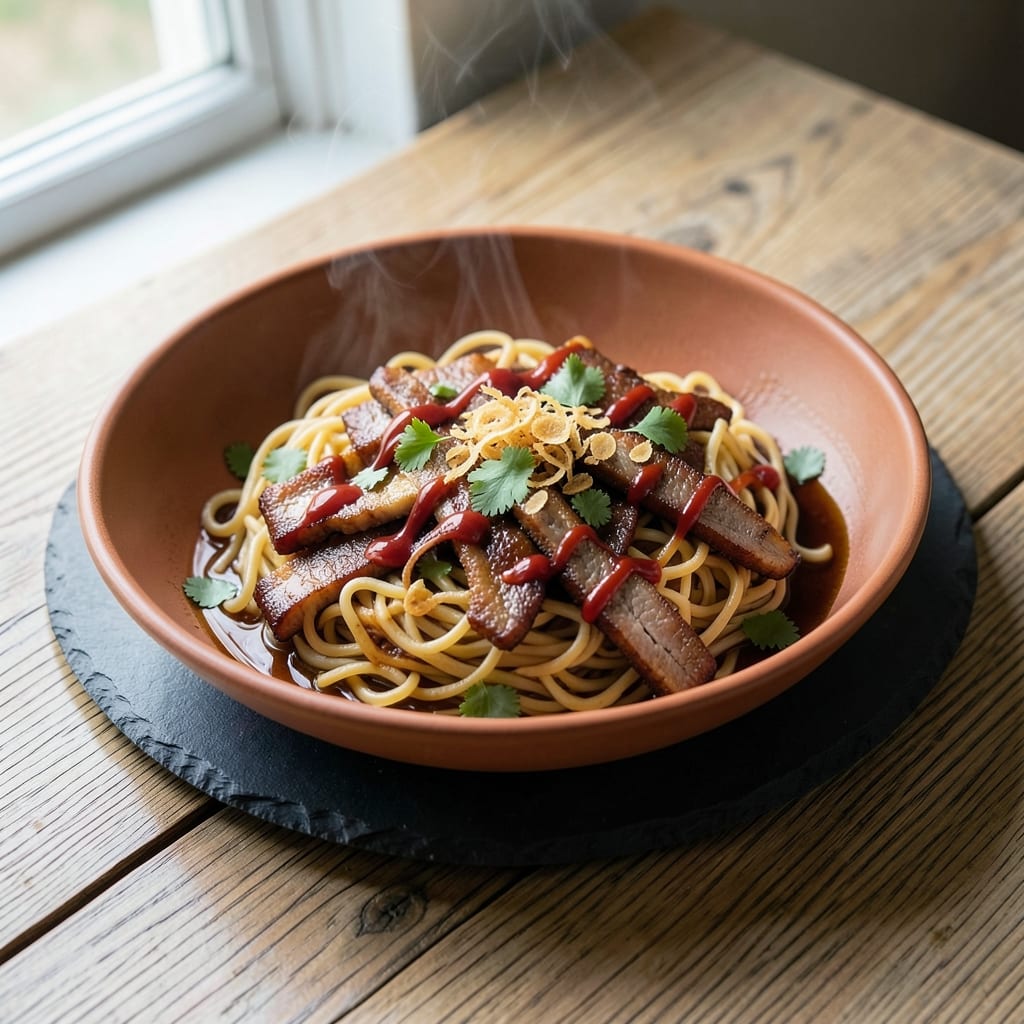
This BBQ pork lo mein delivers the perfect balance of smoky-sweet flavors and satisfying texture—crispy pork bites wrapped in tender noodles with a glossy, umami-packed sauce. 🔥 After years of perfecting stir-fry techniques, I've developed a method that captures wok hei (breath of the wok) while keeping the process straightforward enough for weeknight dinners. The key? A dual-cooking approach that renders fat from the pork for crispy edges while keeping the interior juicy, then tossing everything together at the last minute to maintain that signature stir-fry texture.
The foundation of this dish is a smoky BBQ glaze that adds depth without overpowering the dish's natural flavors. I use a blend of hoisin, soy sauce, and a touch of brown sugar for that signature sweet-savory balance, then finish with a splash of rice vinegar for brightness. The noodles—chewy egg noodles—are cooked just shy of al dente so they soften slightly in the hot wok, creating that perfect bite. What sets this apart is the crispy pork belly strips, which add a luxurious texture that elevates the dish from ordinary to extraordinary.
By the time you're done, you'll have a steaming plate of crispy pork lo mein with glossy noodles coated in a rich, smoky-sweet sauce. The aroma alone will have everyone gathering around the table, and the first bite delivers that perfect harmony of textures—crispy pork, tender noodles, and a sauce that's both sticky and savory. This is the kind of dish that feels like a restaurant-quality meal but comes together in your own kitchen with simple techniques and a few key ingredients.
Perfect for feeding a crowd or meal prepping for the week, this BBQ pork lo mein is versatile enough to stand alone or pair with steamed dumplings and quick-pickled vegetables. Let's get cooking—your taste buds will thank you.
Ingredients for bbq pork lo mein
Crispy pork, chewy noodles, and a smoky-sweet sauce—this stir-fry packs restaurant flavor in one pan.
| Ingredient | Amount | Notes |
|---|---|---|
| Pork Belly 🥓 | 1 ½ lb | Cut into 1-inch strips |
| Egg Noodles 🍜 | 12 oz | Fresh or dried, chewy variety |
| Hoisin Sauce 🍶 | ⅓ cup | Store-bought or homemade |
| Soy Sauce 🥢 | ¼ cup | Light or dark preferred |
| Brown Sugar 🍯 | 2 tbsp | Packed firmly |
| Rice Vinegar 🍶 | 1 tbsp | For brightness |
| Sesame Oil 🫒 | 1 tbsp | Toasted for aroma |
| Fresh Ginger 🌿 | 1 ½ tbsp | Finely grated, peeled |
| Garlic Cloves 🧄 | 6 cloves | Minced, aromatic |
| Vegetable Oil 🫒 | ½ cup | High smoke point |
| Green Onions 🧅 | ¼ cup | Sliced, white and green parts |
| Sesame Seeds 🌾 | 1 tbsp | Toasted for crunch |
| Salt 🧂 | 1 tsp | Kosher or sea salt |
| Black Pepper 🌶️ | ½ tsp | Freshly ground |
The pork belly is non-negotiable here—it's what gives you those crispy, caramelized edges that make this dish sing. Costco or your local butcher will have the best cuts, but if you're buying pre-sliced, grab the thickest strips you can find. Look for good marbling—it's what renders down for that crispy texture. I always ask for it to be cut into 1-inch strips at the counter, which saves time. Fresh ginger is a game-changer for the sauce—Trader Joe's sells pre-peeled, sliced ginger that's perfect for this. If you're using dried, it's one-third the amount, but fresh gives that bright, zesty kick you can't get from powdered.
No hoisin sauce? Mix 1 tbsp soy sauce, 1 tbsp brown sugar, and 1 tsp sesame oil as a quick substitute—it won't be identical, but it'll get you close. Running short on sesame oil? Avocado oil works in a pinch, but toast a few sesame seeds in a dry pan first to add that nutty aroma. The egg noodles can be fresh or dried—just cook them a minute less than package instructions if using dried. The sauce is where the magic happens, so don't skimp on the garlic. Roast it first for 10 minutes at 400°F to mellow its bite—trust me, it makes all the difference. And if you're feeling fancy, add a splash of Shaoxing wine to the sauce for extra depth.
This dish reheats like a dream—honestly, it's even better the next day once everything melds together. Store leftovers in an airtight container for up to 4 days in the fridge. For meal prep, portion into containers with a little extra sauce on top to keep it moist. Freezes beautifully for 3 months if you want to make a big batch. The crispy pork strips lose their crunch when reheated, so I always make a fresh batch of those when serving leftovers—just pan-fry them in a little oil for 2-3 minutes until crispy again. Garnish with extra green onions and sesame seeds right before serving—those add the final pop of color and texture.
Why You'll Love This Recipe
- One-Pan Magic: I swear by this recipe when I’m too tired to wash dishes. The pork belly renders its own fat, the noodles cook right in the same pan, and the hoisin glaze caramelizes into a sticky, irresistible sauce—no extra bowls needed.
- Sweet-Savory Balance: That combo of brown sugar and soy sauce? It’s where this dish gets its addictive kick. The pork belly stays tender while the sauce clings to every strand of egg noodle, giving you a bite that’s smoky, sweet, and just a little salty—like a hug in a bowl.
- Leftover Hero: Between us, this is my go-to for lunch the next two days. The flavors only deepen as the sauce thickens, and reheating it? Just a splash of water and a quick stir. Honestly, I’ve been known to pack it for work when I’m lazy.
- Budget Crowd-Pleaser: Pork belly might sound fancy, but it stretches farther than you’d think when sliced thin. A single package feeds four for under $15, and the hoisin and soy sauce add that restaurant-quality depth without breaking the bank. (Yes, even on a Tuesday night.)
Step-by-step instructions for BBQ pork lo mein
This smoky-sweet stir-fry delivers restaurant-quality crispy noodle bites and tender pork every time.
🔥 Step 1: Render Pork Belly Until Crispy and Smoky
Heat 0.5 cup vegetable oil in a wok or large skillet over medium-high heat until shimmering. Add the 1.5 lb pork belly strips in a single layer, leaving space between pieces. Let them cook undisturbed for 3-4 minutes until the edges turn golden brown and the fat begins to render.
Here's the thing—don't touch the pork for those first few minutes. You want that fat to render out and create a crispy crust. Once the bottoms are golden and the pork releases easily from the pan, gently flip each piece and cook for another 2-3 minutes until evenly browned. Remove the pork and set aside on a paper towel-lined plate to drain excess fat. You'll use this rendered fat for flavor later!
👨🍳 Step 2: Stir-Fry Aromatics Until Fragrant
In the same wok (don't wipe it clean—those browned bits are pure flavor), add 0.5 cup vegetable oil if needed to coat the pan. Increase heat to high and add the 6 cloves minced garlic and 1.5 tbsp finely grated fresh ginger. Stir-fry for 30 seconds until you can smell that amazing aroma—this is where the magic starts!
Add the 0.25 cup sliced green onions (white parts only) and cook for another 30 seconds until they soften slightly. Here's my trick: toss in 1 tbsp toasted sesame seeds now—they'll toast again in the hot oil and add an extra nutty depth. Keep the heat high and don't let anything burn; you want everything to cook quickly and stay vibrant.
🍳 Step 3: Cook Noodles Until Al Dente with Crispy Bites
In a separate pot, bring 4 cups water to a rolling boil and add 1 tsp salt. Add the 12 oz egg noodles and cook for 1 minute less than package instructions (they'll finish cooking in the wok). Drain and rinse briefly with cold water to stop cooking, then toss with 1 tbsp sesame oil to prevent sticking.
Now for the crispy magic: return the drained noodles to the wok over high heat and stir-fry for 2-3 minutes until they're hot and slightly crispy in spots. Here's where you'll get those coveted crispy noodle bites—keep the heat high and toss constantly. The goal is to get them hot and slightly charred in places while keeping them tender. If they look too dry, add 1 tablespoon water and toss to steam them slightly.
🥘 Step 4: Combine Everything for Smoky-Sweet Sauce
Return the crispy pork belly to the wok with the noodles. Add the 0.33 cup hoisin sauce, 0.25 cup soy sauce, 2 tbsp packed brown sugar, 1 tbsp rice vinegar, and 0.5 tsp black pepper. Toss everything together vigorously for 1-2 minutes until the sauce coats the noodles and pork evenly.
Here's the crucial part: keep tossing and scraping up those browned bits from the bottom of the wok. Those bits are packed with flavor, and incorporating them into the sauce will make your lo mein taste like it came from a dim sum house. The sauce should be glossy and cling to everything—if it's too thick, add 1-2 tablespoons hot water to loosen it. Taste and adjust seasoning if needed; you might want to add a touch more soy sauce for saltiness or rice vinegar for brightness.
🍽️ Step 5: Garnish and Serve Immediately
Transfer the lo mein to serving plates and garnish with the remaining 0.25 cup sliced green onions (both white and green parts this time) and an extra sprinkle of 1 tbsp toasted sesame seeds. Serve immediately while everything is hot and the noodles are still crispy in spots.
This dish tastes even better the second day, but the texture won't be quite the same—those crispy noodle bites disappear fast. For maximum enjoyment, eat it right away with extra hoisin sauce on the side for dipping. The combination of smoky pork, sweet-savory sauce, and crispy noodles makes every bite irresistible!
Pro Tips For Making Bbq Pork Lo Mein
- CRISP THE BELLY FIRST: I learned this the hard way—skipping the initial crisp won’t ruin the dish, but it’ll miss that smoky-sweet crunch. Sear the pork belly slices in a screaming-hot wok or pan for 2-3 minutes per side until deep golden before tossing in sauce. The extra time pays off when the noodles hit the plate.
- USE THICK-CUT BELLY: Thin slices turn mushy when they hit the noodles. Ask your butcher for ½-inch thick cuts—it’s worth the wait. After searing, slice against the grain into thin strips; they’ll hold shape and caramelize better in the sauce.
- STIR-FRY IN BATCHES: Crowding the wok steams the pork instead of searing it. Work in 2-3 batches if needed, keeping the first ones warm in a 200°F (95°C) oven while you finish. The sauce will coat better, and you’ll avoid that sad, soggy texture.
- SWEAT THE NOODLES DRY: Fresh egg noodles release starch like crazy when hot. Toss them in the wok for 30 seconds before adding oil or pork—this dries the surface so they absorb the BBQ glaze instead of turning into a gluey mess. (Yes, it looks weird, but trust the process.)
Perfect pairings for bbq pork lo mein
Side Dish Harmony
Start with steamed dumplings—I love siu mai or har gow—to add a light, handheld contrast to the rich lo mein. The juicy filling inside pairs beautifully with the smoky-sweet sauce, creating a perfect balance. For a vegetarian option, try quick-pickled cucumbers with a mix of 1 tbsp rice vinegar, 1 tsp sugar, and ½ tsp salt—the tang cuts through the richness. 🥗
For a heartier option, sesame green beans with a sprinkle of toasted sesame seeds and a drizzle of chili oil add crunch and heat. Or serve with steamed bok choy tossed in a little oyster sauce—the umami depth complements the pork perfectly. I often make a big batch of these sides to share at family gatherings.
Drink Pairings
A crisp jasmine tea with a squeeze of lemon is my go-to for balancing the dish's richness. The floral notes from the tea and the citrus brightness cleanse your palate between bites. For something stronger, a light lager like Asahi Super Dry works wonders—the subtle maltiness doesn’t overpower the smoky flavors. 🍺
If you're serving this at a dinner party, a dry Riesling from Germany or China adds an elegant touch. The acidity in the wine mirrors the rice vinegar in the sauce, while the crisp finish keeps the meal feeling fresh. For a non-alcoholic option, sparkling yuzu soda brings a refreshing zing that pairs surprisingly well with the dish’s depth.
Sauce Enhancers
Set out a small bowl of extra hoisin sauce for dipping—it’s a must for soaking up those crispy noodle bites. For a spicy kick, add a side of sriracha or chili crisp to let guests adjust heat to their taste. I also like to include a drizzle of chili oil in the center of the table for those who want to add a smoky-spicy finish to their bowls. 🌶️
For a creamy contrast, serve coconut milk on the side—just a splash can add a luxurious texture to the dish. Or try peanut sauce with a mix of 2 tbsp peanut butter, 1 tbsp soy sauce, and 1 tsp honey—it’s a crowd-pleaser, especially with kids. The nutty flavor adds another layer of complexity to the meal.
Garnish Upgrade
Before serving, sprinkle the lo mein with crushed peanuts for an extra crunch—just 2 tbsp toasted and lightly crushed works perfectly. A few cilantro leaves add a fresh, herbaceous note that brightens the dish. For a pop of color, add red chili flakes or thinly sliced Thai basil—both bring a vibrant contrast to the rich sauce. ✨
If you’re feeling fancy, drizzle the finished dish with a light soy glaze made from 1 tbsp soy sauce reduced with ½ tsp sugar over high heat. The glossy finish makes the lo mein look like it came straight from a dim sum cart. I always save this step for when guests are ready to eat—it’s the perfect finishing touch!
Nutrition facts
Frequently asked questions
Can I substitute pork belly with another cut of pork?
For a leaner option, use pork tenderloin or shoulder cut into thin strips. Cook them for 2-3 minutes less than pork belly to avoid overcooking. If you want extra crispiness, try pork shoulder with skin on—just remove it after cooking. The fat content is key for that signature texture, so avoid overly lean cuts.
How do I get the crispy noodle bites without burning them?
Work quickly over high heat and keep tossing constantly. Use 1 tbsp sesame oil after draining to prevent sticking, then stir-fry for 2-3 minutes max. If they look dry, add 1 tablespoon hot water to steam them slightly. The secret is high heat and constant movement—don't let them sit in the pan!
Can I make this recipe gluten-free?
Yes! Swap regular soy sauce for tamari or coconut aminos (use 1:1 ratio). For hoisin, make a quick version with 2 tbsp gluten-free oyster sauce, 1 tbsp date syrup, and 1 tsp sesame oil. Check your noodles too—opt for rice noodles or certified gluten-free egg noodles. Always verify labels for hidden gluten.
What's the best way to reheat leftovers?
Reheat in a skillet over medium heat with 1 tbsp water to steam, tossing constantly for 3-4 minutes. The crispy texture won't return, but the flavors deepen. For fresh crispiness, pan-fry extra pork strips separately and add them back to the reheated noodles. Store in airtight containers for up to 4 days—it actually tastes better the next day!
Can I add vegetables to this recipe?
Toss in bell peppers, mushrooms, or snap peas during the final stir-fry. For heartier options, add bok choy or baby corn (they cook quickly). Just